The record
The RAF took Land Rovers almost as soon as Solihull could build them, with major deliveries from 1949, and among their first specialist jobs was airfield crash rescue. Since the war the first vehicle away to a crashed aircraft had been a converted Willys/Ford Jeep - the 'Aircraft Crash Rescue Tender', a quarter-ton 4x4 loaded with extinguishers, ladder, hatchet, crowbar, asbestos blankets and a first-aid kit whose task was to reach the wreck ahead of the heavy foam tenders and start getting aircrew out. In the early 1950s the Series I Land Rover took over this role, carrying similar light rescue kit, with a searchlight and prominent AIRCRAFT CRASH RESCUE lettering, and the lineage it began ran unbroken through the Series-based crash rescue trucks and Marshall crash rescue ambulances to the HCB-Angus TACR1 of the 1970s.
RAF Series Is were delivered in the service's blue-grey - the shade later listed by paint suppliers as 'RAF Blue' - though station fire sections frequently repainted their crash vehicles red, and surviving examples have been found wearing several coats of red over the original blue. Conversions were carried out both on 80/86/88-inch and on long-wheelbase chassis; a documented survivor is a 1955 long-wheelbase example issued to the RAF in 1956 and converted to an Aircraft Crash Rescue Vehicle in 1959 by Marshall of Cambridge, which later worked airside for Marshall's own flight operations and was restored and auctioned in 2022.
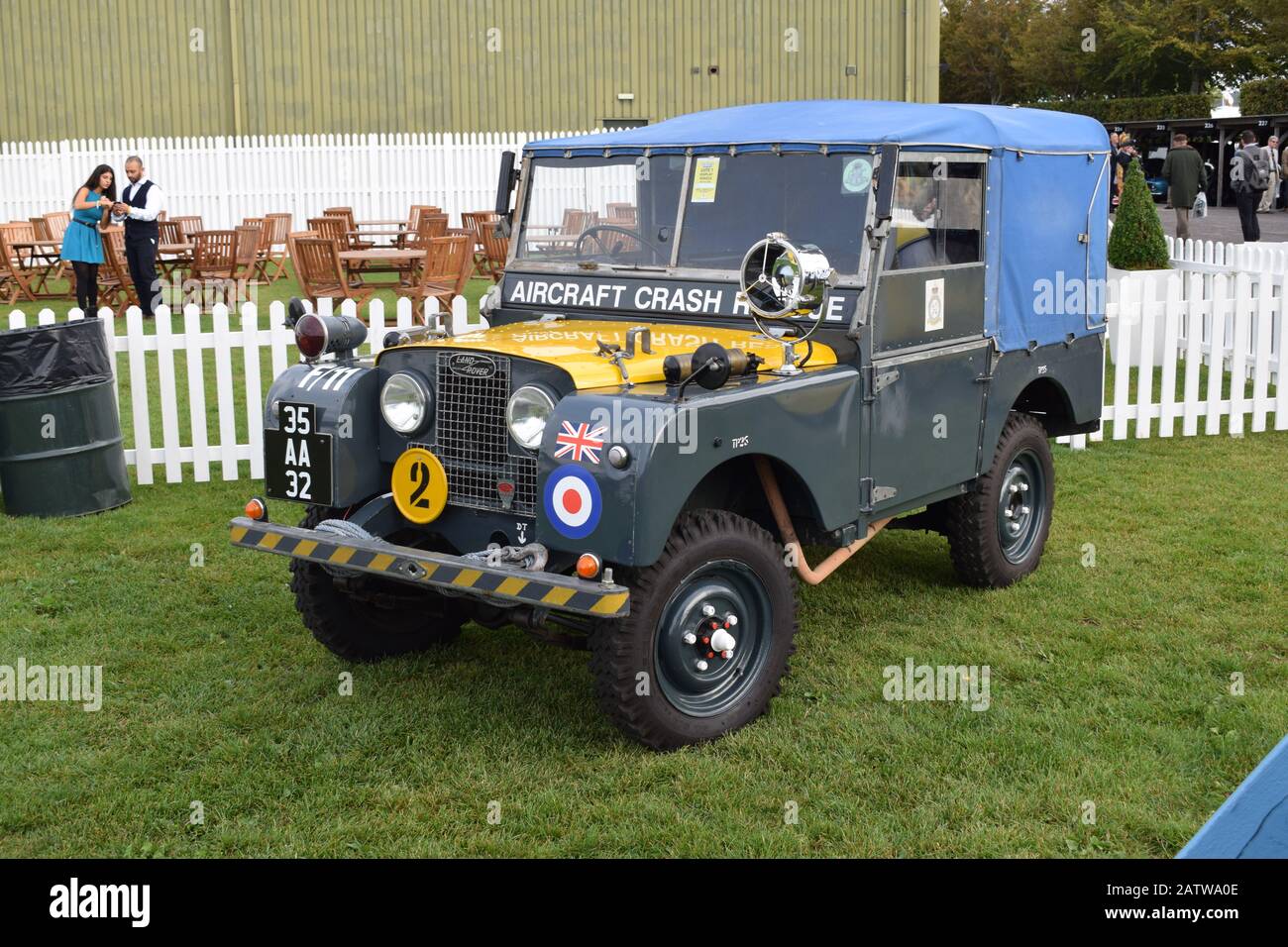
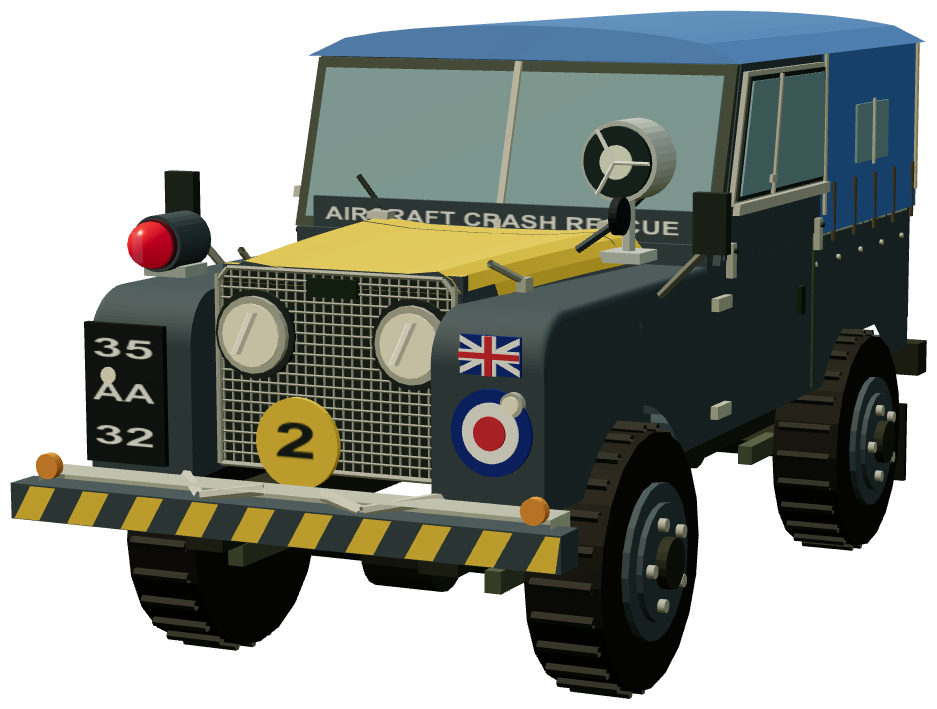
This record models the short-wheelbase form: an 88in soft top in RAF blue-grey with canvas tilt and crash-rescue lettering, as seen on the preserved example displayed among the aircraft at the Goodwood Revival that served as this record's reference. The identity and service history of that particular Goodwood vehicle have not been established.