The record
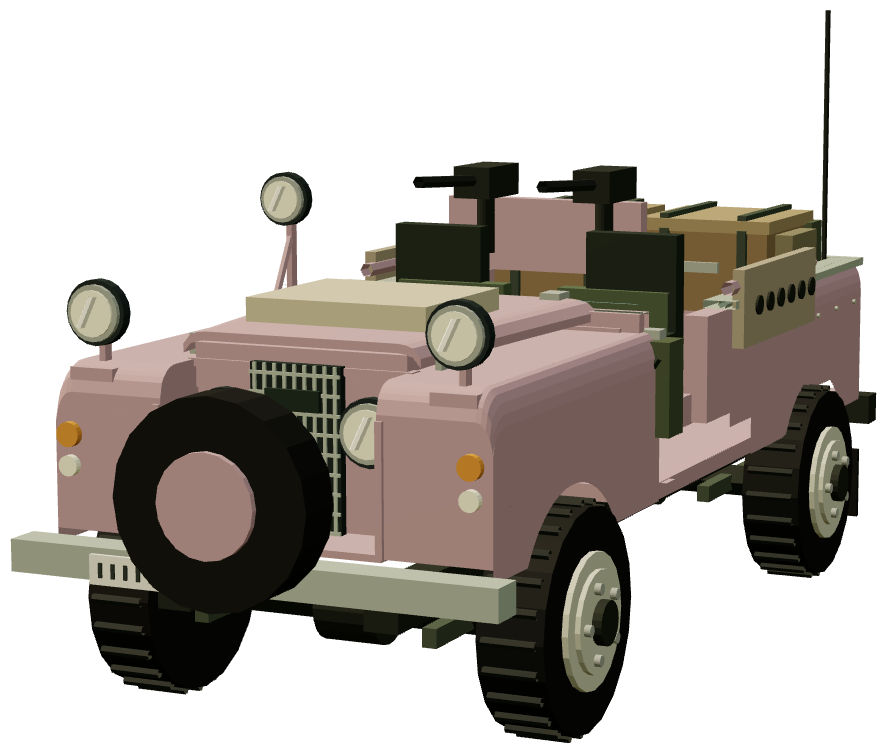
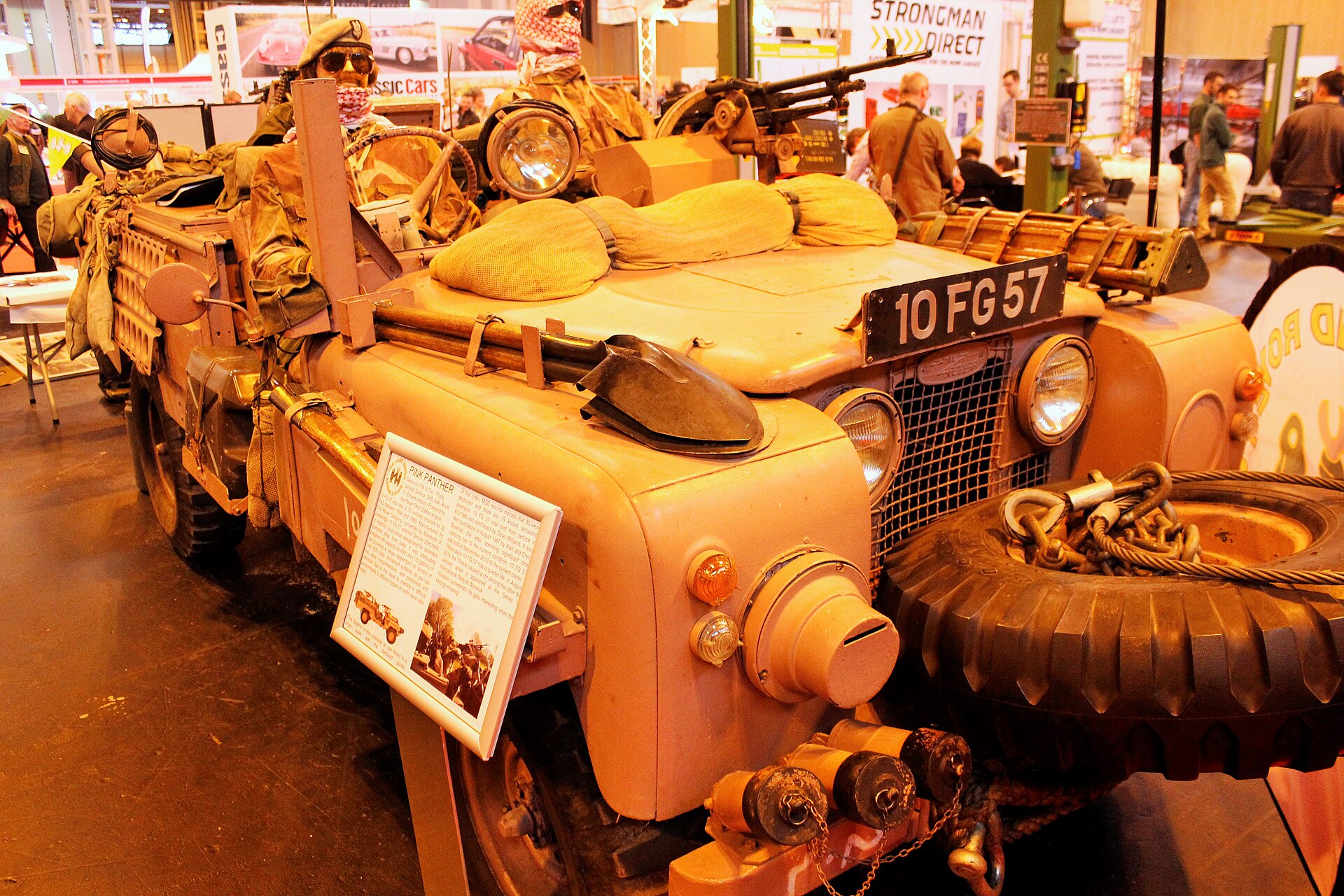
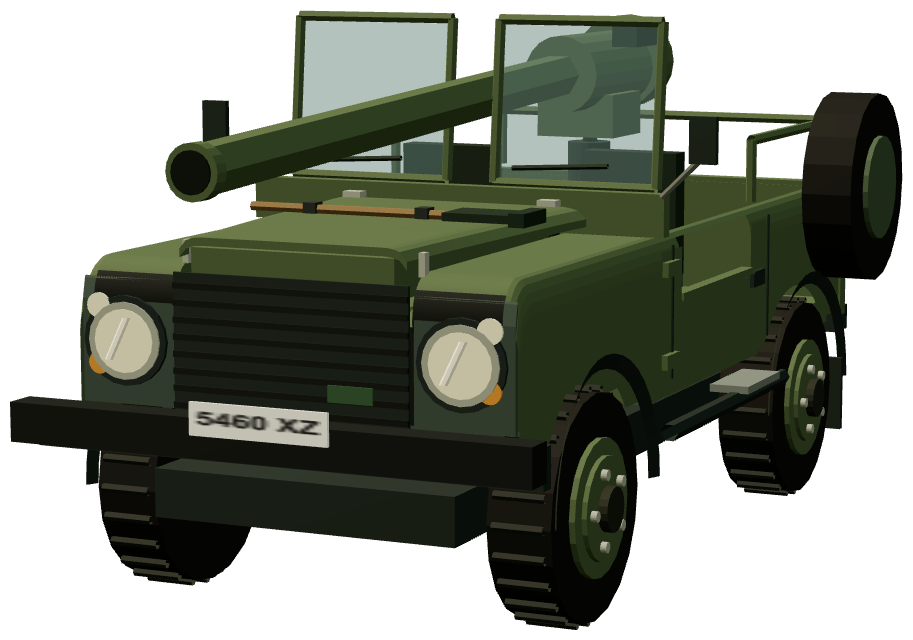
In 1968 the Ministry of Defence bought 72 long-wheelbase Series IIA 109s — Truck, General Service, ¾ Ton, FV18064 — and sent them to Marshall of Cambridge for conversion into dedicated desert patrol vehicles for the Special Air Service. Marshall's conversion was comprehensive: a heavy-duty chassis and suspension, four fuel tanks totalling around 100 gallons for long-range work, water tanks, sand tyres with a spare mounted ahead of the radiator, differential guards, sand ladders, shovels and jerry can stowage. Doors, roof and windscreen were removed entirely, and the vehicles were fitted for a general-purpose machine gun, rifle boxes, grenade holders, smoke dischargers front and rear, navigation equipment and spotlights.
The conversions left Marshall in standard bronze green, but for desert service the SAS painted them a dusty pink — trials having shown pink to be a remarkably effective desert camouflage colour, particularly in the low light of dawn and dusk, an observation dating back to wartime desert operations. The colour, applied to everything including wheels and sometimes tyres, was never an official British Standard shade and was reportedly mixed as required from red lead primer, white and a touch of black. The pink finish earned the vehicles their enduring nickname: the 'Pink Panthers', or 'Pinkies'.
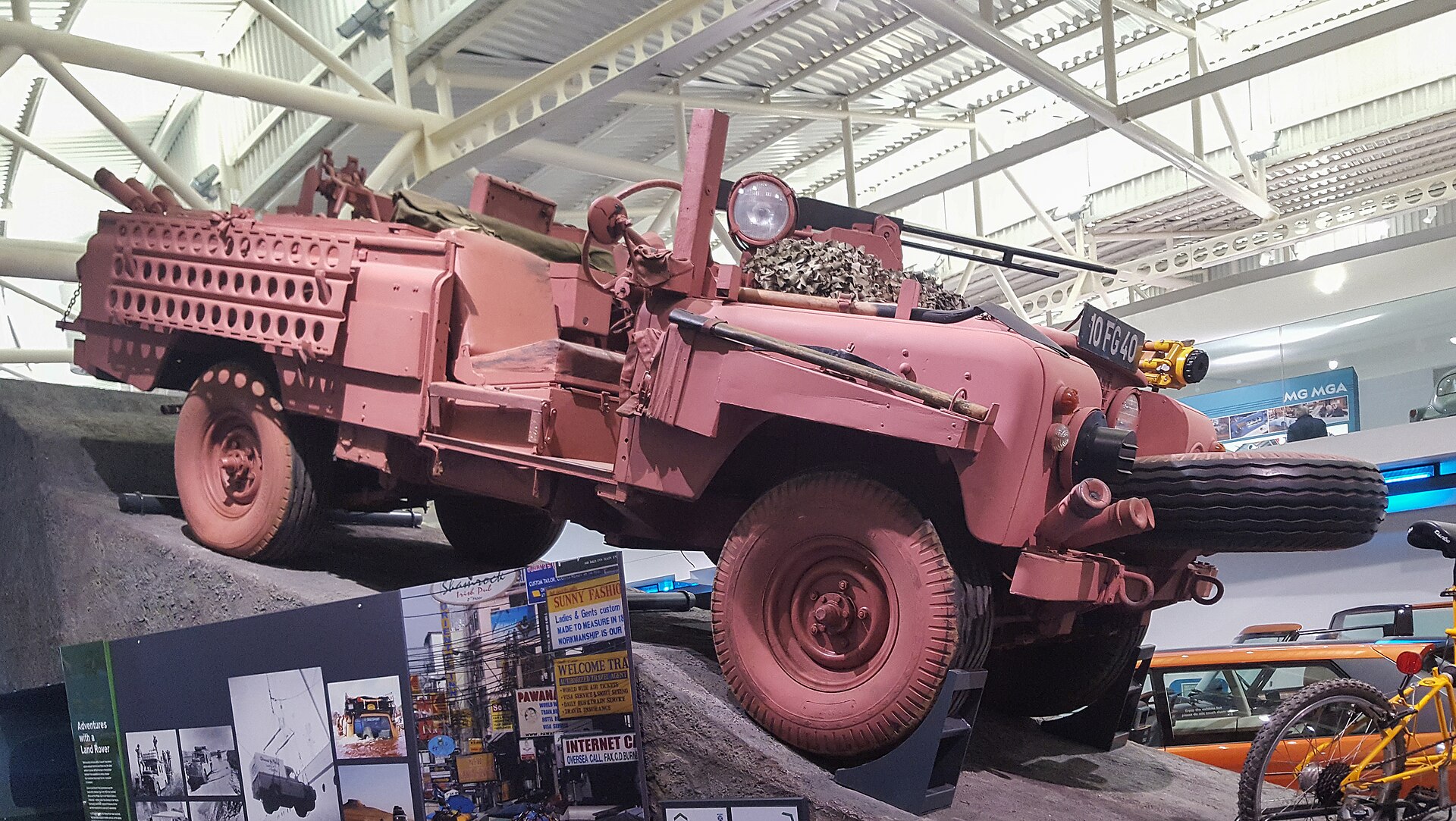
The Pink Panthers served the SAS's mobility troops through the 1970s and into the early 1980s, notably in the Gulf and Oman, before being replaced from 1985 by the Glover Webb-converted Land Rover 110 Desert Patrol Vehicle — which inherited the 'Pinkie' nickname despite wearing more conventional sand colours. Hard desert use meant most of the 72 did not survive service; roughly 20 are thought to remain, and they are now among the most sought-after of all military Land Rovers. Preserved examples include 10 FG 40 in the Land Rover Heritage Collection at the British Motor Museum, Gaydon, and survivors have sold strongly at auction.

.jpg)