NAMED MODELSpecial · AmbulancesMilitary · UKUnited Kingdom
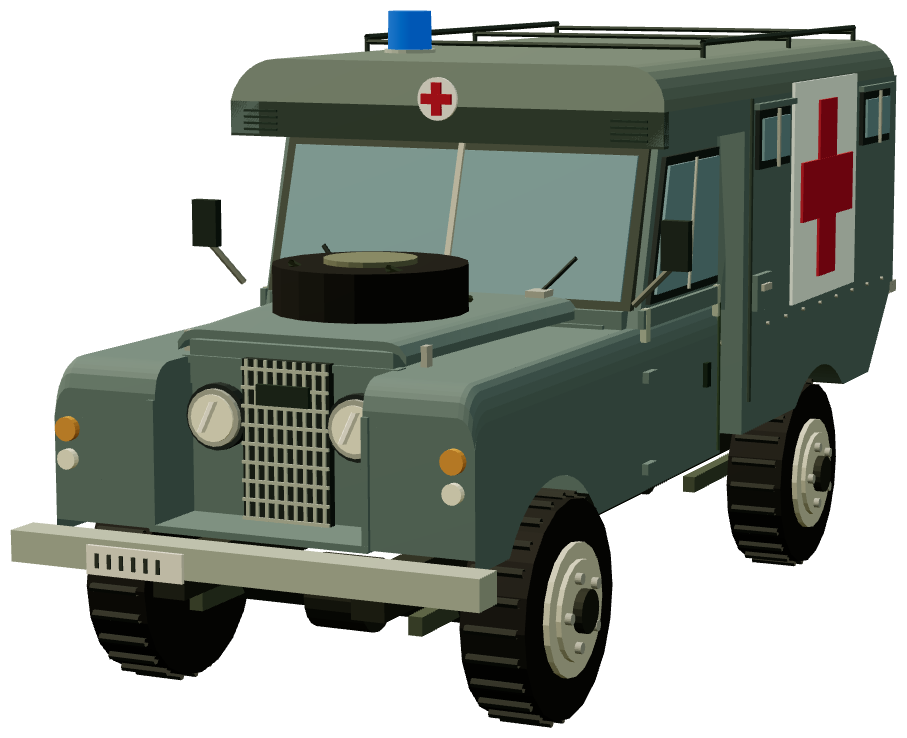
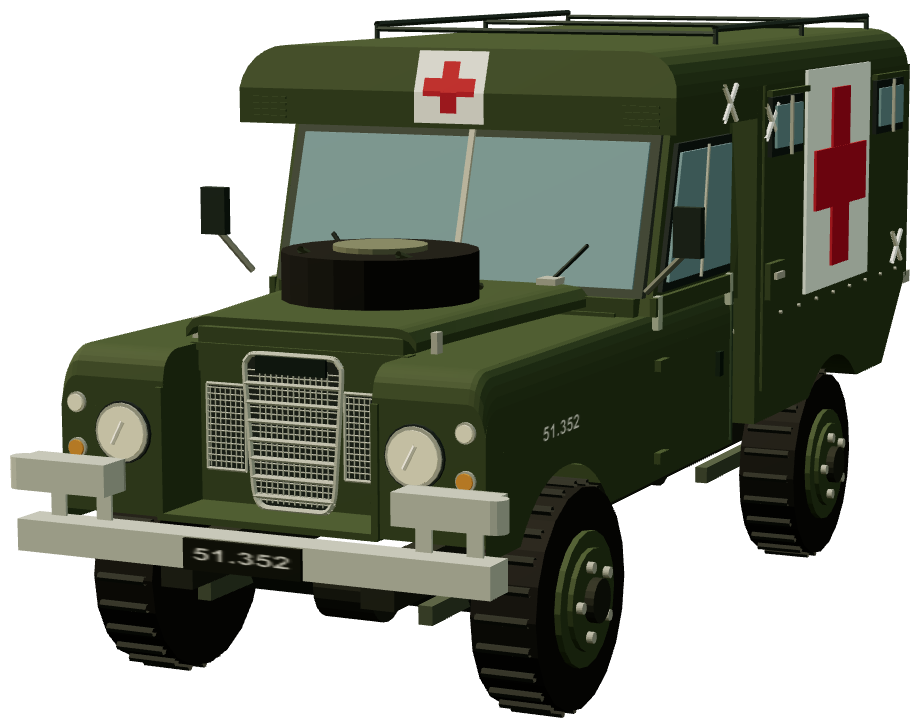
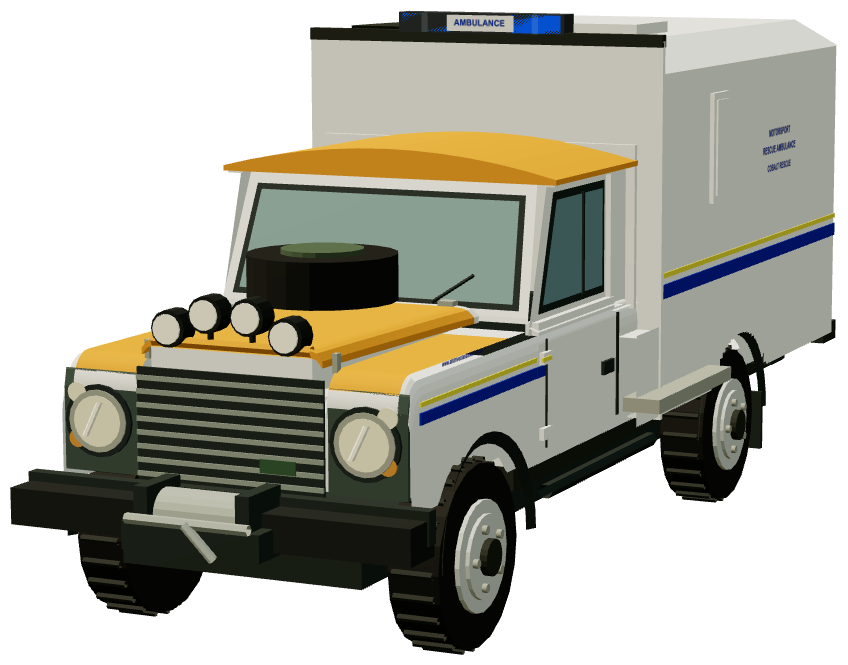
UK Marshal Body Ambulance.
British military field ambulance on the Land Rover 109-inch chassis, with a raised two-to-four-stretcher body built chiefly by Marshall of Cambridge to the MoD's FV18044 specification. Around 2,000 served the British armed forces from the early 1960s into the 1990s.
BASE VEHICLESeries II 109″CONVERTERMarshall of Cambridge, Mickleover TransportIN SERVICE1961–82OPERATED INUnited KingdomPRODUCTION~2,000 vehiclesLAYOUT4 wheels · 109″
The record
The British MoD's requirement for a light 4x4 ambulance on the Land Rover 109-inch chassis was first met by Mickleover Transport Co Ltd, which built the initial 'Ambulance, 2-stretcher, 4x4, Rover 7' (designation FV18044) in 1961-62 on the Series II 109. Marshall of Cambridge — the airframe and special-purpose-vehicle firm — took over production and became the dominant builder, mounting an extended and raised ambulance body on the standard MoD-specification 109-inch chassis of whatever Series was in production, mostly Series II/IIA and less commonly Series III.
The body was designed around air portability: overall height was kept low enough to fit inside RAF transport aircraft of the day, and a distinctive chamfered lower rear body improved the departure angle off-road. The interior carried stretcher or seated casualties (configurations are variously described as two stretchers, four stretchers and a medic, or up to eight seated), with the medical compartment separated from the driver's cab.
Roughly 2,000 first-generation Marshall-bodied ambulances were built from the late 1950s/early 1960s into the early 1980s, serving the Army, the RAF and the Royal Navy's Fleet Air Arm. They proved durable and long-lived, remaining in use through the Falklands and Gulf conflicts before the role passed to Defender 130-based ambulances; many survive in preservation.
Specification
MANUFACTURERLand Rover (The Rover Company / British Leyland)
Catalogue fields describe the vehicle's structure and body as this registry records it. They are not certified factory measurements, and no performance figures are published here.
Codes on hover. Hex values are representative approximations of period paint unless a source states a measured value.
Renders & references
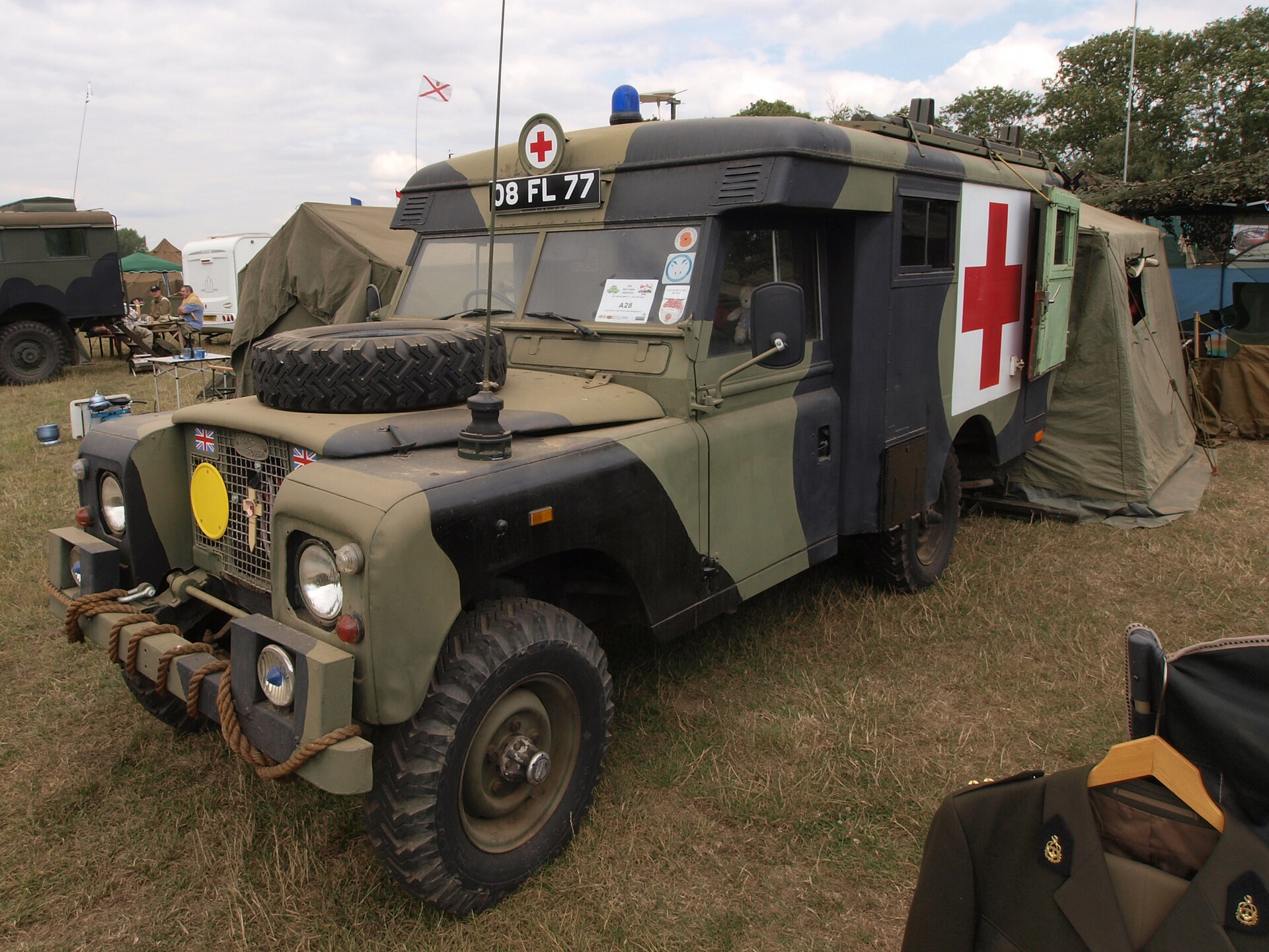
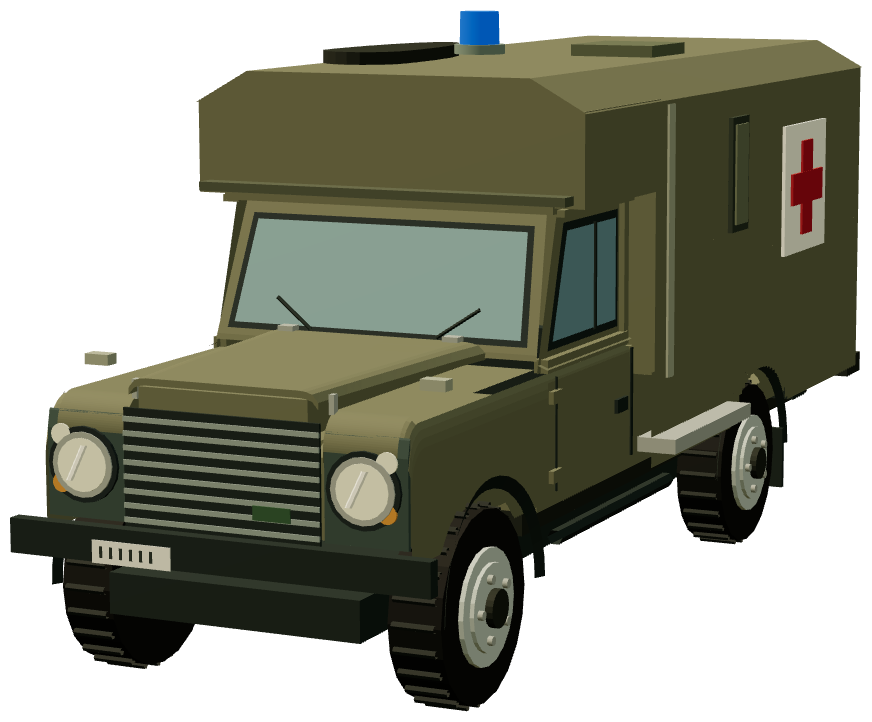
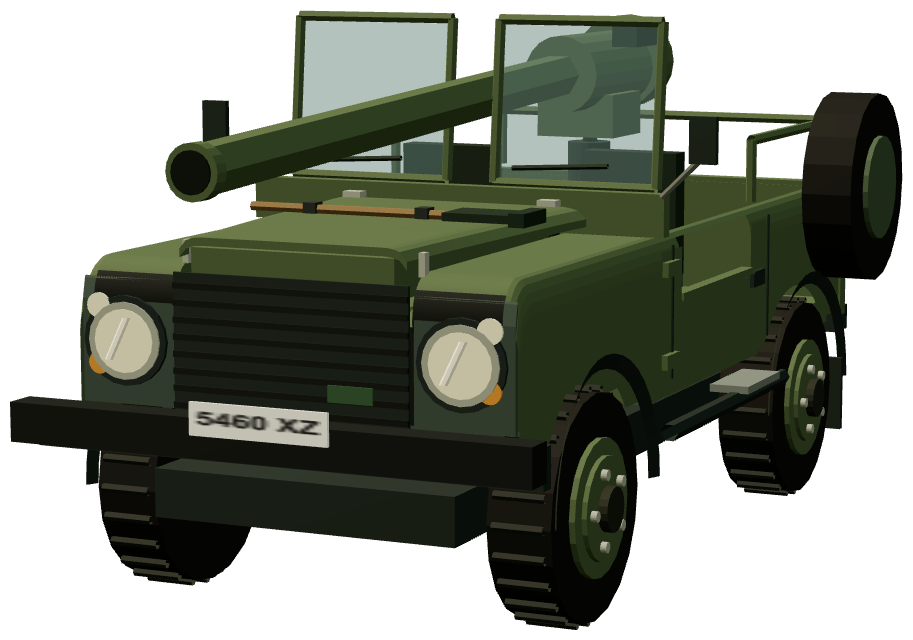
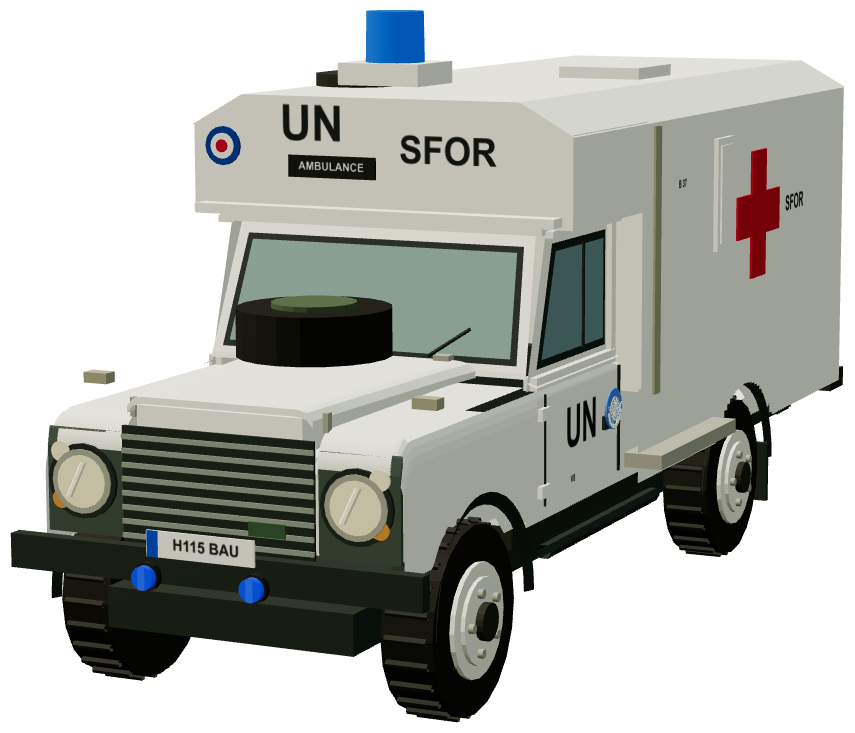
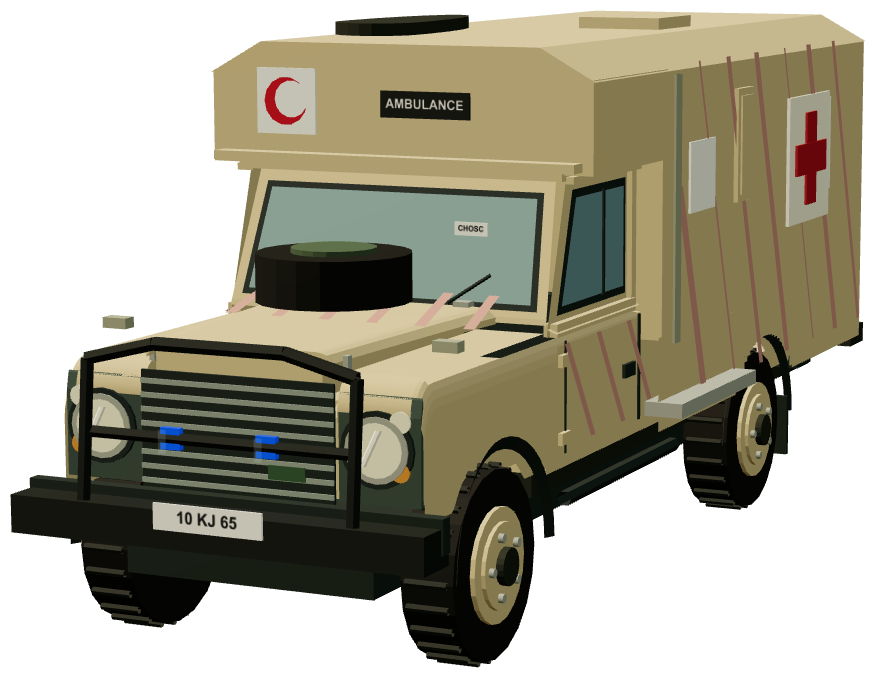
Front three-quarterRegistry renderThree-quarterRegistry renderSideRegistry renderRearRegistry renderFrontRegistry renderLand Rover 109 Series II military ambulance with Marshall-pattern raised bodyJoost J. Bakker · CC BY 2.0 ↗Preserved 1974 Land Rover 109 Series IIA field ambulanceAlfvanBeem · CC0 ↗
4Marshall ambulance family — marshal-ambulance, meteor-works, raf-marshall-rescue · HERITAGE-FLEET-REFERENCES.md
The Series IIA 109-inch Marshall ambulance body is shared by the army ambulance,
Meteor Works (Fan Favourites), and RAF Crash Rescue variants. The shared shell has
an extended rear overhang, a broad low roof with rounded eaves, high side windows,
paired rear doors, and a closed angled lower rear panel sweeping upward behind
the rear wheel. The additional `images.jpeg` rear photograph establishes the
full-width sloping panel, central folded hatch, recessed paired lamps and lower
round reflectors; no deployed horizontal step is shown. Preserve these common body features when adding further liveries.
RAF Crash Rescue uses the user-supplied TRP 291G photographs: dark blue body,
yellow roof, waist stripes and bumper, white/red medical panels, CRASH RESCUE
brow lettering, ROYAL AIR FORCE side lettering, amber roof beacon, paired blue
front lamps, aerials and an outboard searchlight. Listed under UK military and
Special Vehicles rescue/ambulance. Reference files supplied by the user:
`imagesg.jpeg`, `imagesgdsgds.jpeg`, `kkk.jpeg`, `imagesll.jpeg`,
`e6e0e10c51677d4b1471d6c1dc1de9cagdgs.jpeg`, and `imageshh.jpeg`.
The final photograph also illustrates a later Series III Marshall-bodied ex
NOTES
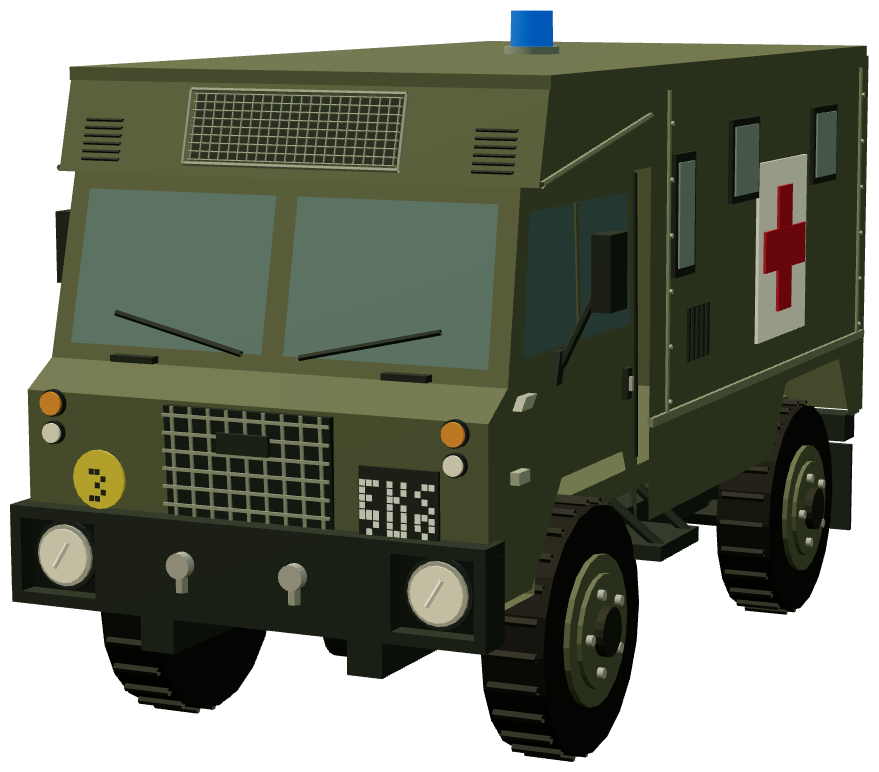
5[Production ambulance photographed by Steve Glover, 1981 vehicle](https://commons.wikimedia.org/wiki/File:Land_Rover_101_Forward_Control_Ambulance_(1981).jpg): split raked screen, separate medical body, projecting roof brow, twin corner vents, low headlamps, central grille, steps and rear doors. · MILITARY-MODEL-REFERENCES.md
- [Production ambulance photographed by Steve Glover, 1981 vehicle](https://commons.wikimedia.org/wiki/File:Land_Rover_101_Forward_Control_Ambulance_(1981).jpg): split raked screen, separate medical body, projecting roof brow, twin corner vents, low headlamps, central grille, steps and rear doors.
NOTES
6[Dunsfold Collection's prototype ambulance](https://dunsfoldcollection.co.uk/collection/101-forward-control-ambulance/): useful side/body reference; its large overhead grille differs from the production front used here. · MILITARY-MODEL-REFERENCES.md
- [Dunsfold Collection's prototype ambulance](https://dunsfoldcollection.co.uk/collection/101-forward-control-ambulance/): useful side/body reference; its large overhead grille differs from the production front used here.
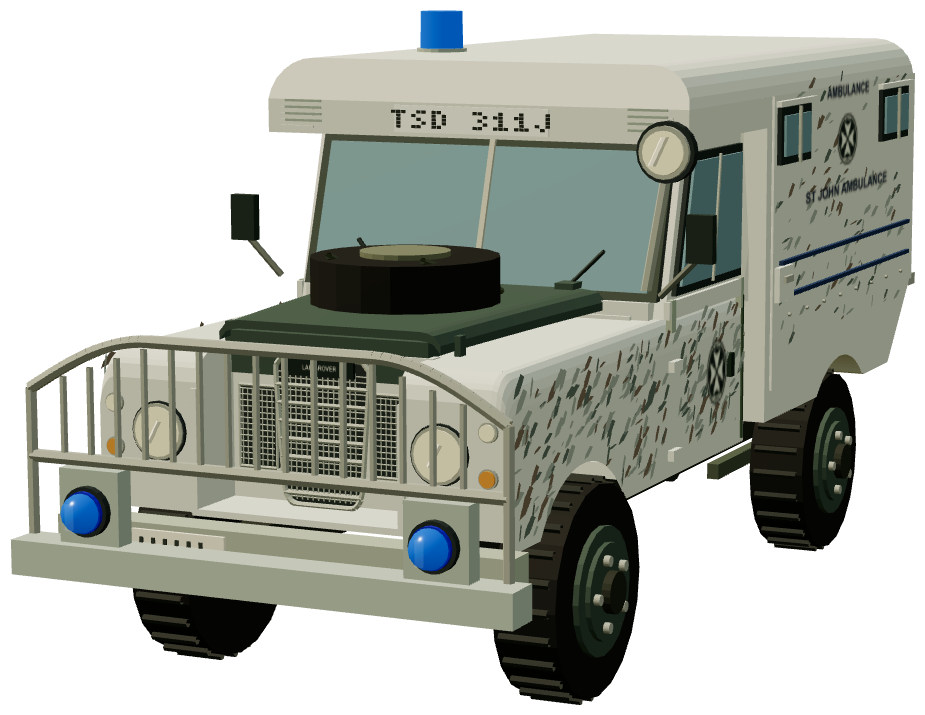 Meteor Works
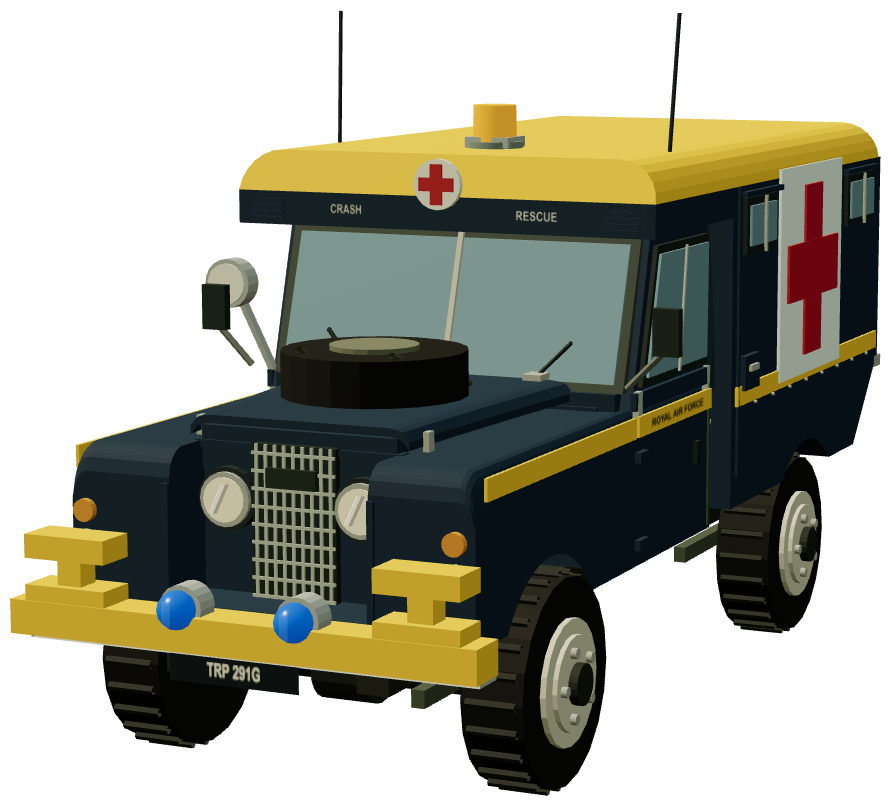 RAF Crash Rescue Marshall Ambulance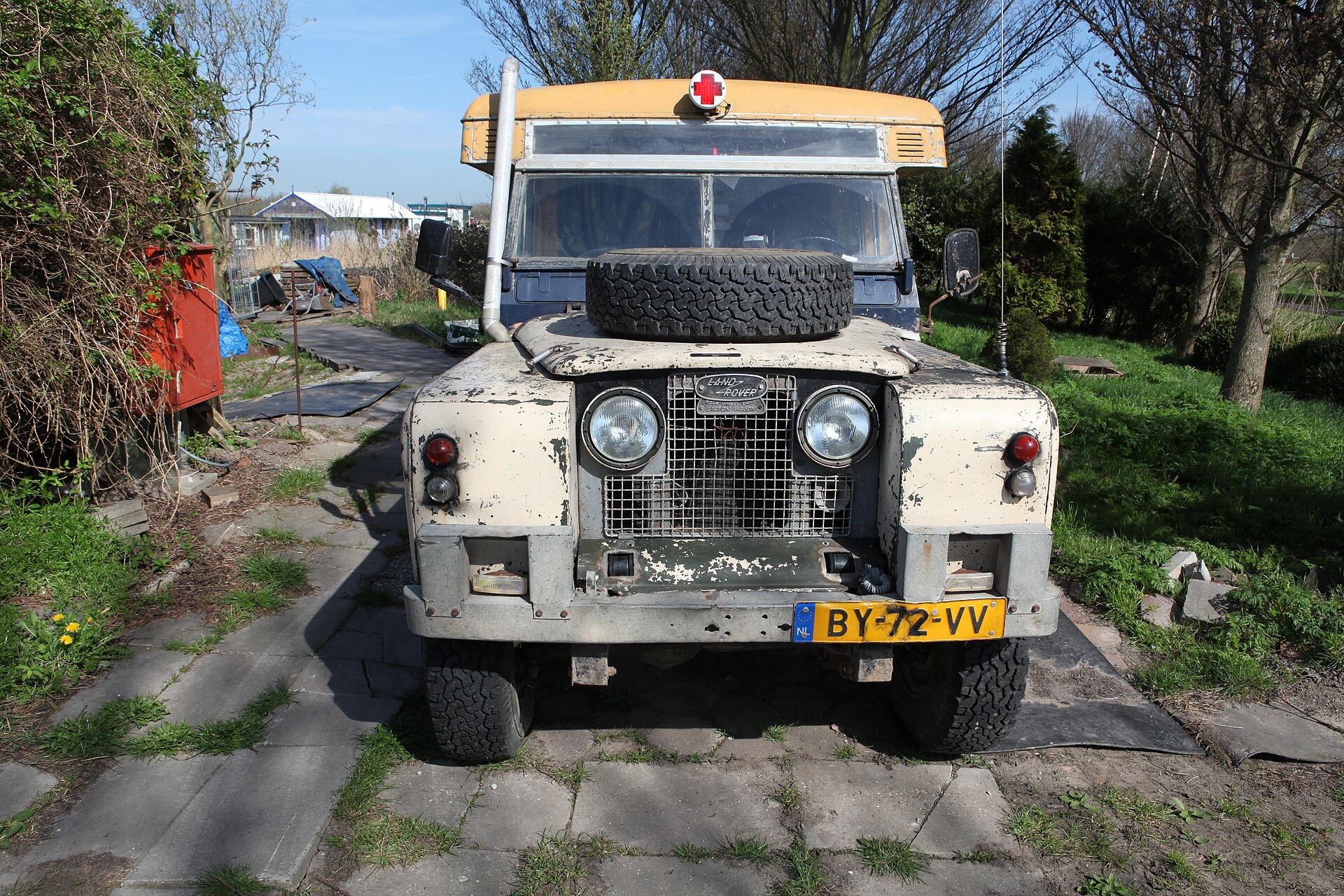

_owned_by_Chistine_Bishop.JPG)