The record
Santana Motor of Linares had been building Land Rovers under licence since 1958 and continued alone after Land Rover's withdrawal in the mid-1980s. Its last original design was the Aníbal — sold abroad as the PS-10 — begun in 1997, shown at the Madrid motor show on 23 May 2002 and built until the factory closed in February 2011. It combined the old Series-derived architecture with an Iveco 8140.43P 2,798 cc common-rail turbo-diesel of 125 CV, parabolic leaf springs, a 3,050 kg gross weight and a tonne of payload, and it was military and state orders — around 1,700 for the Spanish Army alone — that sustained production.
The Unidad Militar de Emergencias was created by agreement of the Spanish Council of Ministers on 7 October 2005, on the initiative of prime minister José Luis Rodríguez Zapatero, with its organisation and deployment fixed by Royal Decree 416/2006 of 11 April 2006. It is a permanent joint force of about 3,500 personnel within the Spanish armed forces, tasked with intervening in serious risk, catastrophe or public calamity — forest fires, floods, snow, earthquakes and chemical, biological and radiological incidents — and structured around emergency intervention battalions (BIEM) distributed across the country. Because it works alongside civil protection agencies on public roads, its vehicles wear a distinctive livery that keeps military green but adds civil-emergency high-visibility markings.
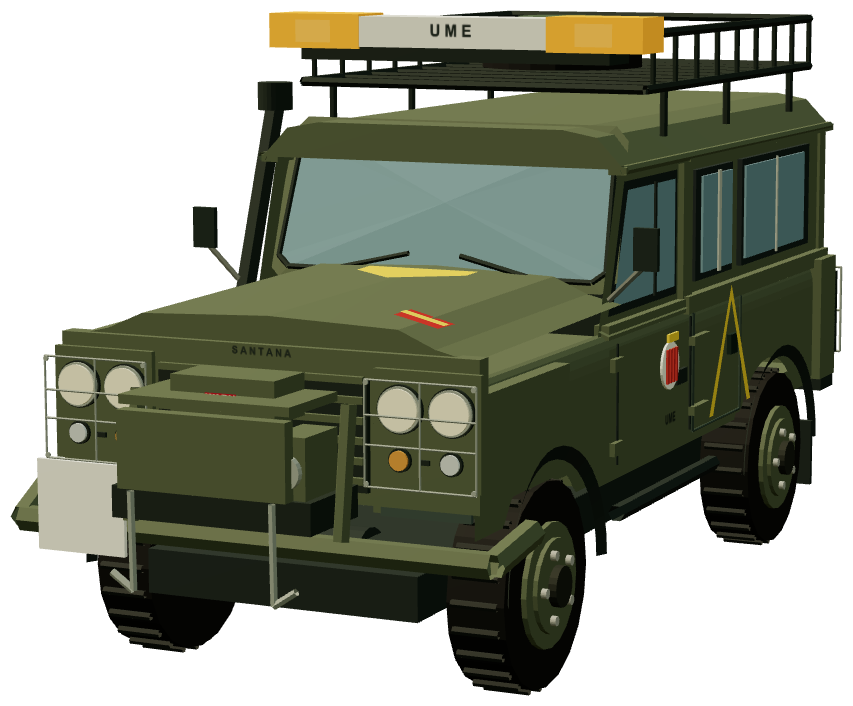
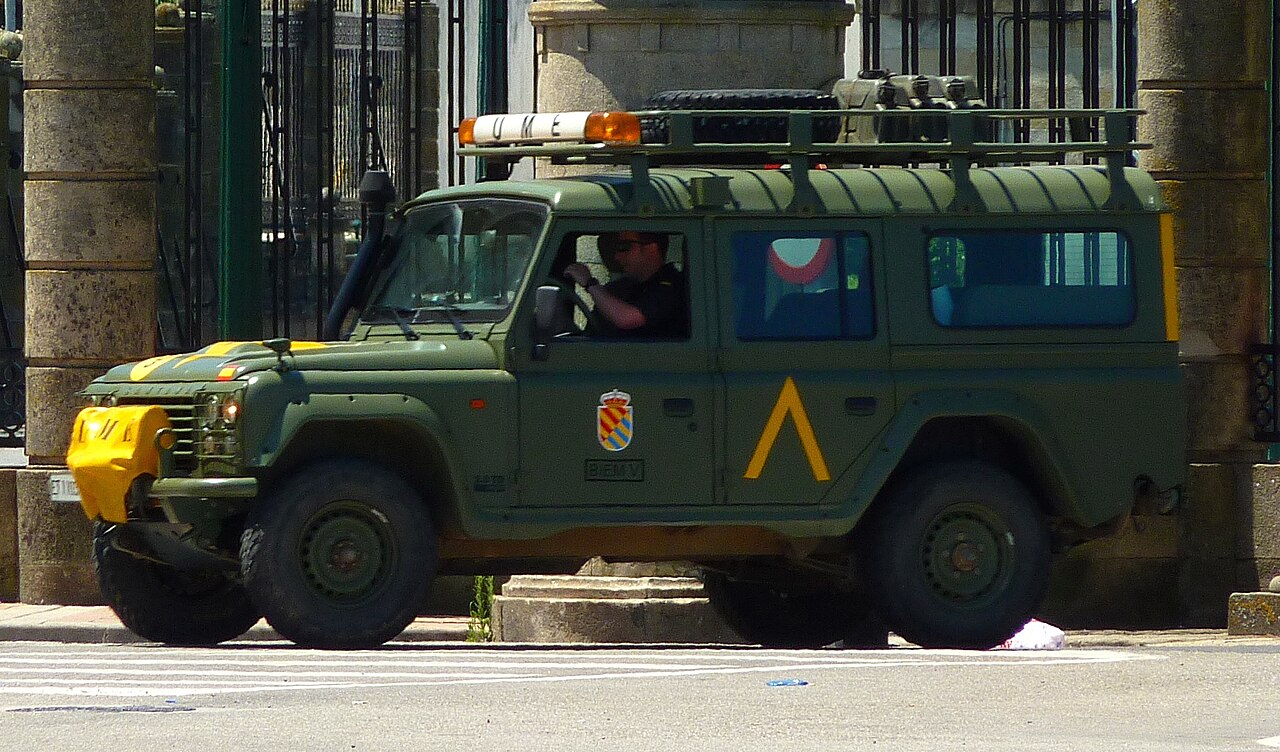
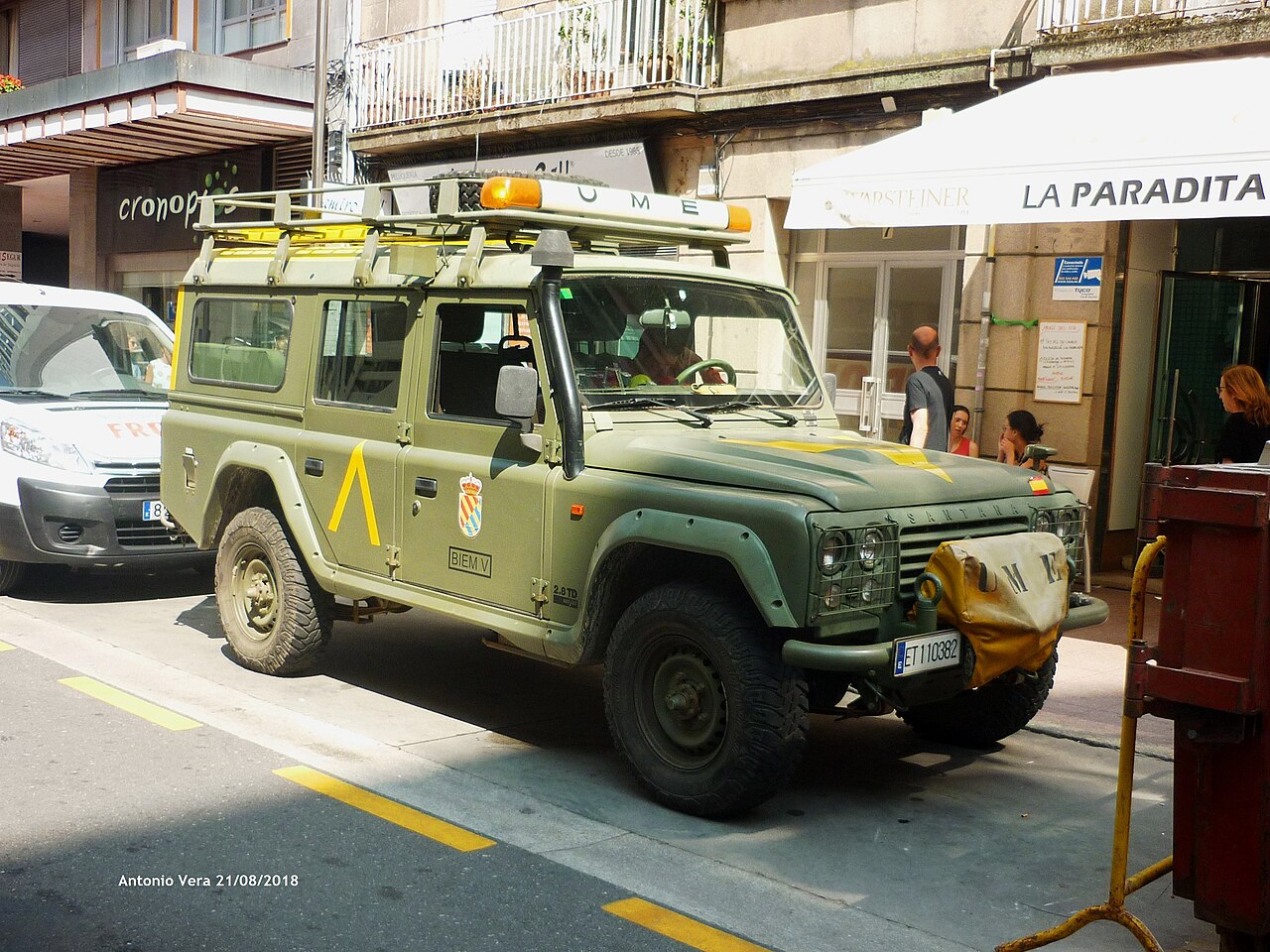
The UME took 225 Santana Aníbal Militar station wagons, issued to all of its battalions. They are standard army-pattern vehicles — tubular front bumper, lamp guards, snorkel, roof rack, ET-series registration — repainted with a yellow front bumper, yellow bonnet and body flashes and a yellow chevron on the doors, and fitted with a roof light bar carrying amber beacons and the letters UME. The example photographed here is marked for BIEM V and carries the unit's shield on the front wing. UME Aníbals have appeared throughout the unit's operations, including Operación Balmis during the COVID-19 pandemic in 2020. From 2016 the UME began replacing its Aníbals and VAMTACs for personnel transport with 292 Volkswagen Amarok pick-ups, chosen as a militarised civilian model for the savings in purchase and maintenance cost.

_-_Flickr_-_antoniovera1.jpg)