The record
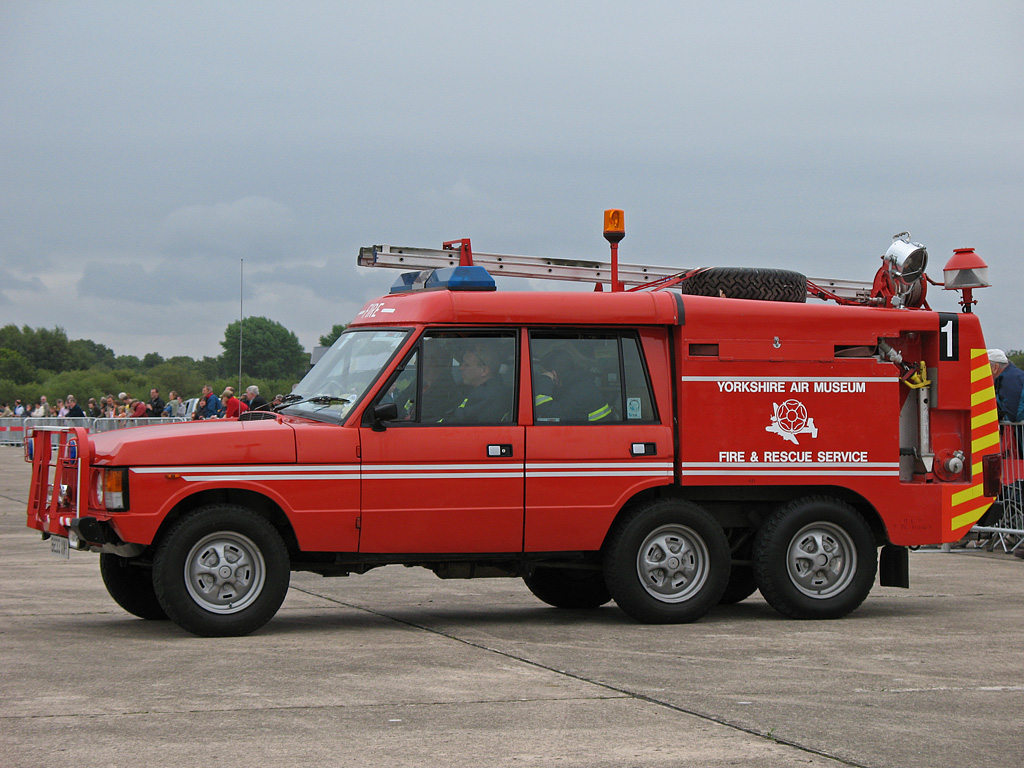
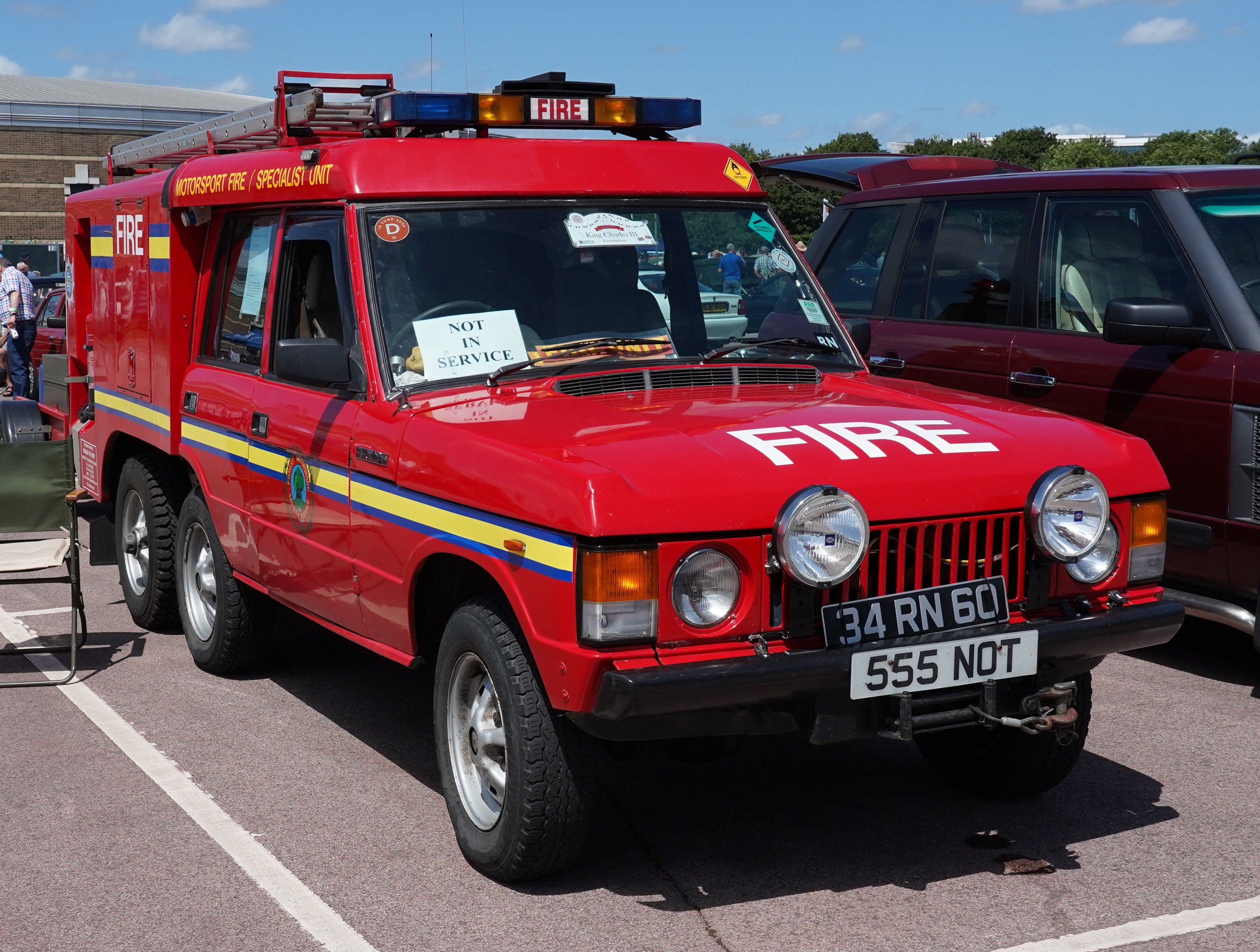
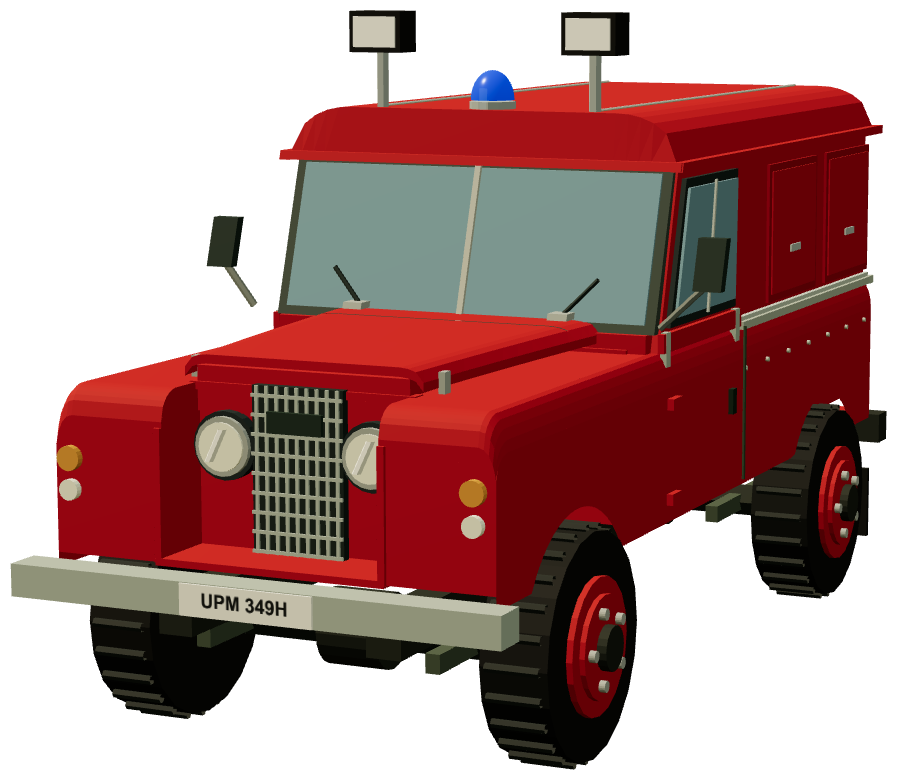
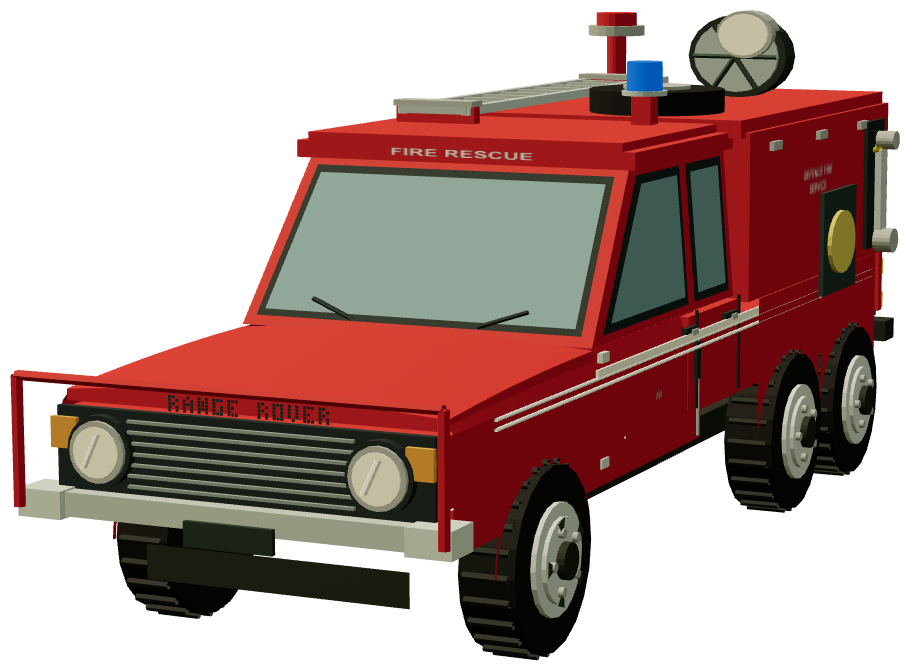
TACR2 - Truck, Fire-Fighting, Airfield Crash Rescue, 2 Tonne, 6×4, Mark 2 - replaced the Land Rover-based TACR1 as the RAF and Royal Navy Fleet Air Arm's first-response crash rescue vehicle from 1977. It used the six-wheel Range Rover conversion developed by Carmichael and Sons of Worcester in the early 1970s for their civilian Commando fire appliance: a 775 mm rear extension of the Range Rover Classic with a third, unpowered axle, making the standard vehicle a 6×4 that kept the Range Rover's permanent four-wheel drive on the front and middle axles. Designed with the Ministry of Defence as a rapid intervention vehicle, the 3.5-litre Rover V8-powered truck doubled the TACR1's capacity, carrying 200 gallons of premixed water/foam plus rescue gear for its crew, and was reputedly capable of over 120 mph on the road.
Bodies were built by Gloster Saro (the largest batch, around 46 for the RAF), by Carmichael themselves, and a smaller run of about 18 by HCB-Angus. The trucks served at RAF stations across the UK and overseas - from Kinloss and Brize Norton to Gibraltar and Ascension Island - and with the Royal Navy's air stations, wearing standard fire-service red. From the mid-1980s the updated TACR2A brought a revised front bumper and lighting and a fuel-injected V8, and this variant soldiered on into the late 1990s, including with The Queen's Flight, before larger Rapid Intervention Vehicles ended the era of the small RAF crash truck.
The registry's catalogue describes the model as a 6×6; the standard TACR2 was in fact a 6×4, though a small number of conversions are reported to have achieved drive to all six wheels. Many survive in preservation and with airfield fire services, and the type remains the best-known emergency-service use of the Range Rover Classic.