DIFFLOCKEDTHE REGISTRY NAMED MODEL · 1961–72
NAMED MODELMilitary · AustraliaAustraliaUnited Kingdom

Series IIA LRPV.

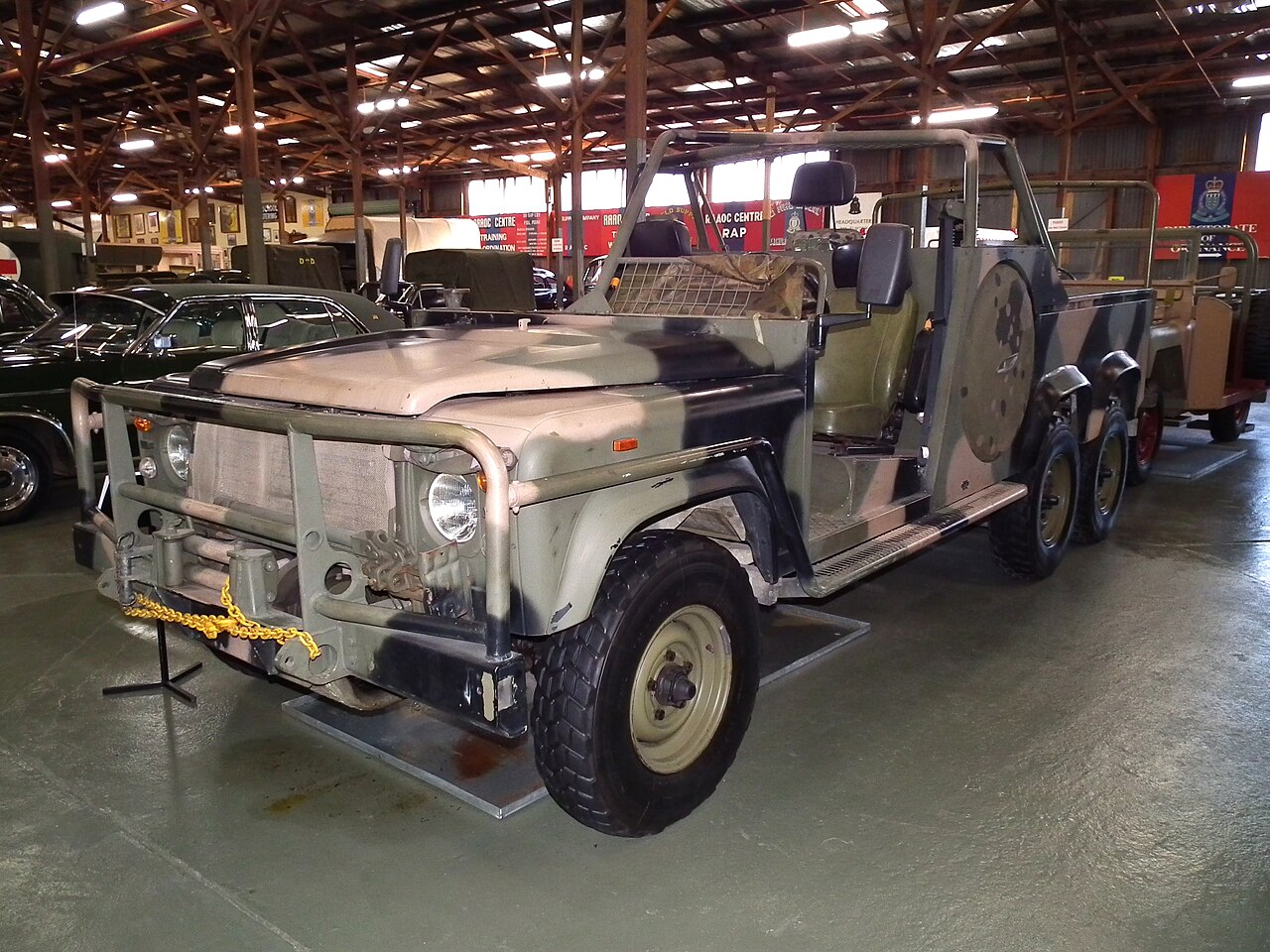
Australia's own long-range patrol Land Rover: AMF-spec Series IIA 109 General Service trucks stripped of doors, roof, windscreen and tailgate and rebuilt in Perth for the Special Air Service Regiment, carrying 360 litres of fuel, 160 litres of water and a bonnet- or tail-mounted machine gun. In service from about 1973 until the Perentie 6×6 LRPV replaced them, they were catalogued under census code 6028K — 'Truck, Utility, 3/4 Ton, GS, Cargo, Modified for SASR Use'.

Drive it in the gameSources & evidence
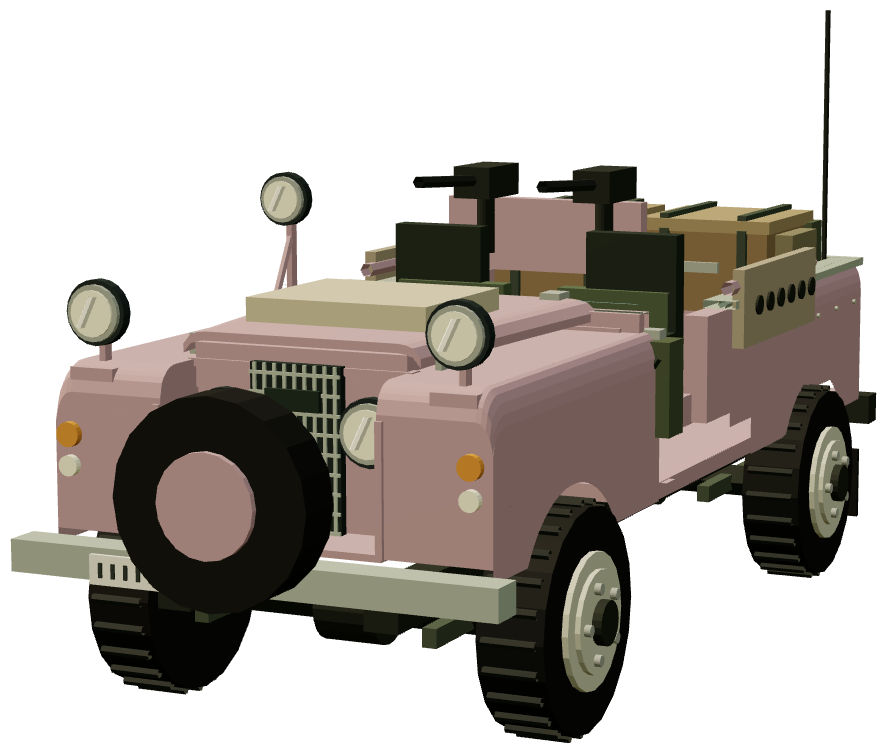
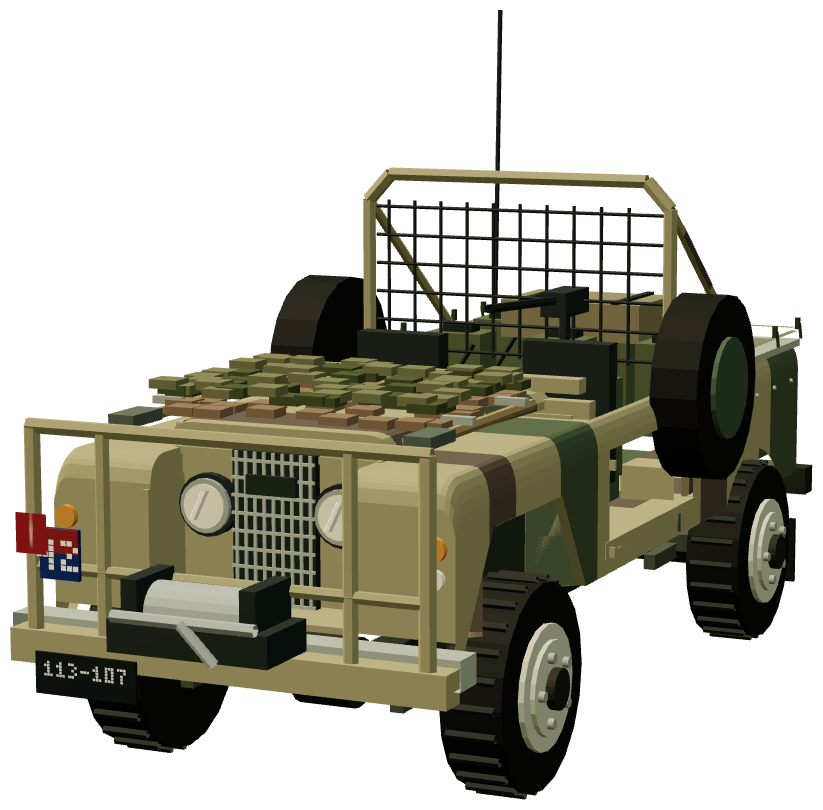
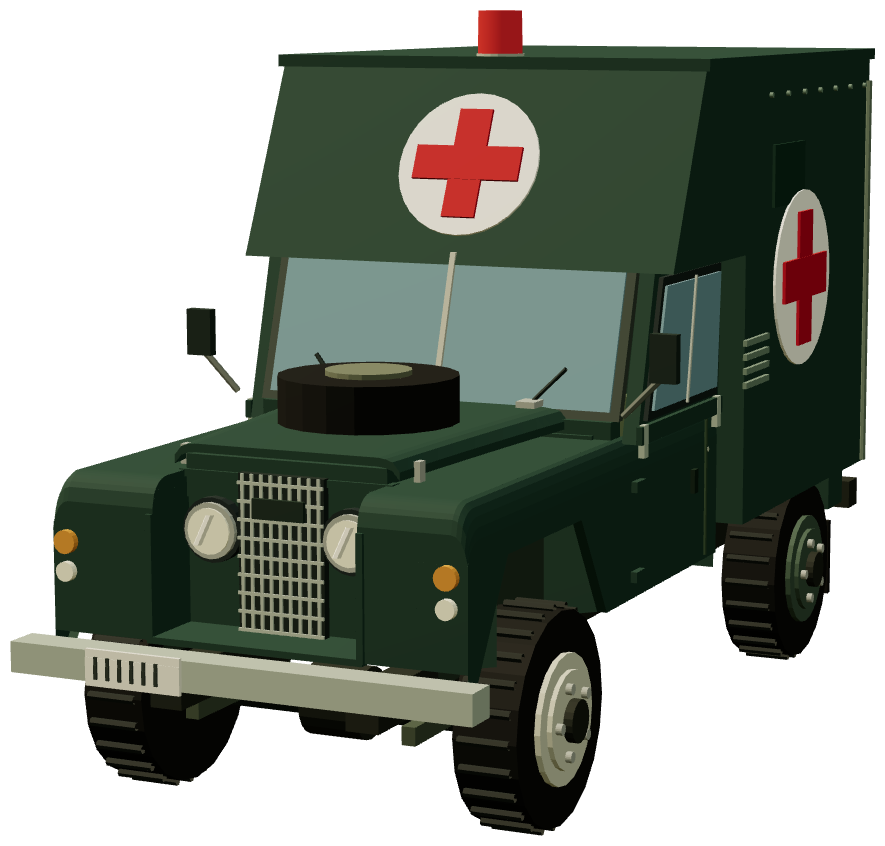
Series IIA LRPV — front three-quarter render
BASE VEHICLESeries II 109″CONVERTERState EngineeringIN SERVICE1961–72OPERATED INAustraliaPRODUCTIONUnresolved: REMLR's ARN register lists 41 vehicles under census 6028K, while REMLR's narrative gives 20, 26 and 37 as competing figuresLAYOUT4 wheels · 109″

The record

The Australian Special Air Service Regiment, based at Swanbourne in Western Australia, needed a vehicle that could cross the continent's interior without resupply. From the early 1970s it got one by taking the Army's standard Series IIA 109-inch General Service truck and having it rebuilt to regimental specification by a Perth contractor — State Engineering, according to a 1978 Overlander magazine feature reproduced by REMLR. The Army gave the result its own census code, 6028K, 'Truck, Utility, 3/4 Ton, GS, Cargo, Modified for SASR Use'; the regiment called it the Long Range Patrol Vehicle, and REMLR records them at work by 1973.

The conversion was subtractive before it was additive. Doors, tailgate, windscreen, hood, canopy and mirrors all came off, leaving the seat backs as the highest point on the vehicle; a roll bar was added later for crew protection. Onto that went two oversize spares on the bull bar, jerrycan racks that required the front chassis rails to be lengthened and the bar moved forward some 400 mm, rifle carriers along the front mudguards, sump and steering guards, and side plates cut from wartime pierced steel planking. Three extra fuel tanks — one behind each standard tank and one under a false floor in the rear — took capacity to about 360 litres for a road range beyond 1,500 km, and five more jerrycans behind the seats brought water to roughly 160 litres. A PTO winch went on the front and a pack carrier on the tail. The main armament was a machine gun on a bonnet mount (M60) or a rear pedestal (.30 calibre), with astro-navigation gear, a solar battery charger, an AN/PRC-77 for vehicle-to-vehicle work and a long-range set for base carried in the back. Mechanically almost nothing changed: the 2.25-litre petrol four, gearbox and axles stayed standard, and the whole job was described at the time as costing about $15,000 per vehicle. Notably the regiment never moved to the six-cylinder Series 3 that entered Army service from 1977, staying instead with the older, simpler Series IIA.

The registry holds two neighbouring records that this one sits between. The British Army's Series IIA 'Pink Panther' (see `sas-pink`) was a contemporary of the same idea executed differently — 72 vehicles converted in one batch by Marshall of Cambridge to a Ministry of Defence contract, and painted pink for desert work. The Australian cars were not a factory batch at all: they were existing fleet trucks of varying ages sent for conversion in ones and twos, and REMLR's LRPV narrative states the type was 'modelled on the British SAS Pink Panther'. At the other end, the Perentie 6×6 LRPV (see `lrpv`) is this vehicle's direct replacement — a purpose-built, turbo-diesel, three-axle machine of which 27 were made, and the vehicle most people now mean when they say 'LRPV'.

How many Series IIA LRPVs existed is genuinely unsettled. REMLR's page on the type offers 'perhaps only 26... perhaps 37' before adding that 'the latest information indicates that only 20 were made', while REMLR's own ARN register lists 41 vehicles carrying census code 6028K, several of them flagged only as 'possibly LRPV conv.' Those 41 donors were built between 1961 and 1972, overwhelmingly in 1970–71, and several had earlier lives as winch trucks, command reconnaissance cars and in one case a wrecker before conversion. No authoritative published total exists, and the registry does not pick one.

Paint followed Australian Army practice rather than the British pink. Donors delivered before April 1967 left the factory in gloss Deep Bronze Green; from April 1967 the fleet colour became lustreless Australian Olive Drab, which is what most LRPVs wore. REMLR's paint notes record that unit-level camouflage experiments in the 1980s appeared first on Armoured and Infantry Corps vehicles — heavy weapons platoon gunbuggies and the SAS LRPVs among them — in schemes that 'were not uniform and reflected unit level preferences', before the three-colour Auscam pattern of olive drab, tan and black became the official fleet scheme. The Series IIA cars were gone by the time the 6×6s arrived in full Auscam. Two REMLR members in Western Australia own preserved examples, and ARN 172-436 is held by the Army Museum Bandiana.
Specification

MANUFACTURERLand Rover (Rover Company) — AMF-specification Series IIA 109 General Service trucks
MODIFIER / COACHBUILDERState Engineering ↗
Western Australia (to SASR specification)
MANUFACTUREDDonor Series IIA 109s of 1961–1972 (mostly 1970–71); converted for SASR use from the early 1970s, at work by 1973
ENGINE2.25 L petrol inline-four, unmodified (the six-cylinder Series 3 was never used as an LRPV base)
PRODUCTION RUNUnresolved: REMLR's ARN register lists 41 vehicles under census 6028K, while REMLR's narrative gives 20, 26 and 37 as competing figures — no authoritative total is published
COUNTRY OF ORIGINAustralia / United Kingdom
OPERATED INAustralia
STATUSretired from SASR service and replaced by the Perentie 6×6 LRPV; a handful preserved privately in Western Australia and at the Army Museum Bandiana
CENSUS CODE6028K — Truck, Utility, 3/4 Ton, GS, Cargo, Modified for SASR Use
CREWthree
FUEL CAPACITY≈360 L (two standard tanks of ≈100 L plus three auxiliary tanks)
WATER CAPACITY≈160 L in jerrycans, front and behind the seats
RANGEover 1,500 km on road; consumption 12 mpg on road falling to 4–6 mpg cross-country
ARMAMENTM60 7.62 mm on a bonnet mount or .30 calibre on a rear pedestal; crew rifles in mudguard carriers
PROTECTIONpierced steel planking side plates, steering and sump guards, roll bar (later addition)
EQUIPMENTfront PTO winch, rear pack carrier, astro-navigation gear, solar battery charger, AN/PRC-77 and long-range HF radios
CONVERSION COSTabout A$15,000 per vehicle (1978 report)
RECORD KINDNamed model
MODEL LINESeries IIA
WHEELS4
NOMINAL WHEELBASE109″
CATEGORYMilitary · Australia

Catalogue fields describe the vehicle's structure and body as this registry records it. They are not certified factory measurements, and no performance figures are published here.

Variants & colours

Factory colours

  • Australian Olive Drab (lustreless)
  • Deep Bronze Green
  • Auscam Camouflage Tan (Brown)
  • Auscam Camouflage Black

Codes on hover. Hex values are representative approximations of period paint unless a source states a measured value.

Sources

  1. 1Series 2A Long Range Patrol Vehicle (conversion by a Perth contractor; in service by 1973; modelled on the Pink Panther; competing totals of 20/26/37; Series 3 never used; reprint of Jim McNamara, 'Australia's Forward Defence Land-Rovers', Overlander, Feb/Mar 1978 — State Engineering, fuel and water capacity, armament, PSP plating, conversion cost) ↗Registry of Ex-Military Land Rovers (REMLR) · accessed 2026-09-10SOURCE
  2. 2Census 6028K — Long Range Patrol Vehicle (LRPV) ARN register (41 listed vehicles, donor build dates 1961–1972, prior census codes, disposal and preservation notes) ↗Registry of Ex-Military Land Rovers (REMLR) · accessed 2026-09-10SOURCE
  3. 3Census Codes and ARN Notes for Land Rovers (6028K nomenclature 'Truck, Utility, 3/4 Ton, GS, Cargo, Modified for SASR Use') ↗Registry of Ex-Military Land Rovers (REMLR) · accessed 2026-09-10SOURCE
  4. 4Australian Army Vehicle Colour Schemes and Paint (Deep Bronze Green gloss to April 1967, Australian Olive Drab thereafter; 1980s unit-level camouflage first applied to gunbuggies and SAS LRPVs; Auscam three-colour scheme) ↗Registry of Ex-Military Land Rovers (REMLR) · accessed 2026-09-10SOURCE
  5. 5https://www.remlr.com/2Alrpv.htmlhttps://www.remlr.com/2Alrpv.html ↗REFERENCE

Registry record updated 2026-09-11T00:38:16.973Z · status: researched