The record
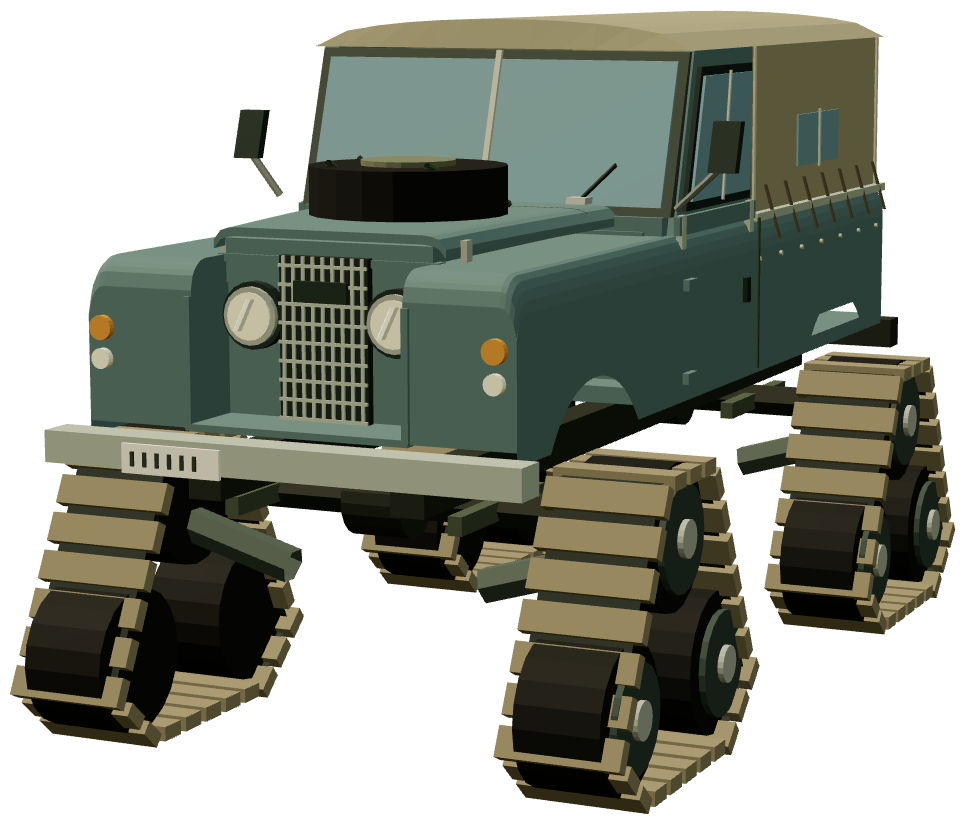
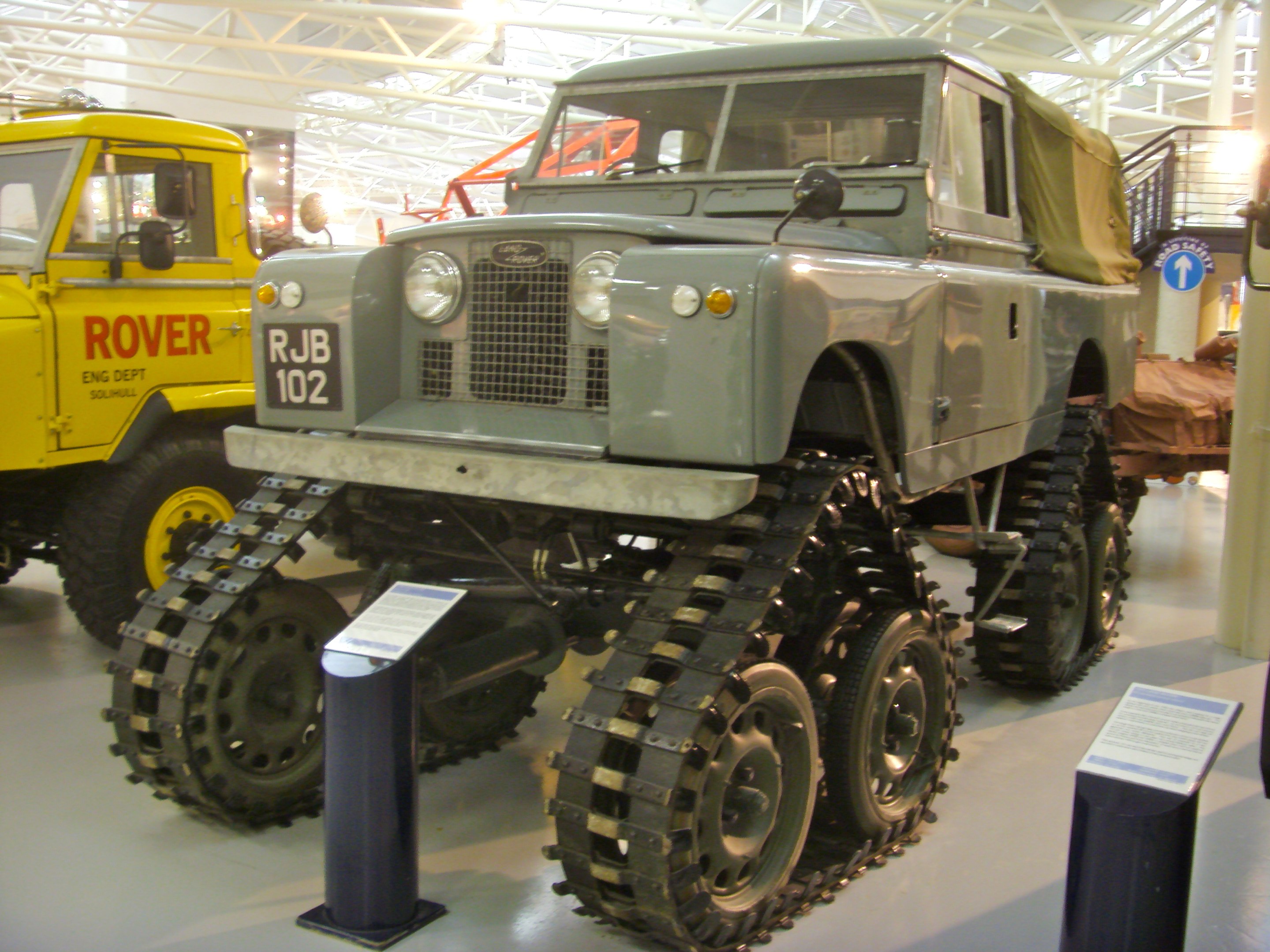
James A. Cuthbertson Ltd of Biggar, Lanarkshire - a firm founded in 1936 that pioneered rubber-tracked snow-clearing and soft-ground equipment during the Second World War - began converting Land Rovers in 1958. Rather than modify the vehicle itself, Cuthbertson built a girder subframe carrying four rubber-jointed track bogies and bolted a standard Land Rover on top: the road wheels were replaced by sprockets which drove the tracks, the front bogies steered conventionally on a track-rod linkage, and an engine-driven power steering system helped the driver swing the front track units. Ground pressure fell to roughly 1.9 lb/sq in, letting the vehicle cross peat bog, tidal flats and snowfields that would swallow a wheeled Land Rover, at the cost of road speed, noise and considerable extra height.
Conversions were supplied on Series I, Series II and later Series III donors in both wheelbases, though the classic Cuthbertson is a 109-inch Series II. Customers included estates, utilities and telephone companies needing to inspect lines over soft ground, and the military, which used tracked Cuthbertsons for explosives clearance work where light footprint mattered. The exact production total is unrecorded; around 15 conversions - certainly fewer than 20 - are believed to have left the Biggar works, and only a handful survive.
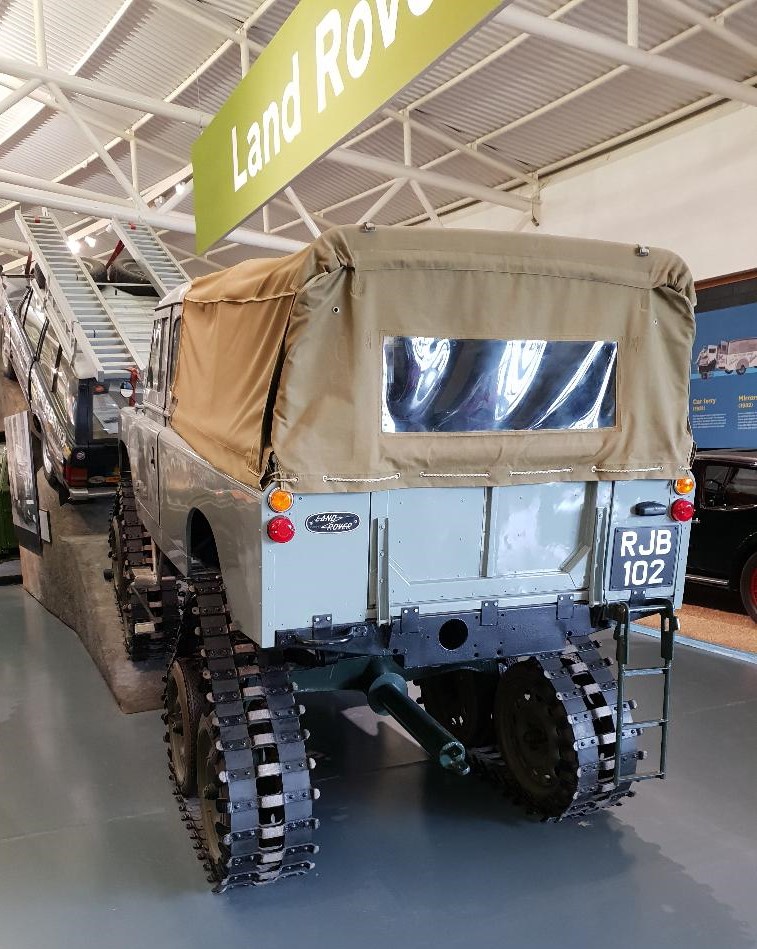
The registry's reference vehicle is RJB 102, a restored 1958 Series II 109 conversion displayed in the Land Rover collection of the British Motor Museum at Gaydon, Warwickshire. Another 1958 survivor, chassis 151900157 (registered 178 UYU, originally NHH 297), was restored around 2000, spent years in a Norwegian collection, and made £33,000 at Bonhams' Goodwood Revival sale in September 2017. The Cuthbertson company itself still trades in Biggar, building snowploughs and gritters.

.jpg)