The record
Among the many configurations of the Wolf programme, the 'Winter/Water' project answered the Royal Marines' need for vehicles that could come ashore from landing craft and then fight through a Norwegian winter. The aim was a fleet of 686 vehicles capable of wading to 1.5 metres in salt and fresh water and of operating in temperatures down to minus 46 degrees Celsius. Trials were run by ATURM, the Amphibious Trials and Training Unit Royal Marines, at Instow in Devon and in the Arctic Circle.
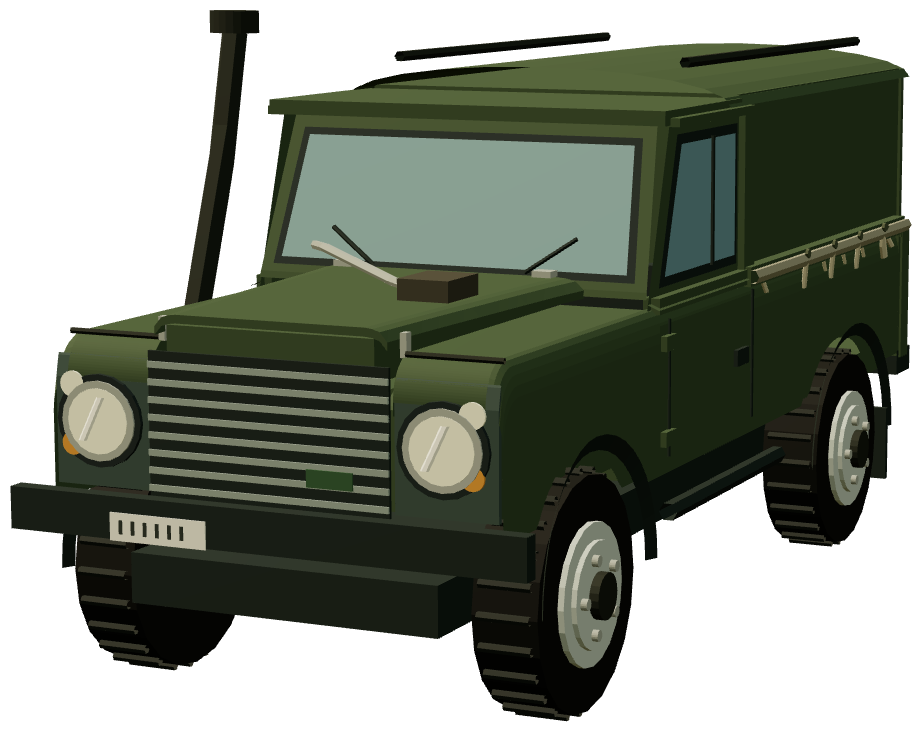
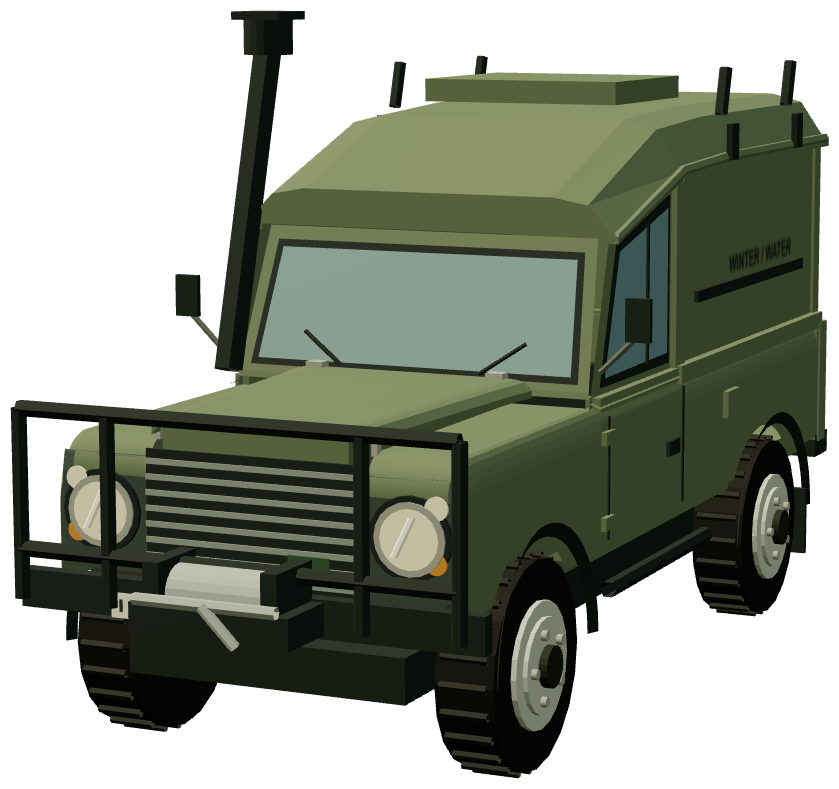
The modifications work with, rather than against, the water: the vehicle is designed to flood as it wades so that it keeps traction. A raised air intake feeds the 300 Tdi engine, transmission breathers are extended, switchgear sits in sealed compartments behind transparent covers, and a roof escape hatch is provided. Winterisation adds a fuel heater and rear-mounted radiators (heaters), while full preparation for submersion — greasing and graphite lubricant across the running gear on the deepest-wading Royal Marines vehicles — takes about an hour; so prepared, a vehicle can run briefly with virtually the entire machine submerged, snorkelling through a 'periscope' intake.
The Dunsfold Collection preserves the 1998 development prototype, R210 FRW, which Land Rover retained as an engineering reference vehicle until 2006. Production winterised/waterproofed Wolfs served with 3 Commando Brigade and the Royal Marines on amphibious shipping and Arctic deployments, and the raised-intake, hard-top silhouette became one of the most recognisable of the Wolf family.