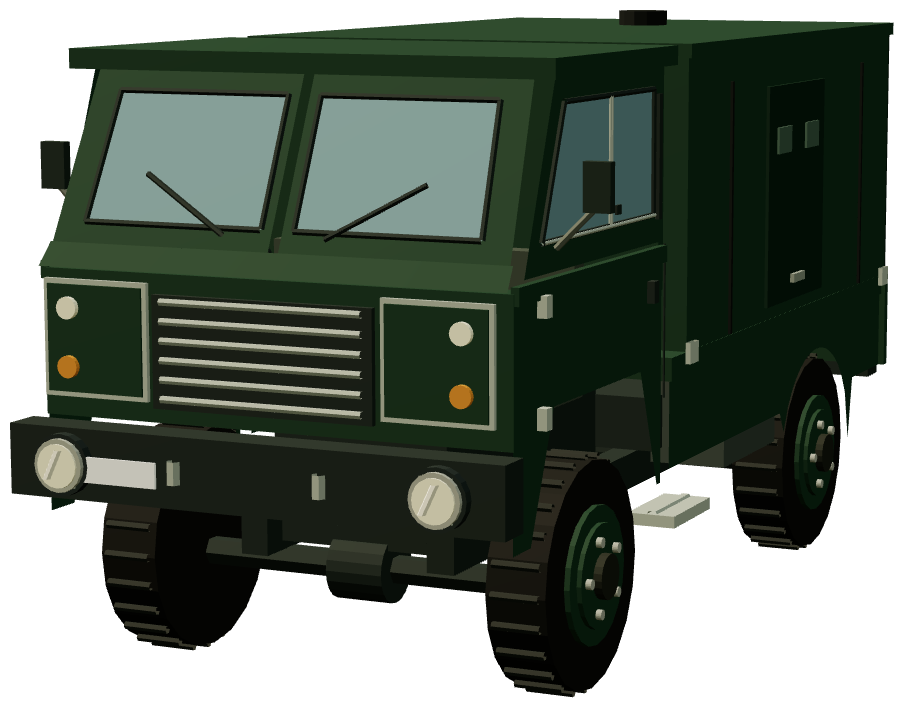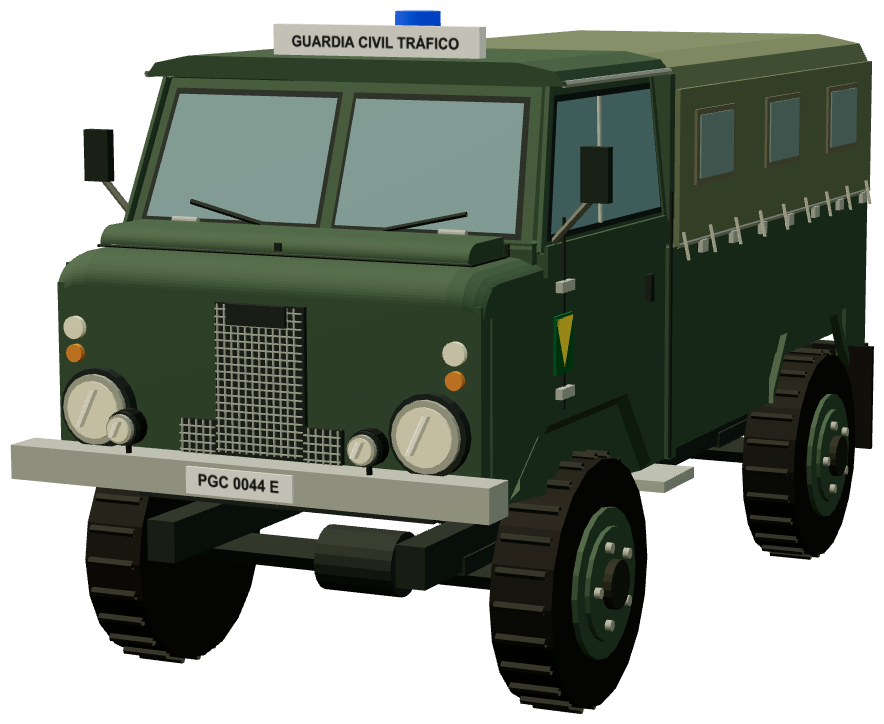
DIFFLOCKEDTHE REGISTRY NAMED MODEL · 1970–80
NAMED MODELMilitary · SpainSpain

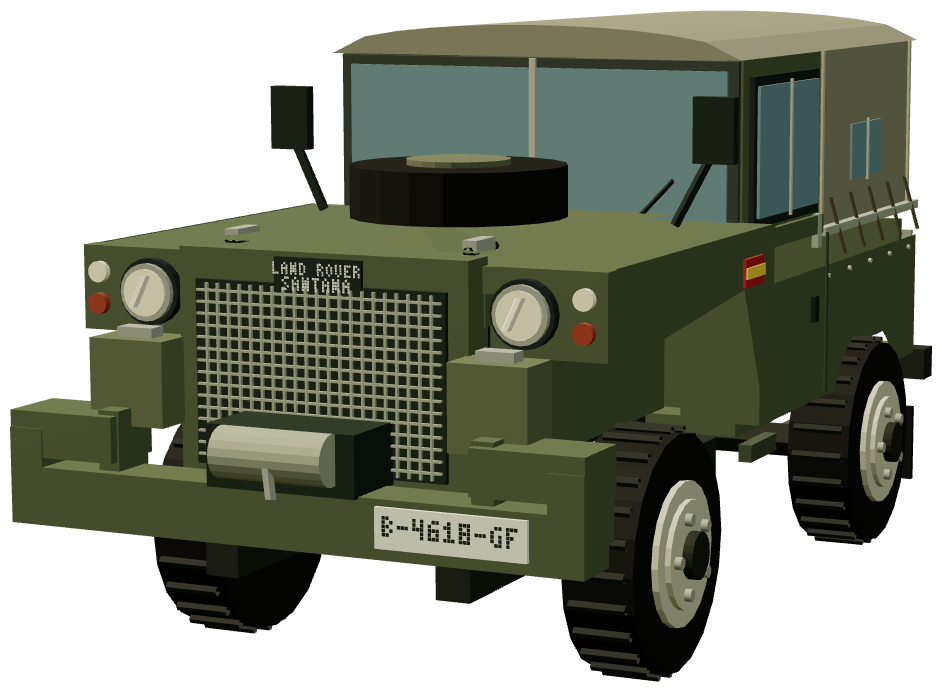
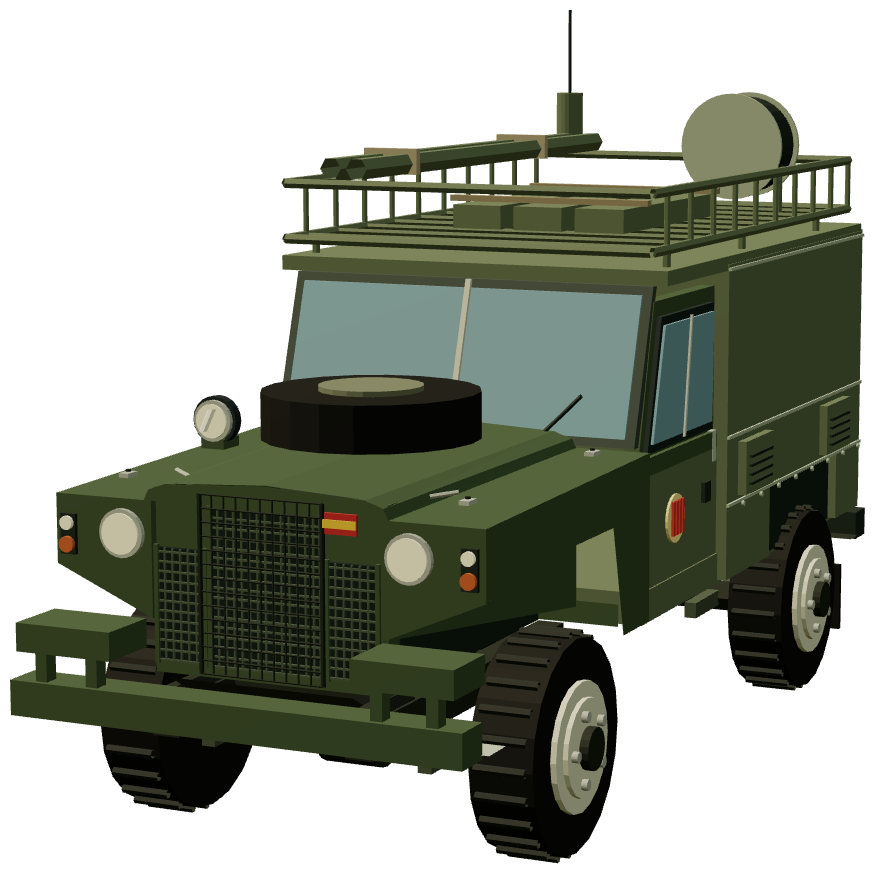
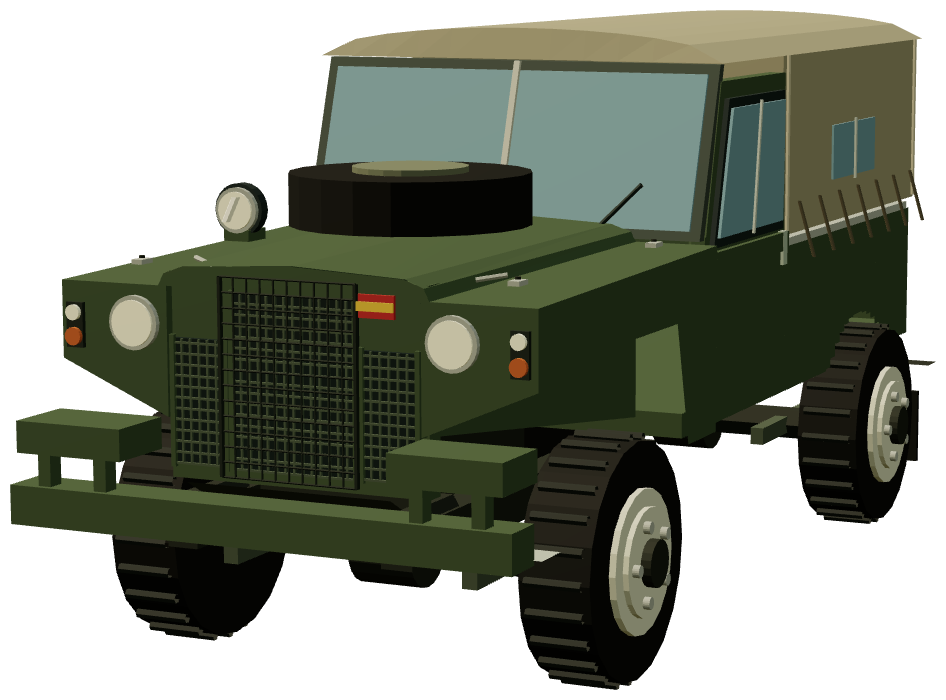
Santana 109 Mercurio.

The Mercurio was the radio station (estación radio) of the Spanish Army's Programa OLIMPO signals system, carried in the hard-topped signals body of a Santana-built Land Rover 109 — the LR-109 ETRS. The Type B version paired a 400-watt ELMER SRT-470 HF set with a 30-watt VHF radio and a Siemens T-1000 teleprinter, powered by a 3 kW generator, and worked the army's radio-teletype and command nets from 1980 into the late 1990s.

Drive it in the gameSources & evidence
Santana 109 Mercurio — front three-quarter render
BASE VEHICLESantana Series (88/109)CONVERTERSpanish Army Jefatura de Transmisiones, Santana Motor (Metalúrgica de Santa Ana)IN SERVICE1970–80OPERATED INSpainLAYOUT4 wheels

The record

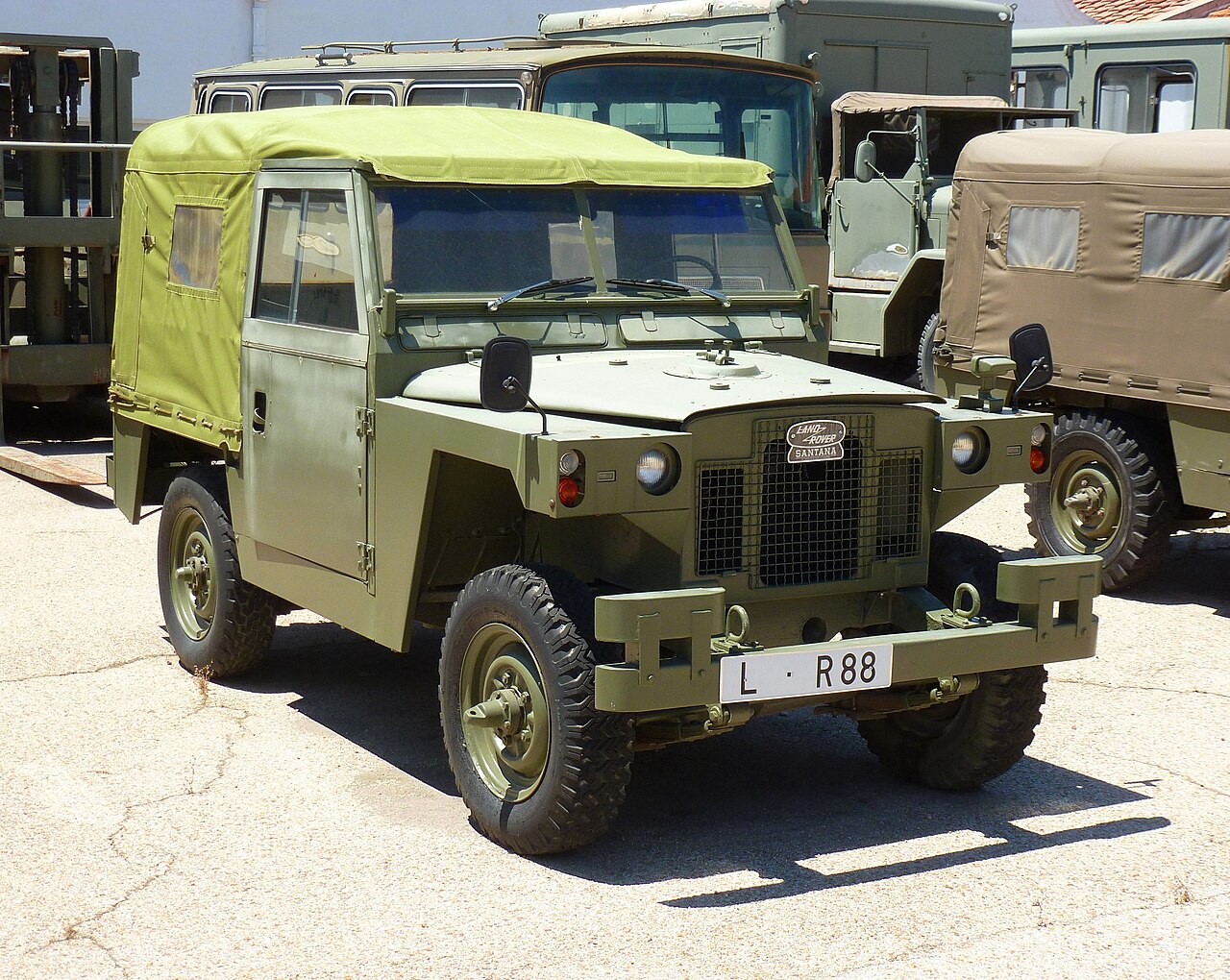
Santana Motor of Linares built Land Rovers under licence from 1958, and the Spanish armed forces were among its first and largest customers. Its 109-inch long-wheelbase military models — the 109 Militar and its signals-bodied derivative, catalogued as the LR-109 ETRS — became the standard mount for the Spanish Army's field communications equipment, fitted with a hard top, opaque curtains dividing the working compartment from the driving position, blackout curtains for night work and supplementary batteries for the radio racks.

Programme OLIMPO appeared in Spanish Army signals units in 1980 as an emergency plan. The service's first attempt at a tactical digital network, RADITE, had been under development since 1969 and was falling badly behind (it was eventually cancelled in 1991), while equipment ordered from the United States in 1977 would not be fully delivered until 1984. Rather than wait, the Jefatura de Transmisiones assembled a provisional system from equipment already in stock, standardised the layout of signal centres across the army, and mounted the resulting stations on cross-country vehicles — Land Rover 109s at first, later shelters, BMR and TOA armoured vehicles. The stations were named after gods: Hermes, Minerva, Centauro, Tritón, Plutón, Ceres and Mercurio. Intended as a stopgap, OLIMPO stayed in service for roughly two decades.

The Mercurio was the pure radio station of the set, issued to battalion command posts and to division and brigade signal centres. Two fits existed. Type A carried a 100 W RACAL Syncal HF set covering 1.66-29.999 MHz, two 30 W AN/GRC-160/30 VHF radios (30-75.95 MHz), a Marconi AN/GRA-39 VHF remote-control unit and a teleprinter. Type B replaced the HF set with a 400 W ELMER SRT-470 and carried a single VHF radio, the same remote-control unit and a Siemens T-1000 teleprinter; by the mid-1990s all Mercurios ran the ELMER. Power came from a 3 kW generator giving 220 V AC and 24 V DC plus supplementary vehicle batteries, and the crew was three — a station commander (sergeant or corporal first class), an operator's assistant and a driver-generator operator. The HF set worked the RATT radio-teletype nets for logistics and operations traffic; the VHF set handled voice on the command net, the VHF logistics net and the NBC alert net, reaching about 5 km on low power, 20 km on high power, or working remotely up to 3 km away over CBO field cable. Unusually among the OLIMPO stations, the Mercurio could operate on the move. Restored examples survive in private hands; one advertised in 2025 had been refurbished by the Spanish Army and carried a RACAL MA-445/MA-931 HF installation with a BCC 540B matching unit, a PRC-25/PRC-77 VHF rack, VIC-1 type intercom, Siemens teleprinter and TP-6N field telephone.
Specification

MANUFACTURERSantana Motor (Metalúrgica de Santa Ana) ↗
Linares (Jaén), Spain (Land Rover 109 ETRS base vehicle)
MODIFIER / COACHBUILDERSpanish Army Jefatura de Transmisiones ↗
Programa OLIMPO signals installation
MANUFACTUREDSantana 109 base vehicles of the 1970s-80s; Mercurio radio fit issued from 1980
ENGINE2,286 cc Santana inline-four (2.25-litre petrol or diesel)
COUNTRY OF ORIGINSpain
OPERATED INSpain
STATUSwithdrawn from service; a small number preserved, some restored by the Spanish Army before disposal
ROLEEstación radio (radio station), Programa OLIMPO
TYPE AFIT100 W RACAL Syncal HF (1.66-29.999 MHz), two 30 W AN/GRC-160/30 VHF (30-75.95 MHz), Marconi AN/GRA-39 remote control, Siemens T-1000 teleprinter
TYPE BFIT400 W ELMER SRT-470 HF, one 30 W AN/GRC-160/30 VHF, Marconi AN/GRA-39 remote control, Siemens T-1000 teleprinter
POWER3 kW generator (220 V AC, 24 V DC) plus supplementary vehicle batteries
CREWthree — station commander, operator's assistant, driver-generator operator
VHF RANGE~5 km low power, ~20 km high power, ~3 km remote over CBO cable
ISSUED TObattalion command posts, division zone signal centres and brigade principal signal centres
RECORD KINDNamed model
MODEL LINESantana Series (88/109)
WHEELS4
CATEGORYMilitary · Spain

Catalogue fields describe the vehicle's structure and body as this registry records it. They are not certified factory measurements, and no performance figures are published here.

Variants & colours

Factory colours

  • Spanish Army Green (caqui verdoso)
  • NATO Green (IRR)

Codes on hover. Hex values are representative approximations of period paint unless a source states a measured value.

Sources

  1. 1OLIMPO: la provisionalidad que duró dos décadas ↗Radio Militar · accessed 2026-09-10SOURCE
  2. 2Mercurio (Land Rover Mercurio 109e) ↗Land Rover Mercurio 109e (EA3WG) · accessed 2026-09-10SOURCE
  3. 3Land Rover Santana 109 MERCURIO B for sale (classified advertisement) ↗Milweb · accessed 2026-09-10SOURCE
  4. 4File:Land Rover Santana 88 Ejército español.jpg ↗Wikimedia Commons · accessed 2026-09-10SOURCE
  5. 5https://www.milweb.net/webvert/a8915/110277https://www.milweb.net/webvert/a8915/110277 ↗REFERENCE

Registry record updated 2026-09-11T00:38:16.974Z · status: researched