The record
Santana Motor built Land Rovers under licence at Linares, in the province of Jaén, from 1958, and carried on alone with the Santana 2.5 and 2500 after Land Rover withdrew in the mid-1980s. The Aníbal was its successor and Santana's last original design: a project begun in 1997 under factory director José Antonio Navarro Yagüe, approved as a scale model in January 1998, prototyped on 2500 running gear and unveiled at the Madrid motor show on 23 May 2002. Sold abroad as the PS-10 because the Hummer's maker held the 'Hannibal' trademark, it took its Spanish name from Hannibal Barca, whose wife Himilce came by tradition from Cástulo, an Iberian city inside the modern boundaries of Linares.
Under the familiar bodywork the Aníbal used the Iveco 8140.43P, a 2,798 cc turbocharged, intercooled common-rail four of 92 kW (125 CV) and 275 Nm, driving through Santana's LT85 five-speed and later a ZF five-speed and a dual-ratio transfer box, on parabolic leaf springs. Gross weight was 3,050 kg with a tonne of payload and a 100-litre tank. In July 2005 the British magazine 4x4 named it the best off-roader in the world. But civilian sales alone were never going to sustain Linares, and it was the military orders — around 1,700 for the Spanish Army, plus vehicles for France and the Czech Republic — that carried the model until the factory closed in February 2011.
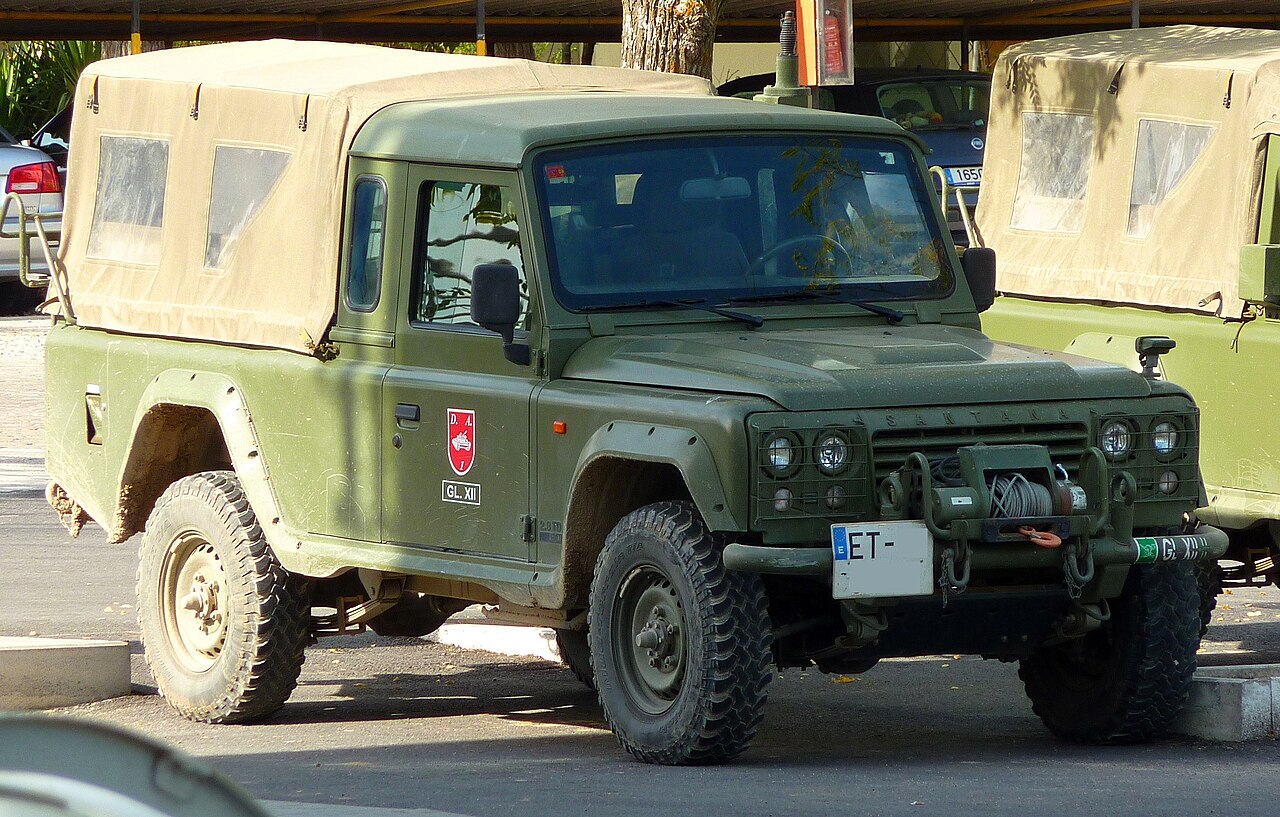
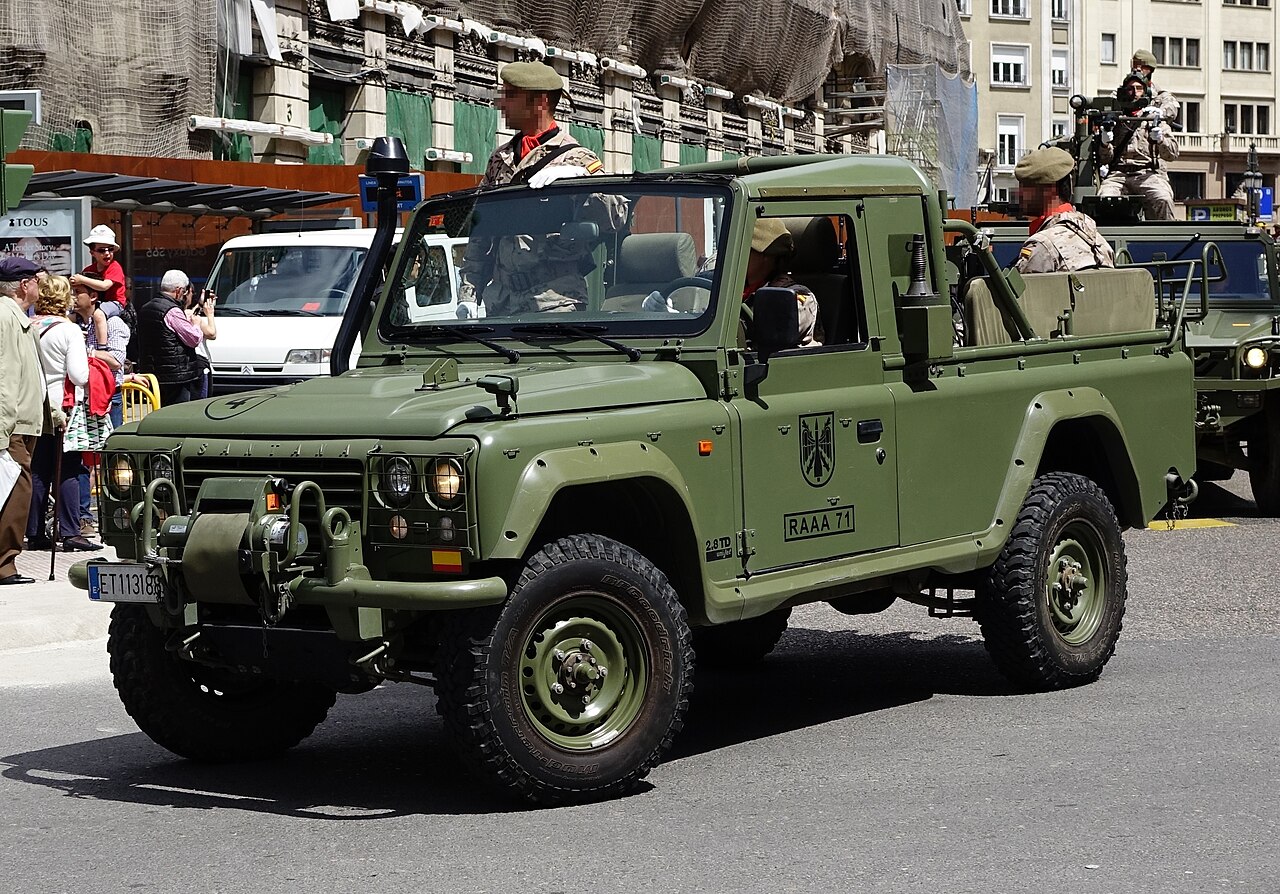
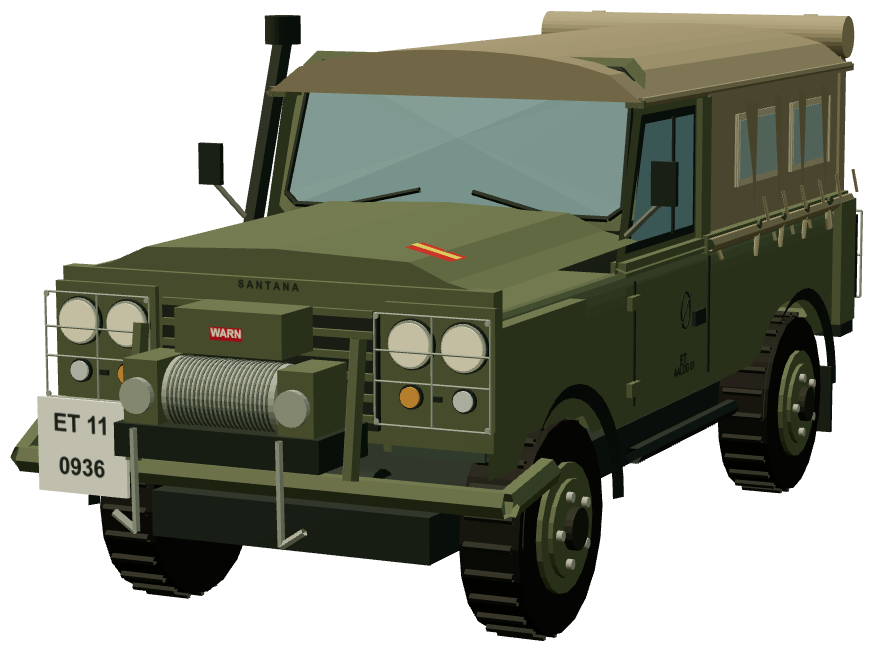
Spanish Army Aníbals come in two main body forms: a four-crew hard-topped station wagon, and this shorter-roofed version with two cab doors and a canvas tilt over the rear. The canvas body suits general cargo and troop movement, and the type is common in logistic and support units — the example photographed here wears the shield of Grupo Logístico XII. Military fittings are the same across the fleet: heavy tubular front bumper with lamp guards, self-recovery winch, snorkel, ET-series registration and the flat khaki-green of the Ejército de Tierra. A closely related open version dispenses with the tilt altogether, carrying a roll bar and inward-facing bench seats in the rear body. Aníbals have served on NATO's enhanced Forward Presence in Latvia since 2017 and on major exercises including Trident Juncture, and are now being replaced under the army's VMTT programme.