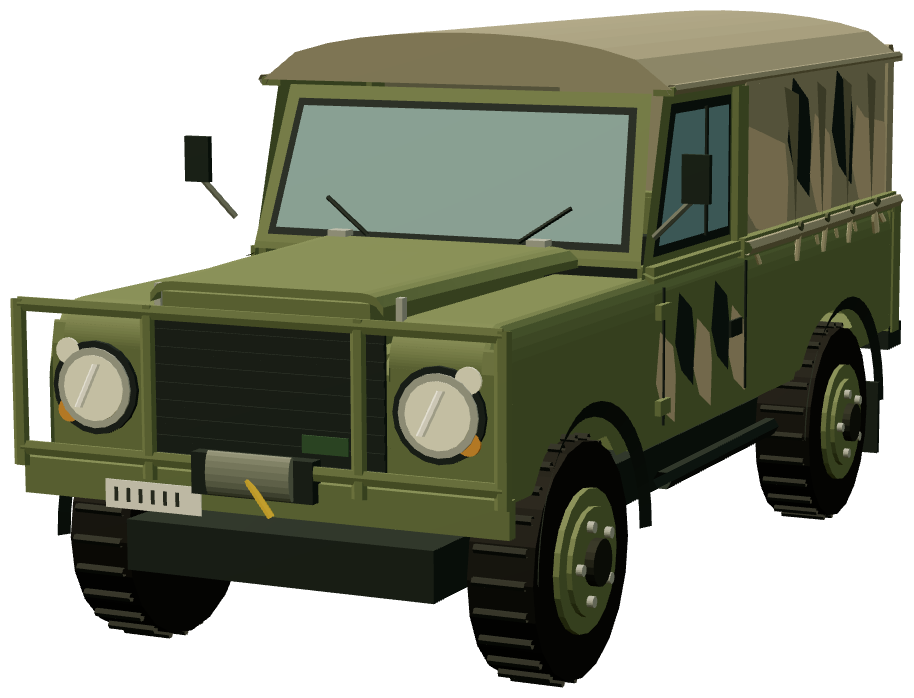
The record
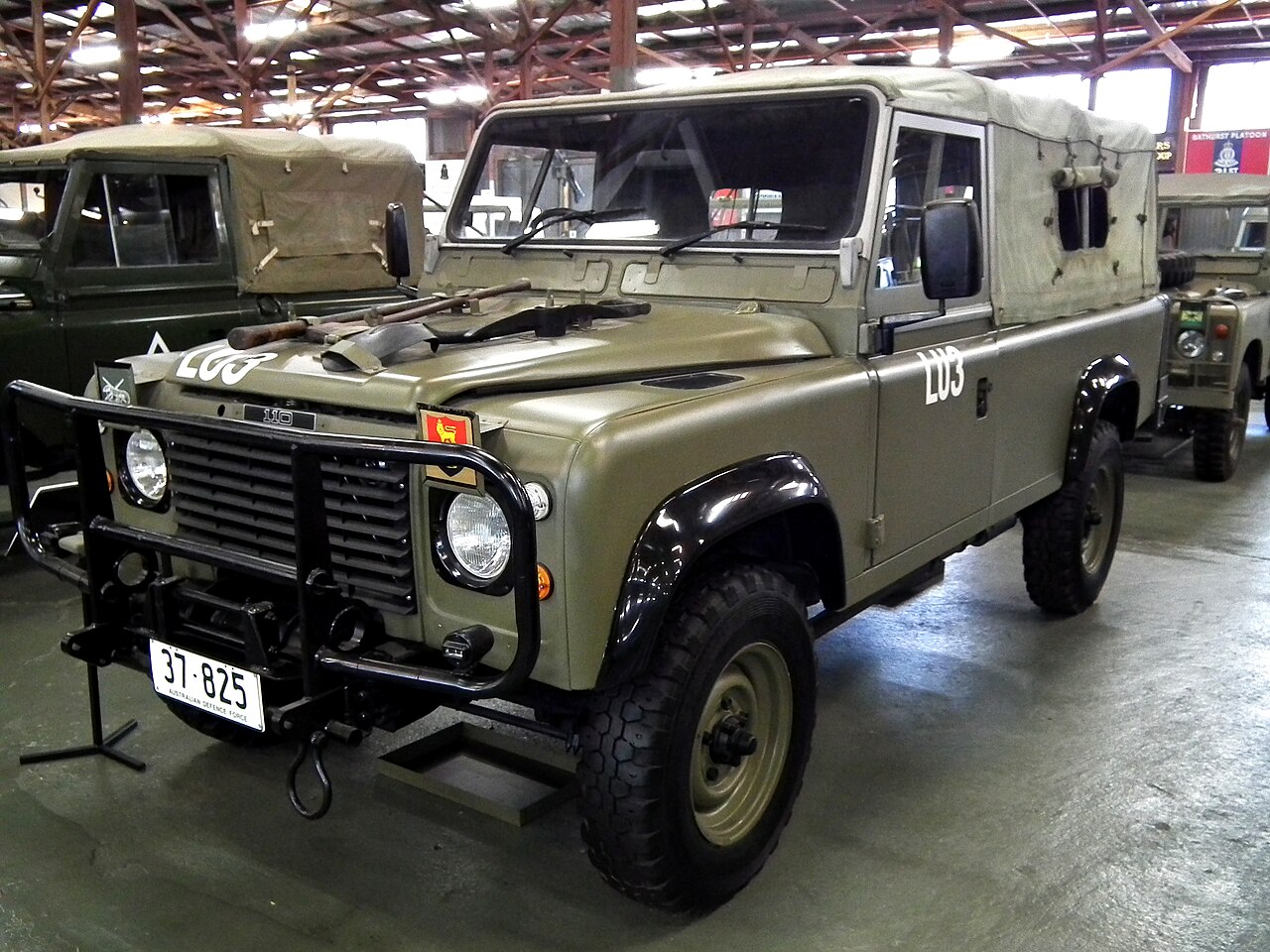
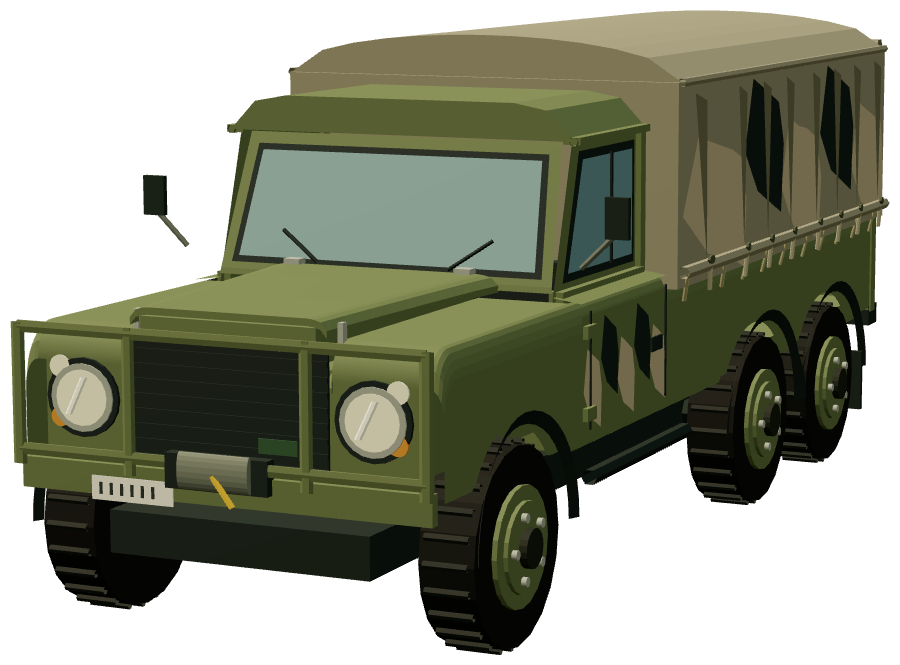
Under liability codes 72500 and 72510, the plain canvas-topped General Service utility was what most Australian soldiers meant by 'a Perentie'. REMLR describes it flatly as 'the basic version', used by the greatest variety of units in the Army and the general workhorse for most of them: 1,000 kg of cargo (900 kg once a winch was fitted), or six troops in the tray plus two in the cab, and a trailer of up to 900 kg behind.
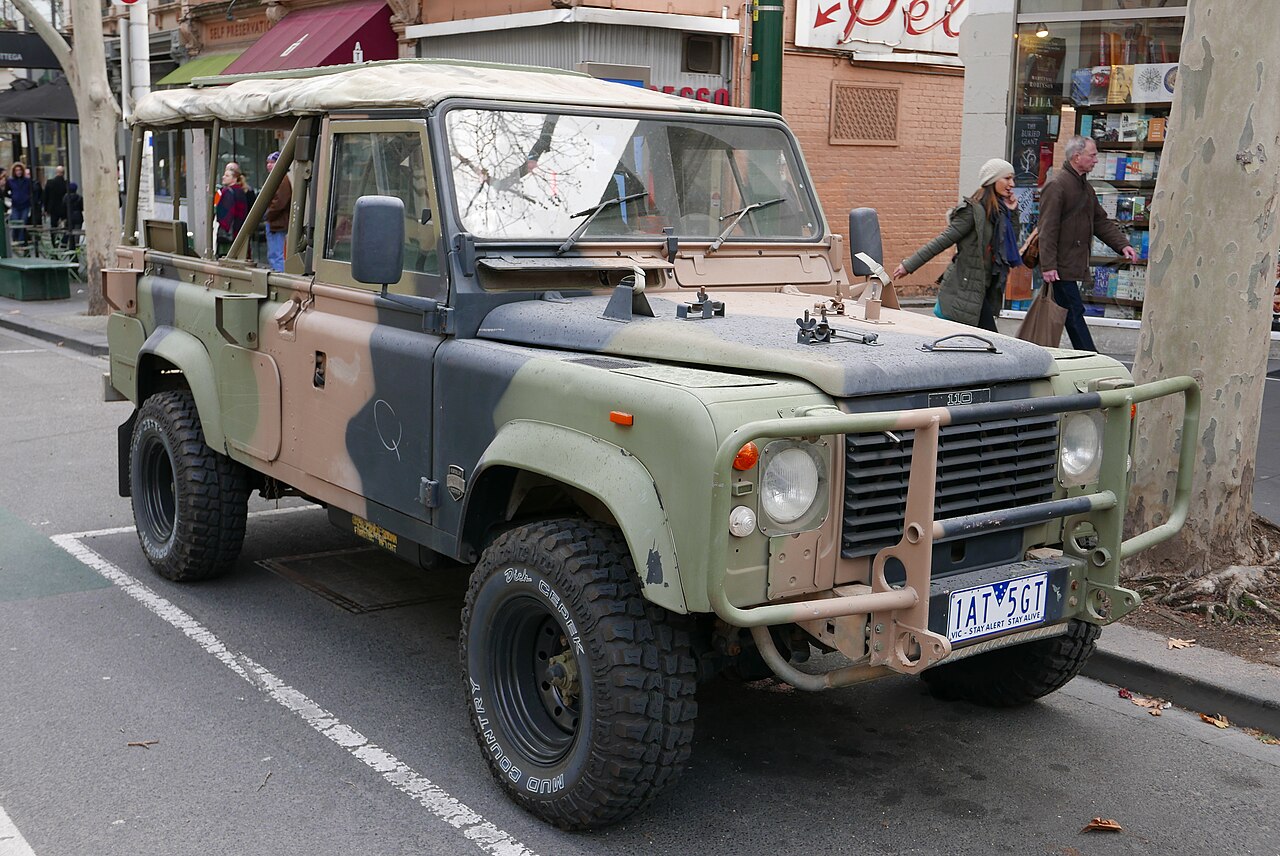
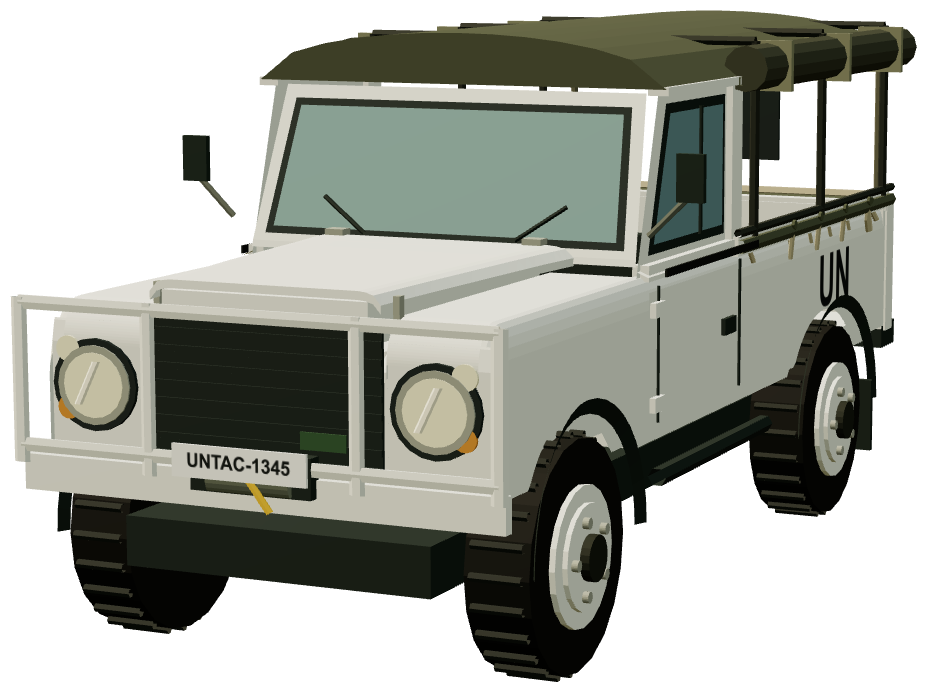
The body is the ordinary Land Rover 110 tray done to Australian military specification: drop sides, a full-height drop tailgate, five hoops and a canvas tilt with side windows. Small details separate it from its stablemates. A single rearward-facing bench seat sits at the front of the tray — the Surveillance and Reconnaissance Vehicle has two. A stowage locker let into the body side is unique to the 110 Perentie and has no Solihull equivalent, as is the rear crossmember. Externally the tray is clean: no half-height scooped tailgate, no antenna mounts through the side panels, no battery-box access doors — those belong to the Fitted For Radio version (see `perentie-ffr`). Above the cab sits a tubular rack that both carries kit and gives the crew some protection, and the vehicles rode on Olympic Steeltrek tyres with the spare stowed beneath the rear of the tray rather than on the bonnet or door.
The numbers make the point about how central this body was. Wikipedia's Perentie variant table gives 1,222 GS utilities and 314 GS with winch — 1,536 vehicles, just over half of the 3,023 4×4s built. REMLR's independently compiled ARN register lists 1,211 and 240 under the same two nomenclatures, close on the plain trucks and noticeably short on the winch version; neither figure should be treated as final, and the registry records both.
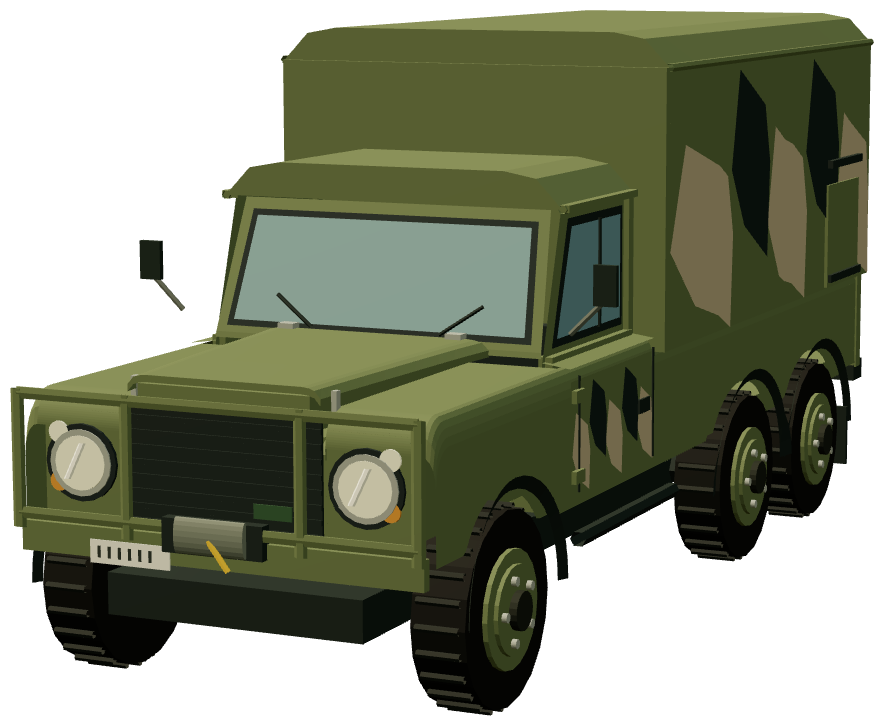
One production detail belongs to this variant more than any other. REMLR's research on the two Command Post prototypes notes that from ARN 48-008 — the first true production Perentie 110 — through to 48-033, all of them General Service vehicles, the trucks came off the Moorebank line wearing plain olive drab canopies. Only from 48-034 were disruptive-pattern canopies fitted, with the earlier ones retrofitted during service. Early canvas-bodied GS Perenties are therefore the vehicles most likely to be seen in the fleet's original all-olive-drab appearance, before Auscam became the official scheme across the whole green fleet in the 1990s.
The underlying vehicle was Project Perentie's: a hot-dip galvanised, helicopter-liftable 110 chassis built under Land Rover licence by JRA Limited at Moorebank, New South Wales, powered by a naturally aspirated Isuzu 4BD1 3.9-litre diesel. Deliveries began in August 1987 and the plant closed on 30 September 1992. Because the GS truck was the commonest type, it is also the commonest survivor: when the Mercedes-Benz G-Wagon replaced the fleet under Project Land 121 from around 2012, canvas-bodied Perentie utilities went to auction in their thousands and became the default cheap ex-military Land Rover in Australia — and, with a new tilt from one of several Australian canvas makers, the basis for a large touring and restoration scene.
.jpg)
_01.jpg)