The record
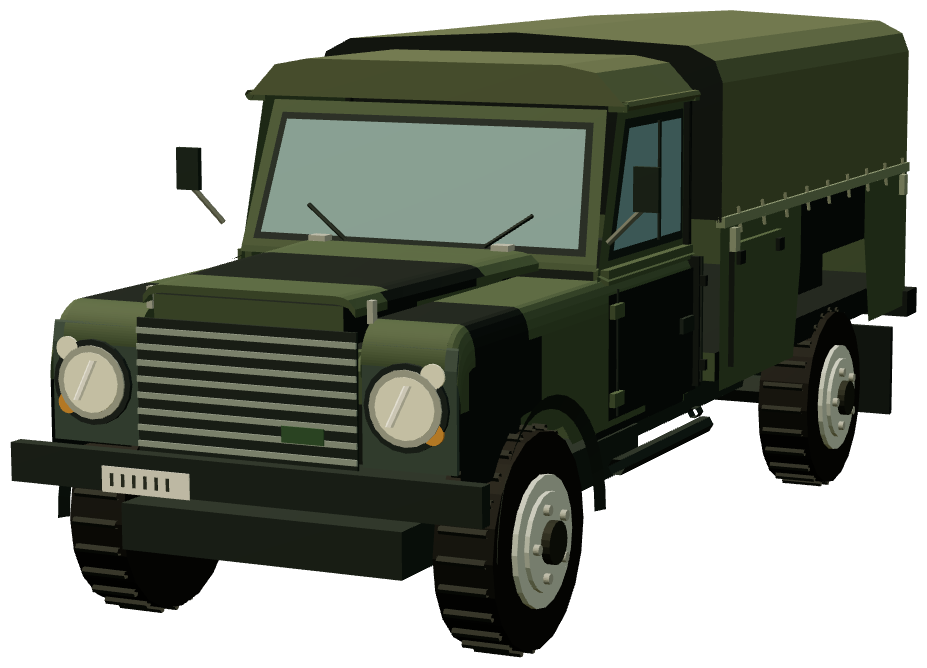
When the 101 Forward Control fleet aged out of the air defence role, the Rapier detachment moved onto the coil-sprung One Ten family. Land Rover's Special Projects Division built a fleet of 127-inch V8 vehicles for the task, the 127 being a One Ten chassis cut in two and lengthened before the halves were rejoined — a platform rated for around 1.4 tonnes of payload. In the resulting detachment the 127 carried the launching and aiming equipment while two One Tens carried the crew and the rest of the kit.
The arrangement replaced a much heavier one. Into the 1980s a Royal Artillery Rapier fire unit ran a 24-volt 101 Forward Control towing the launcher with four missiles aboard, a 109-inch FFR Land Rover towing a missile supply trailer, and — where Blindfire radar was issued — a third, winch-equipped 101 as Tracking Radar Tractor. Blindfire went to only about a third of Army fire units but to all RAF Regiment ones, so the RAF Regiment operated a larger share of the radar tractors.
Documented vehicles put the fleet into service at the turn of the 1990s. One 127 Rapier, chassis SALLDHAV7FA424884, was taken into service on 1 February 1990 at RAF Marham as 13-AY-42, is believed to have gone to the Falkland Islands in the mid-1990s, returned to RAF Brampton and was decommissioned on 20 January 2003 having covered 44,447 km. Others in the same 13-AY military registration series survive in preservation, and the Imperial War Museum holds a 127 (Rapier) in its collection.
How many were built has not been established from a published source. Disposals ran through the 2000s, and because the 127 Rapier is a soft-top V8 on a rare long chassis it has become sought after among civilian buyers — surviving examples are commonly seen on LPG conversions, as campers and as expedition vehicles.