The record
HM Coastguard has coordinated maritime search and rescue around the United Kingdom since 1822, but the people who physically go over a cliff edge or into an estuary are the Coastguard Rescue Service: today some 352 Coastguard Rescue Teams and around 3,500 volunteer Coastguard Rescue Officers stationed along the coast. A team's Land Rover is its station — everything it owns travels in the back of it.
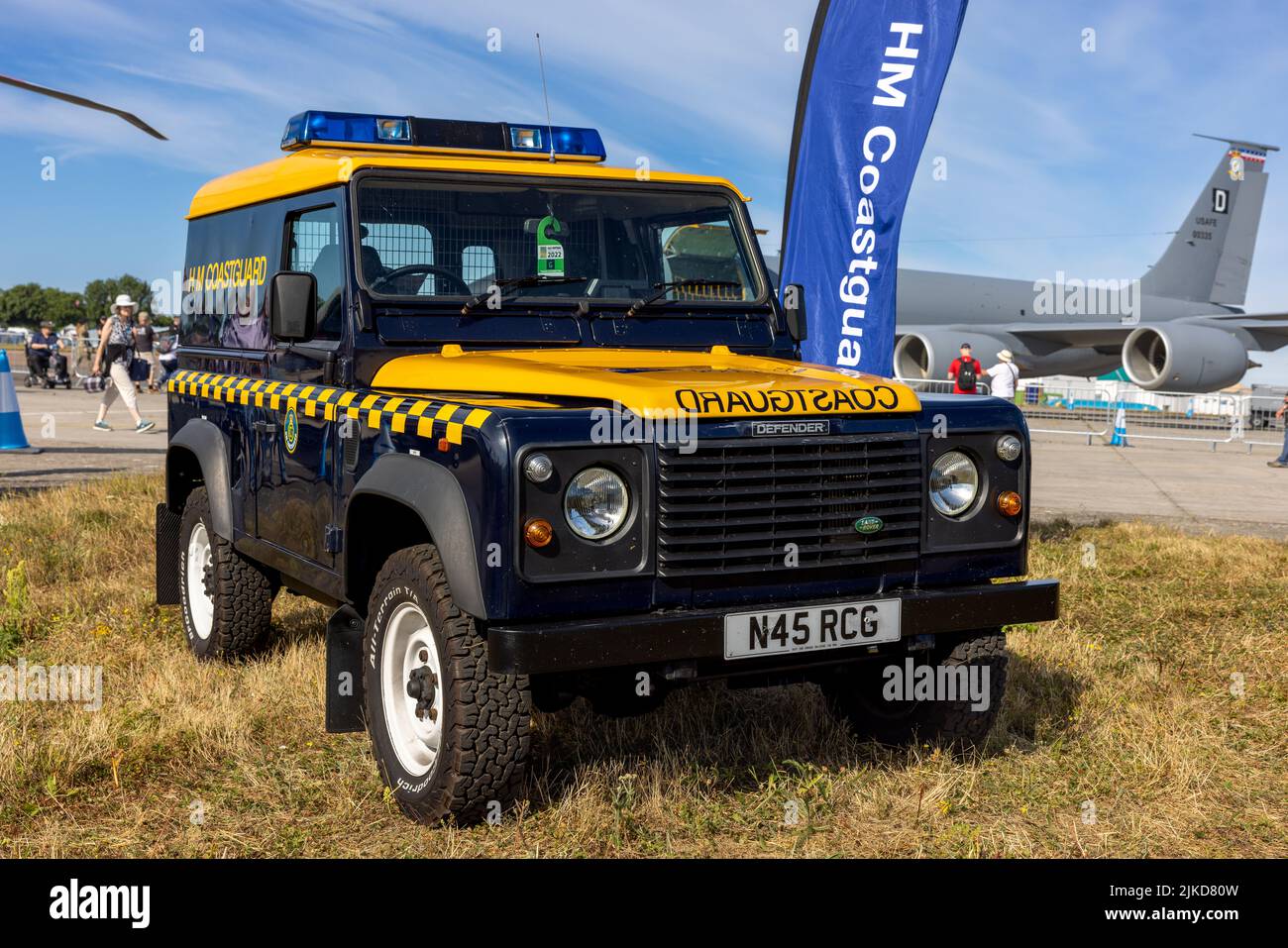
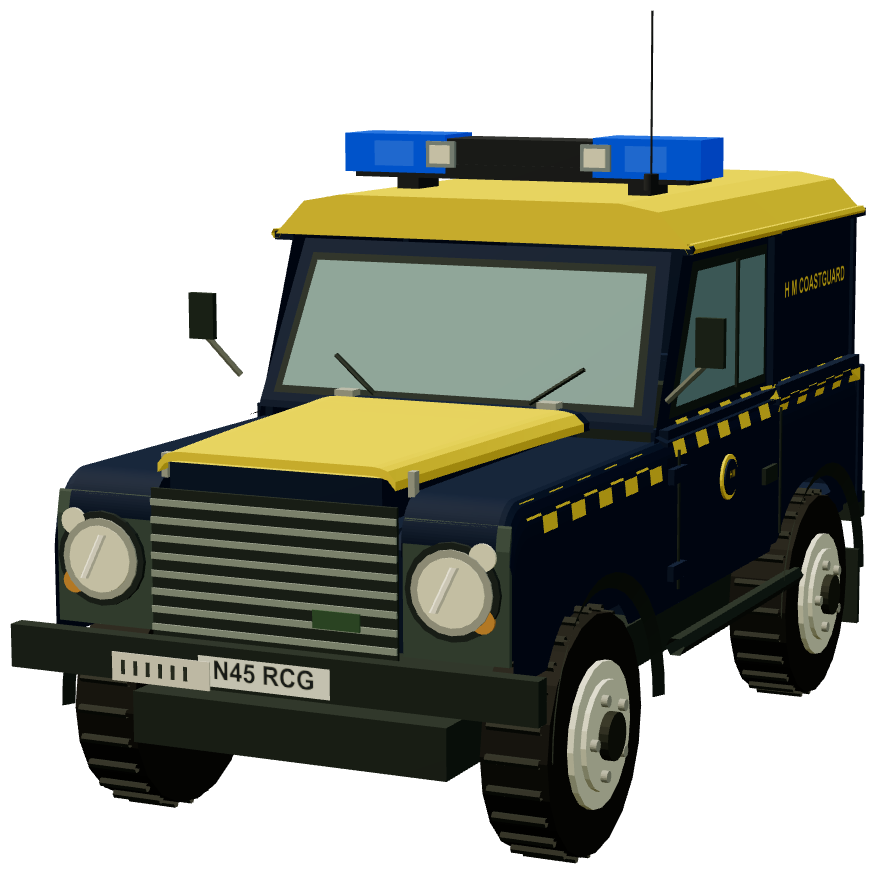
The work dictates the vehicle. Teams are tasked by the Maritime Rescue Coordination Centres to rope rescues on cliffs, mud and quicksand rescues in estuaries, water rescue and shoreline searches for missing people, in any weather and usually at the point where the metalled road stops. A hard-top Defender 90 gives a short, manoeuvrable platform for cliff-top tracks and slipways, with racking in the load space for rope, harnesses, stretchers, mud pads and lighting, a blue light bar and two-tone horns, and dash modifications for the team's radios.
A vehicle registered in 1995 was delivered to the Coastguard Agency, the executive agency then running HM Coastguard; it merged with the Marine Safety Agency on 1 April 1998 to form the Maritime and Coastguard Agency, which reports to the Secretary of State for Transport. The livery is dark navy blue with yellow markings, reflective chevrons and COASTGUARD lettering — distinct from the white-based Battenburg of the police and from the red of the fire service.
The registration on this vehicle places it in a small block of Coastguard Defender 90s issued together: N45 RCG has been photographed on static display at the Royal International Air Tattoo in 2022, and N47 RCG was photographed on patrol at Newhaven in East Sussex during high-tide flooding in January 2017. Land Rovers have since largely given way to Ford Rangers, Mitsubishi L200s and estate cars in the Coastguard fleet, but the Defender remains the shape most people picture parked at a cliff top with its blue lights turning.