The record
The Australian Military Forces chose the Land Rover as their ¼-ton light vehicle after the 1958 'Project V50' comparative trials, in which the first Series 2 ever seen in Australia — chassis 142800001, rushed off the Solihull line and shipped to the Army Design Establishment near Melbourne — beat the Jeep CJ-3, Willys M38A1, Austin Gypsy and a local Freighters design. Contract 104337 followed in November 1958, and the first CKD Series 2 88″ short-wheelbase units, all dated 16 December 1958 and assembled from RHD kits by Pressed Metal Corporation at Enfield in Sydney, were in service early in 1959. REMLR's Army registration records count roughly 1,221 short-wheelbase 88s among 1,841 Series 2 Land Rovers enlisted in total — the SWB fleet actually outnumbering the better-known 109s.
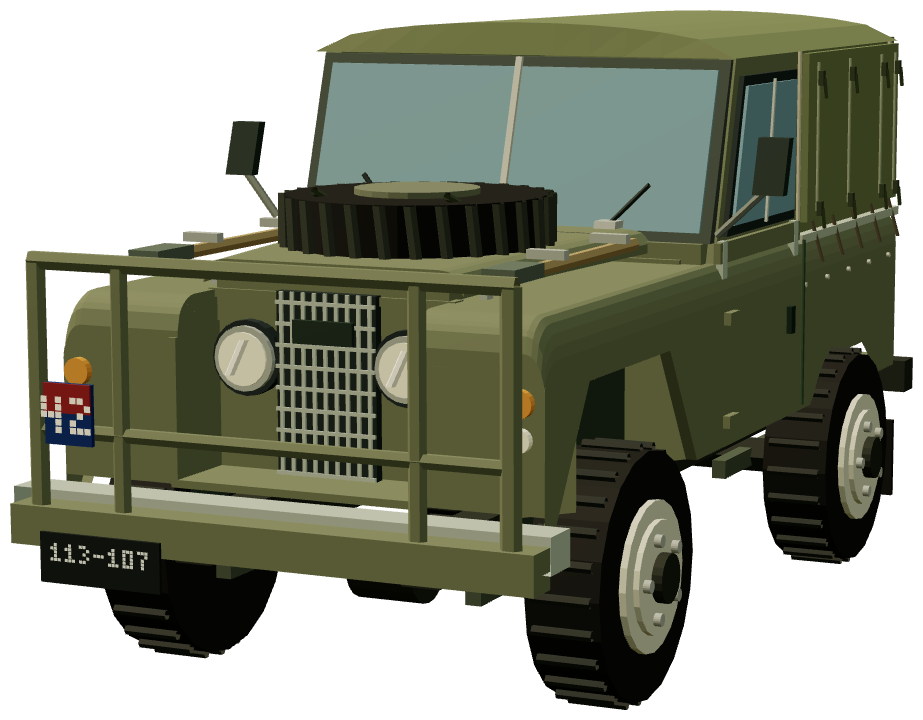
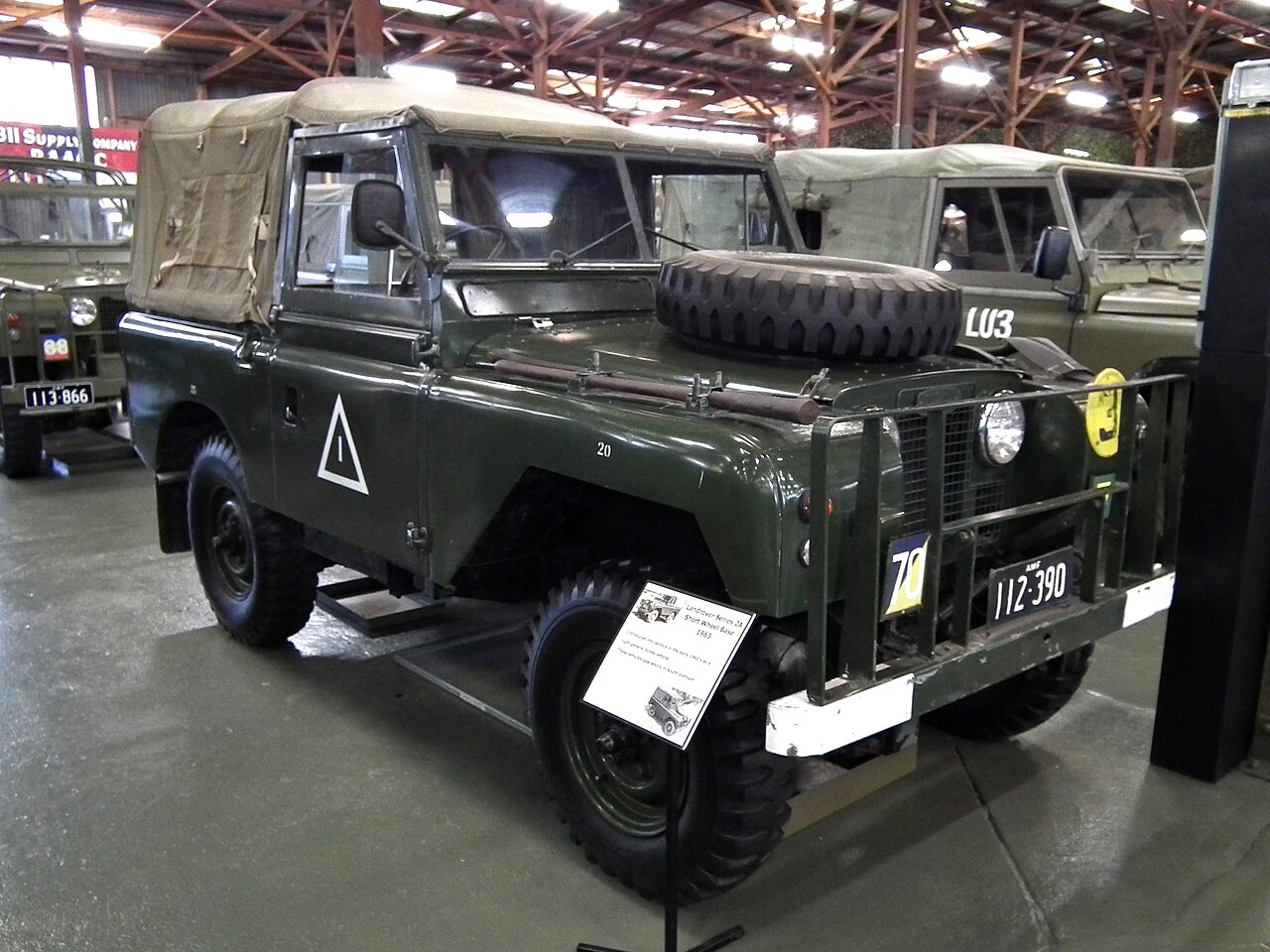
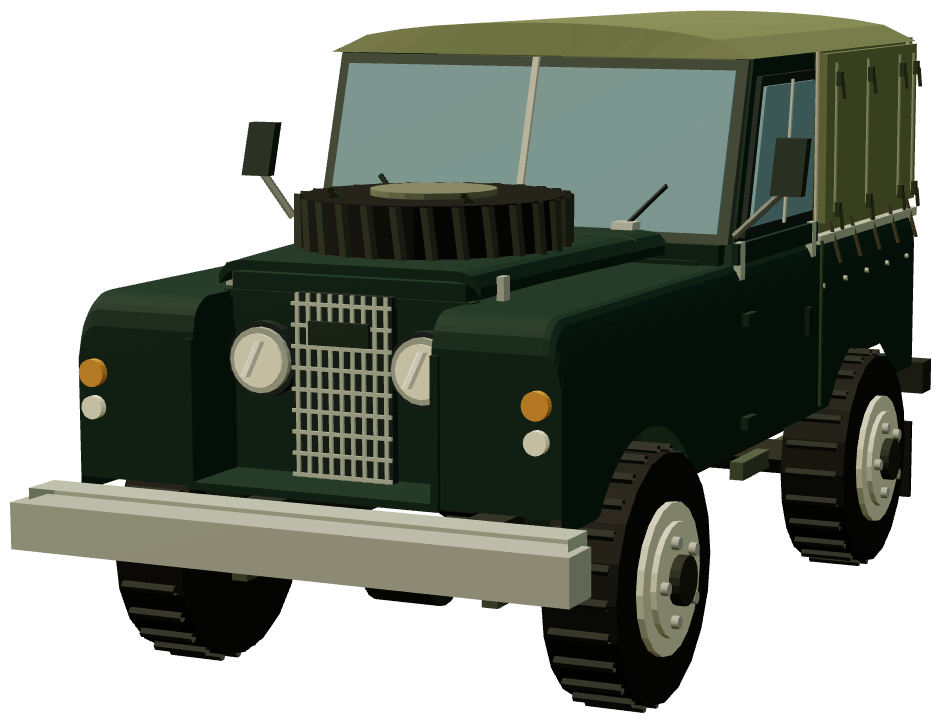
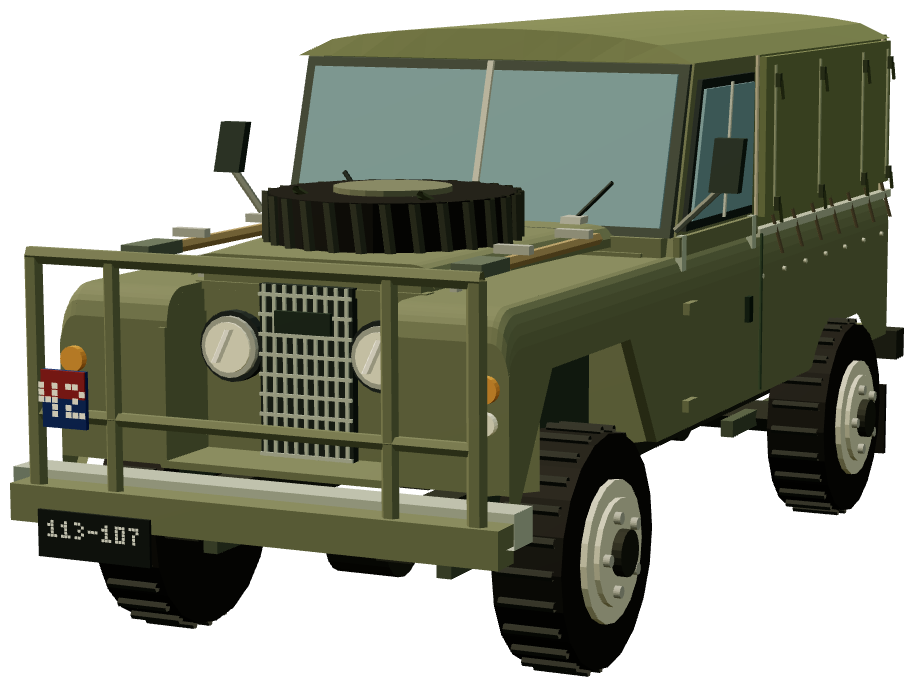
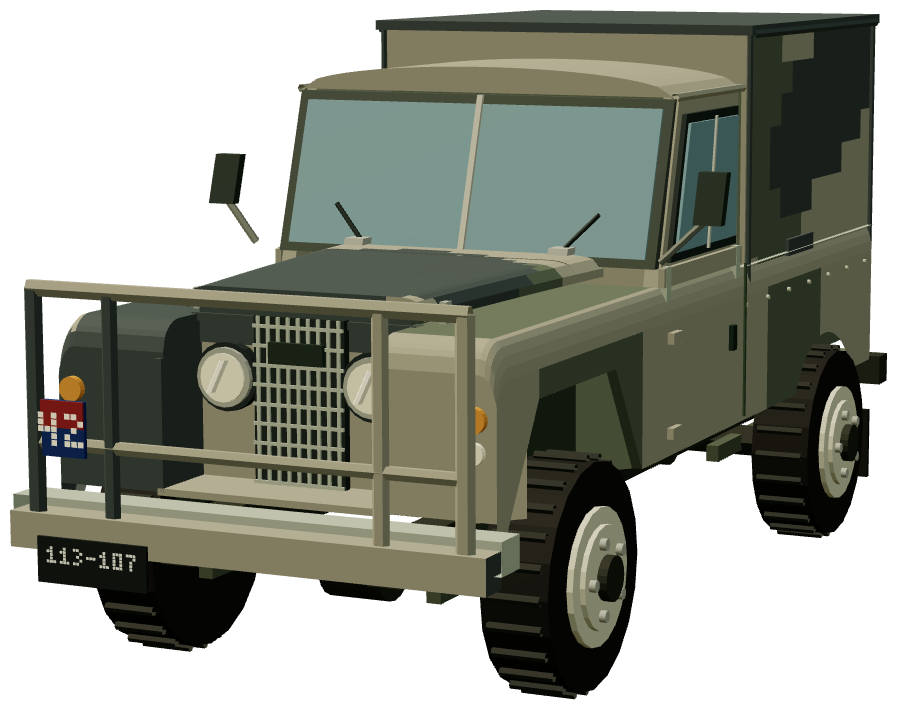
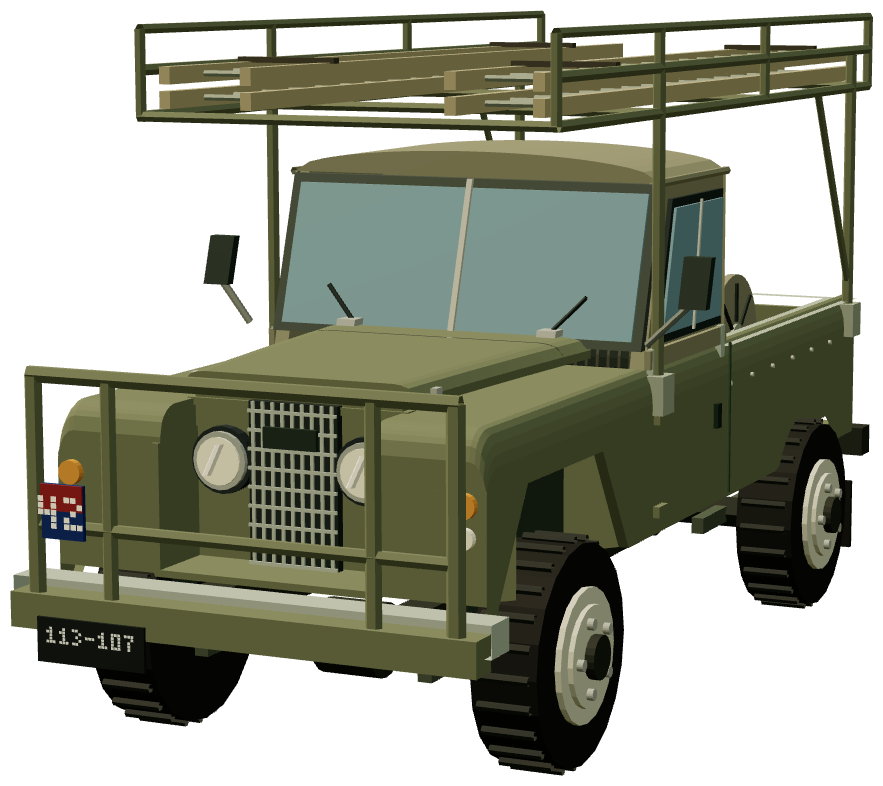
The Series 2 88s were near-civilian vehicles, designated Trucks, Command and Reconnaissance ¼-ton, with only light militarisation. The definitive army short-wheelbase came with the Series 2A ¼-ton GS (census 6005) of 1963–64, which shared the heavy modifications of its ¾-ton 109 sibling: extended front spring mounts and rear shackles for extra ride height, an extra outrigger carrying a duplicate 10-gallon fuel tank, longer shock absorbers, 7.50-16 tyres and a 2.25-litre petrol engine with twin fan belts. Exterior fittings included the characteristic brushguard, bridge-classification plate, blackout light, cut-away front wings, pioneer-tool brackets, NATO trailer socket and the canvas windscreen strap — the canvas-tilted, bull-barred silhouette the registry model reproduces. The 88s served in general duties, fitted-for-radio and specialist roles, including the 106 mm recoilless-rifle 'gunbuggy' conversions built on the SWB chassis.
Early vehicles were delivered in gloss Bronze Green enamel; from April 1967 the fleet was over-sprayed in the Australian Army's flat, infrared-reflective Olive Drab, with white bumper corners and rear diff for convoy work and stencilled ¼-ton load-sign markings. The SWB fleet was progressively replaced by Series 3 and later Perentie vehicles; survivors are preserved by collectors and in unit museums, including the Series 2A SWB displayed at the Australian Army Museum Bandiana.
.jpg)