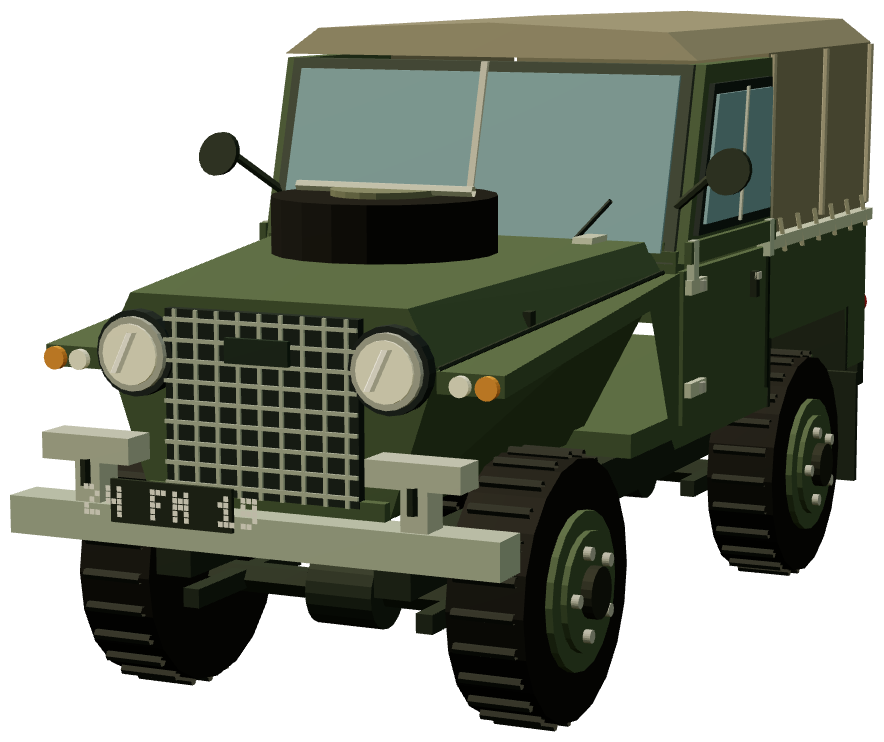
The record
In the mid-1960s the British armed forces asked for a Land Rover that could be flown into battle. The standard 88-inch vehicle was too wide and too heavy for the helicopters of the day, so Rover redesigned it with new axles and shorter half-shafts to cut 4 inches (100 mm) from the width — letting it sit on a standard air-freight pallet — and made the upper bodywork, doors, windscreen, hood and bumperettes quickly demountable. With the removable panels stripped off, the 24-volt FFR version came down from 3,329 lb (1,510 kg) to 2,808 lb (1,274 kg), light enough for the Westland Wessex medium-lift helicopter's 2,500 lb underslung load — although in practice the margin was so tight that stripped-down flying was rarely needed once more powerful helicopters arrived.
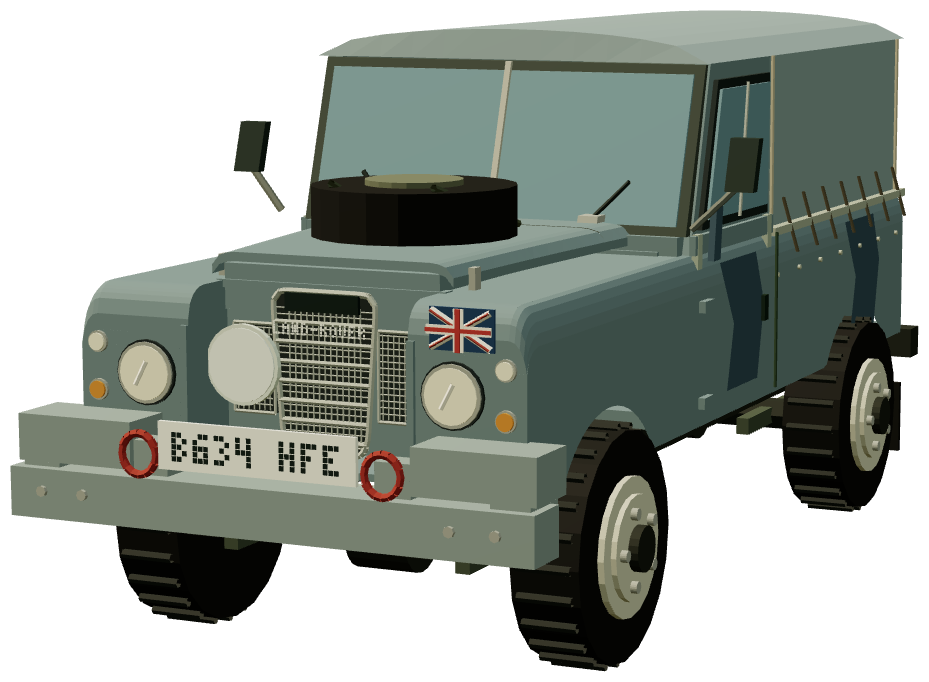
Quantity production of the Series IIA Lightweight began on 11 November 1968, and the type entered service as the Truck, Utility, ½ Ton, 4×4. Estimates put Series IIA Lightweight production at roughly 1,500-3,000 vehicles before the model was replaced on the line in 1972 by the Series III Lightweight, once outstanding Series IIA orders for the MoD had been cleared. The Series III version, distinguishable by its flatter windscreen-mounted wipers, revised grille and all-synchromesh gearbox, carried the type through to the end of production in 1984 and accounts for the large majority of the 37,897 Lightweights (petrol and diesel) built in total — which is why this record is filed under the Series III model line.
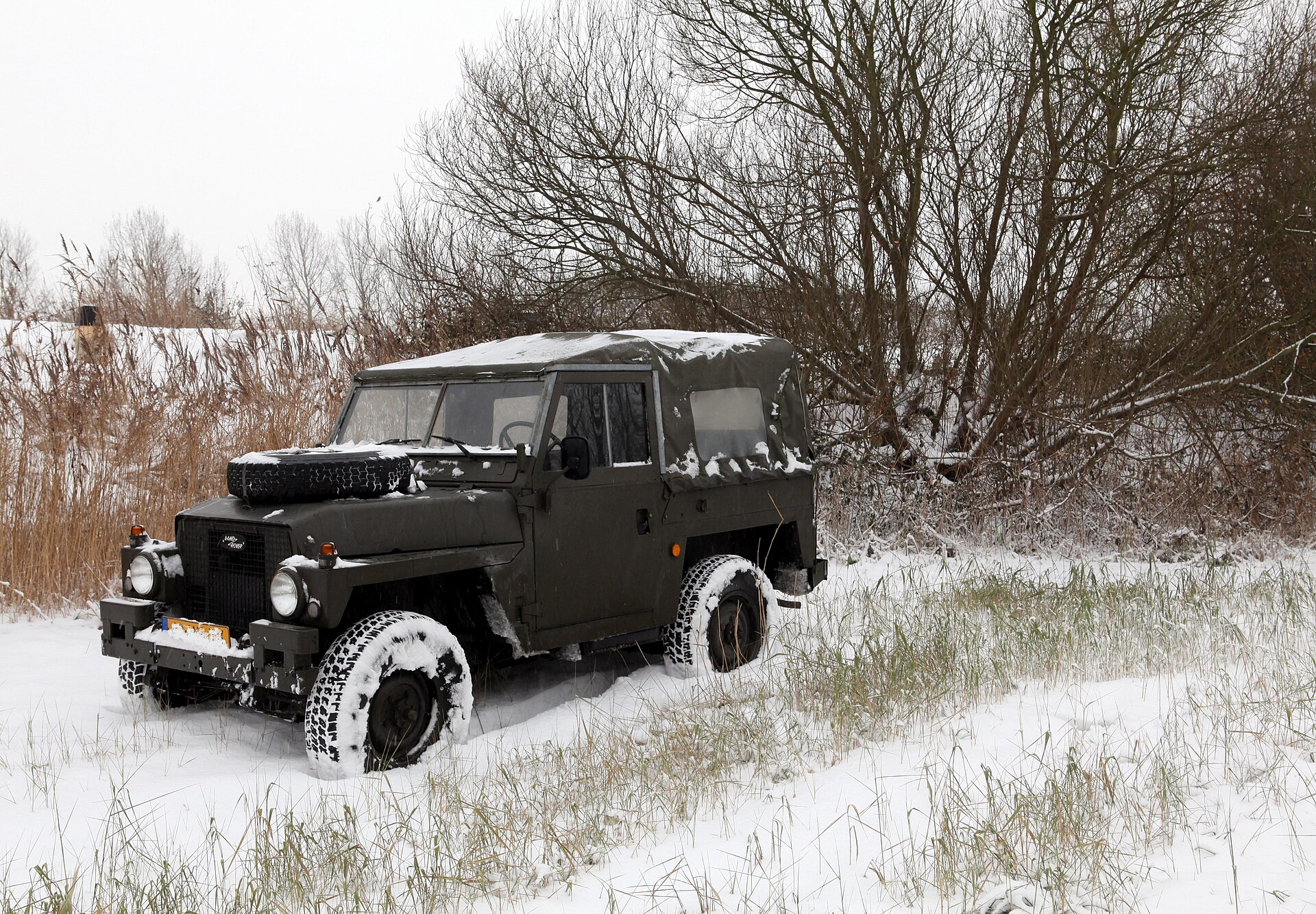
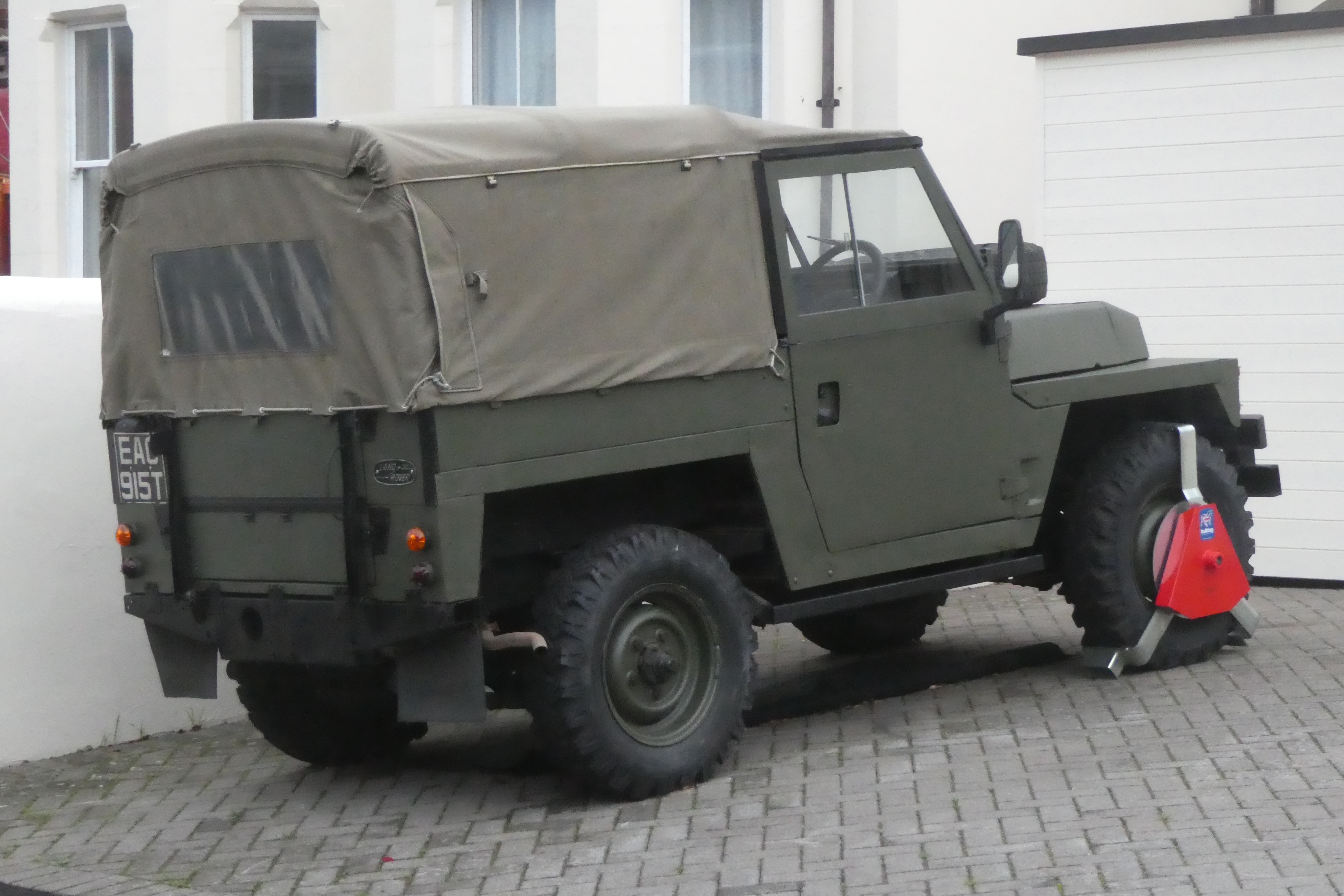
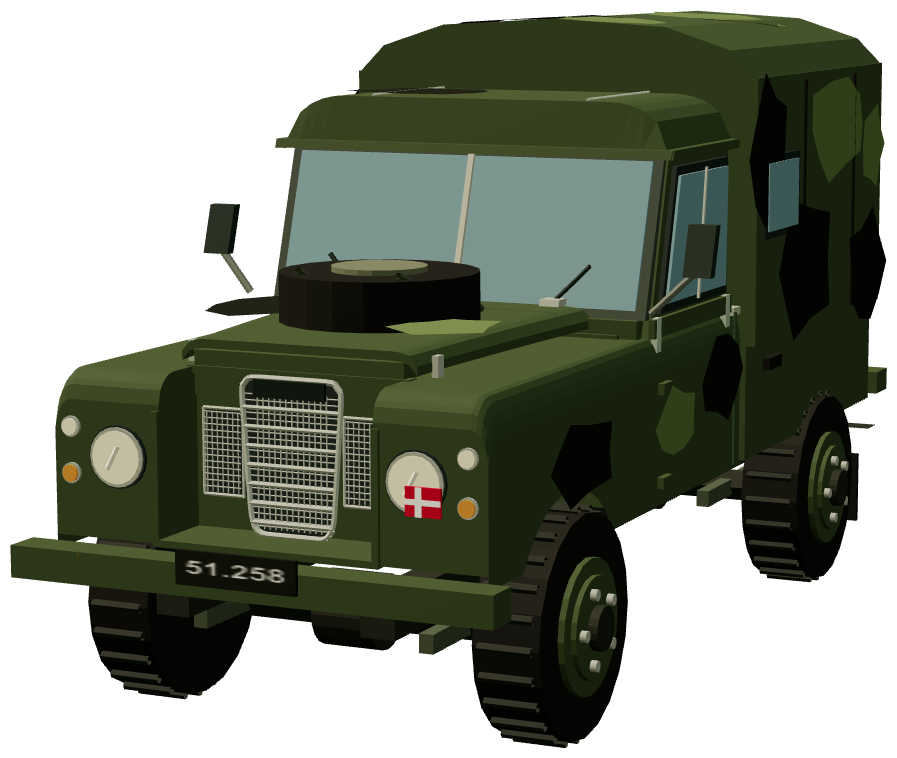
Power came from the familiar 2.25-litre four-cylinder engines — the 73 hp petrol being standard in British service, with the 62 hp diesel favoured by some export customers such as the Netherlands. Lightweights served with all three British armed services in General Service (12-volt) and FFR 'Fitted For Radio' (24-volt) forms, and with the armed forces of more than twenty other countries. British vehicles were delivered in Deep Bronze Green, giving way to matt infrared-reflective NATO Green from the late 1970s. Large numbers were sold off from the mid-1980s as the Land Rover 90 and 110 replaced them, and the Lightweight is today one of the most affordable and popular ex-military Land Rovers in preservation.

_(50546626261).jpg)