The record
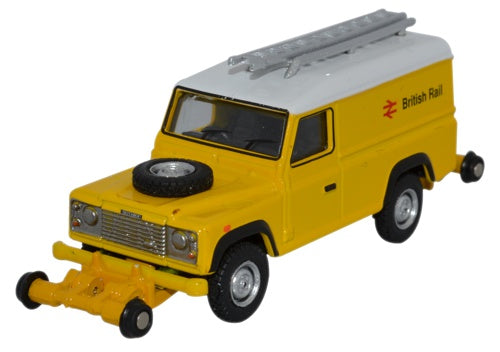
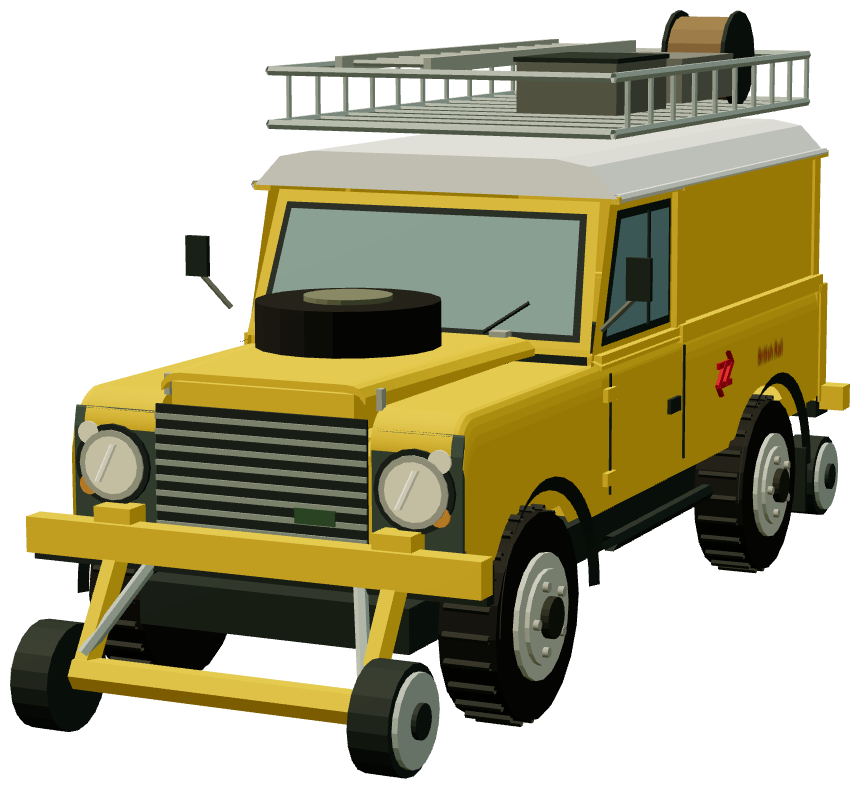
Road-rail Land Rovers reached the track by a crossing or a purpose-built ramp: the driver lined up on the rails, hydraulics lowered a set of flanged guide wheels at each end until they engaged the railhead, and the vehicle then ran along the line on its own rubber tyres with the rail wheels steering it. British Rail's engineers used them for track inspection and maintenance, where a road vehicle that could drive to a crossing, drop onto the line, run a section and climb off again was far cheaper to operate than a dedicated rail machine. Early hopes of using them for light shunting came to nothing against the mass of railway rolling stock, and from the 1970s the type settled into inspection and maintenance work.
The registry's model follows Oxford Rail's OR76ROR003, which depicts the type on a Defender 110 hard top in British Rail engineers' yellow with a white roof, a spare wheel on the bonnet, a roof rack carrying a ladder, the BR double arrow and 'British Rail' on the rear side panels, and the yellow rail-gear frames front and rear with their small steel wheels. The queue row lists the base as a Series III 109; the supplied reference is unambiguously a Defender, and the model follows the reference. No registration, depot or dates for an individual vehicle are given in the sources, and the number of road-rail Land Rovers BR operated is not recorded here.