The record
The Post Office adopted the Land Rover, in the words of its own Engineering Instruction, for use where maintenance access to key stations has to be ensured in the event of exceptionally difficult ground conditions. That is a telephone engineer's way of saying that some exchanges and repeater stations are up tracks a van cannot climb.
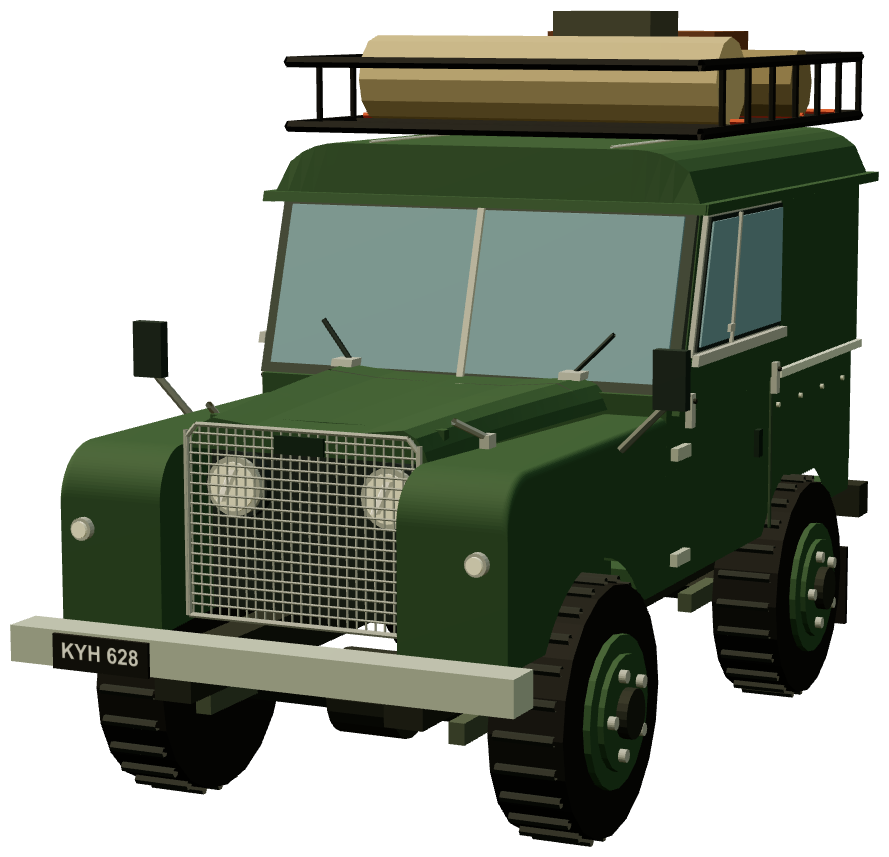
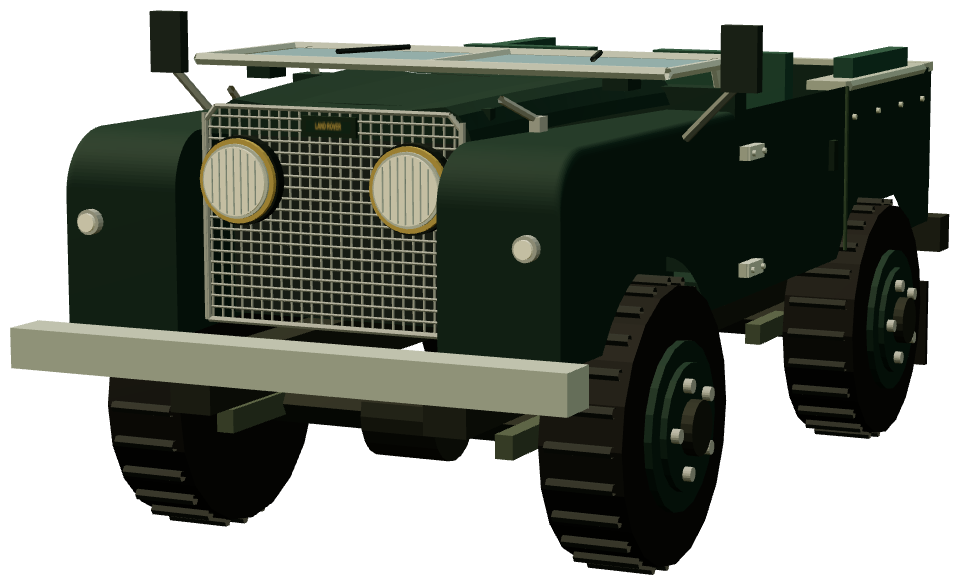
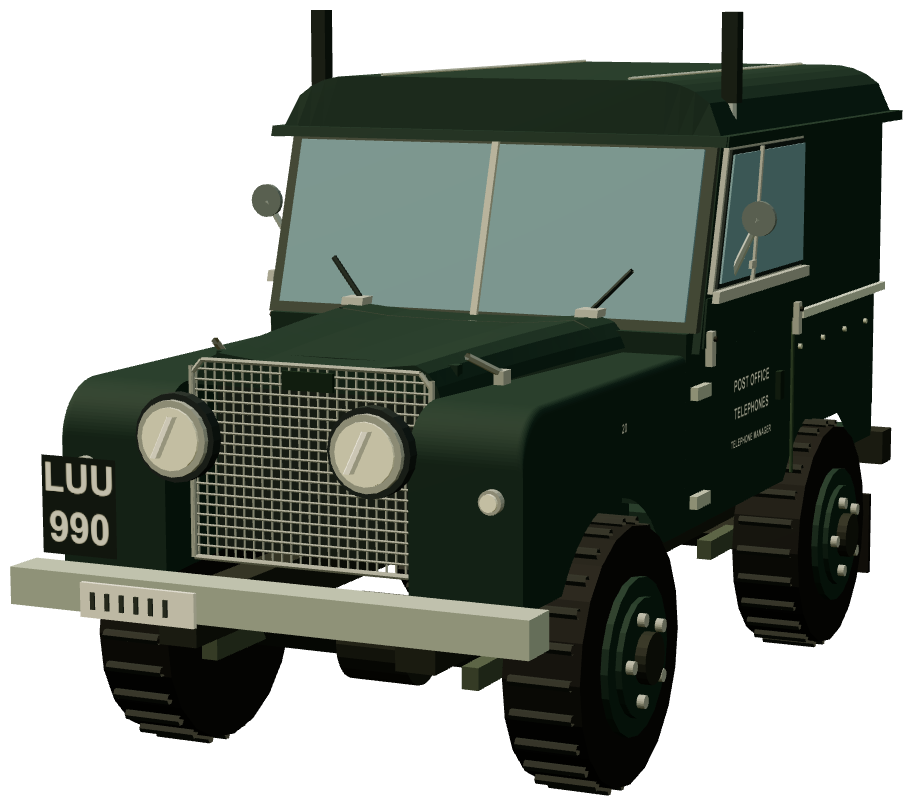
The designation Type 1 covers two phases of Land Rover production which, the instruction notes, differ mainly in external appearance. LUU 990, photographed in June 1951, is a Phase 1 car: an 80-inch Series I with the light-alloy body and hardtop, the standard three-abreast cab — the Post Office regarded the centre seat as fit only for casual use on short journeys — and a body separated from the cab by a waist-high bulkhead, reached through a two-piece rear door whose upper half lifts and lower half drops as a tailboard. A fire extinguisher and First Aid Outfit No. 1 were mounted in the cab, and the maximum load was 9 cwt besides the driver and two passengers. The later instruction, written around the Phase 2 88-inch, specifies a diesel engine as standard for engineering service with petrol only by special case; a 1951 car predates Land Rover's diesel and carries the petrol four.
The Post Office fleet numbers tell the story of a cautious buyer: 16815–16817 (LUU 989–991) in 1950, then two or three a year — MLB 988–989 and MLH 636–637 in 1951, MYF 954–956 in 1952, OYF 218–219 and PUL 880–885 in 1954, RLB 785–787 in 1955, SXH 348–351 in 1956 and TUV 964–966 in 1957 — twenty-eight Type 1 hardtops in all.