The Series III Stage 1 V8 (1979-1985) squeezed the Range Rover's detuned 3.5-litre V8 and LT95 permanent four-wheel drive into the leaf-sprung Series III body, making it the only Series Land Rover with constant 4WD; just 24 were built on the short 88-inch wheelbase.
By the late 1970s the Series III's 2.25-litre engines were badly outgunned in the export markets Land Rover depended on, and Japanese rivals were taking sales. British Leyland's answer was the first stage of a major government-backed investment plan for Land Rover - hence the name 'Stage 1' - which put the 3.5-litre all-aluminium Rover V8 petrol engine into the Series III. To cope, the V8 was paired with the Range Rover and 101 Forward Control's LT95 four-speed gearbox with a lockable centre differential, making the Stage 1 the only Series III with permanent four-wheel drive.
The V8 was detuned from the contemporary Range Rover's 135 bhp to around 91 bhp at low revs, trading outright pace for torque, reliability and the ability to run on poor fuel. The longer engine and gearbox pushed the radiator forward to sit flush with the front of the wings behind a distinctive flat grille - a face the coil-sprung One Ten would inherit. Underneath, however, the Stage 1 kept the Series III's leaf springs and drum brakes largely unchanged.
The Stage 1 went on sale in February 1979 as an export-only model, aimed at markets such as Africa and Australia, and became available to UK buyers in 1980. It was normally sold only in 109-inch long-wheelbase form as a pick-up, hard top or station wagon; a mere 24 examples were built on the 88-inch short wheelbase, making the SWB Stage 1 one of the rarest production Series Land Rovers of all. In Australia, vehicles could be had from 1981 with a factory-fitted Isuzu 4BD1 diesel in place of the V8 - a pairing that foreshadowed the later Perentie programme.
Production ran alongside the new coil-sprung One Ten from 1983 until 1985, and the Stage 1's drivetrain layout - permanent 4WD with a locking centre diff - became standard for every Ninety, One Ten and Defender that followed. Total production figures were never published, but surviving chassis records show thousands were built, the great majority exported; a small number are thought to have served with British forces.
Specification
MANUFACTURERLand Rover (British Leyland)
MANUFACTURED1979-1985 (export-only from February 1979; UK sales from 1980)
ENGINE3.5 L Rover V8 petrol, detuned to ~91 bhp (68 kW), with LT95 four-speed gearbox and permanent 4WD
PRODUCTION RUNTotal unpublished (thousands, mostly exported); only 24 88-inch SWB examples
COUNTRY OF ORIGINUnited Kingdom
STATUSout of production; sought after in preservation
RECORD KINDBase model
MODEL LINESeries III
FAMILYLand Rover Series
SERIES3
ENGINE VARIANTstage1-v8
WHEELS4
NOMINAL WHEELBASE109″
BODY STYLENo roof
VARIANTS7
Catalogue fields describe the vehicle's structure and body as this registry records it. They are not certified factory measurements, and no performance figures are published here.
Codes on hover. Hex values are representative approximations of period paint unless a source states a measured value.
Renders & references
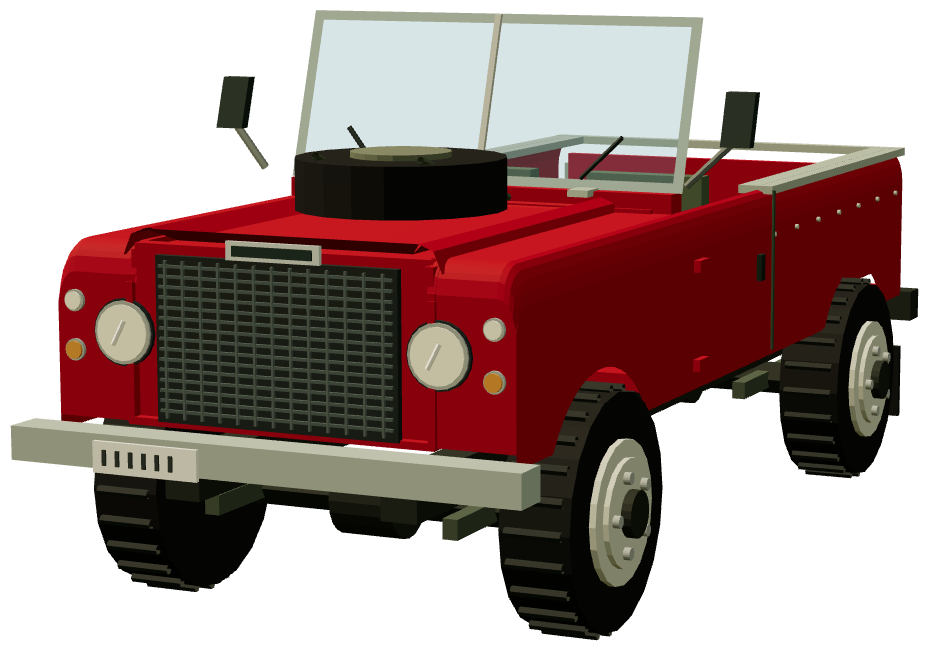
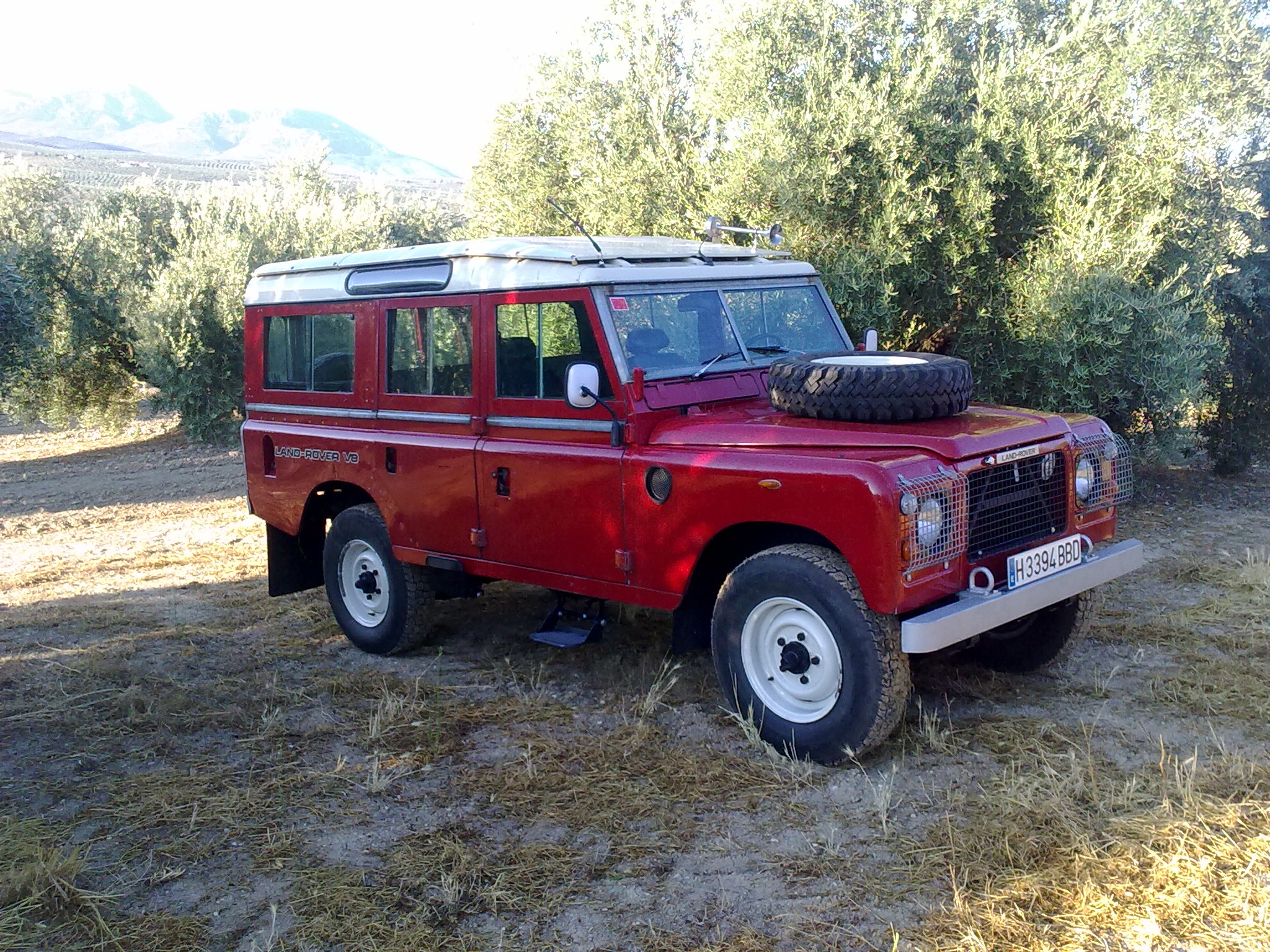
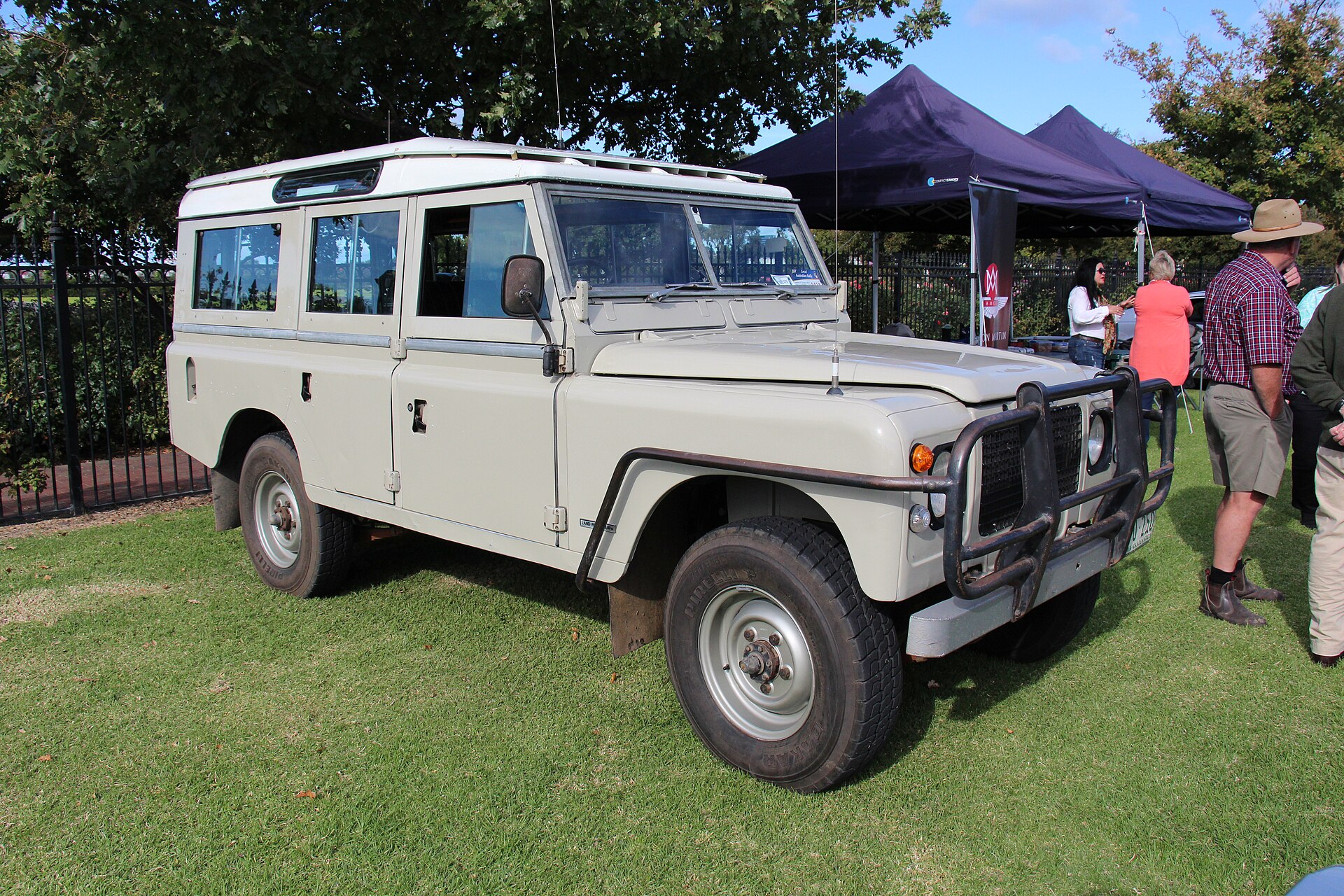
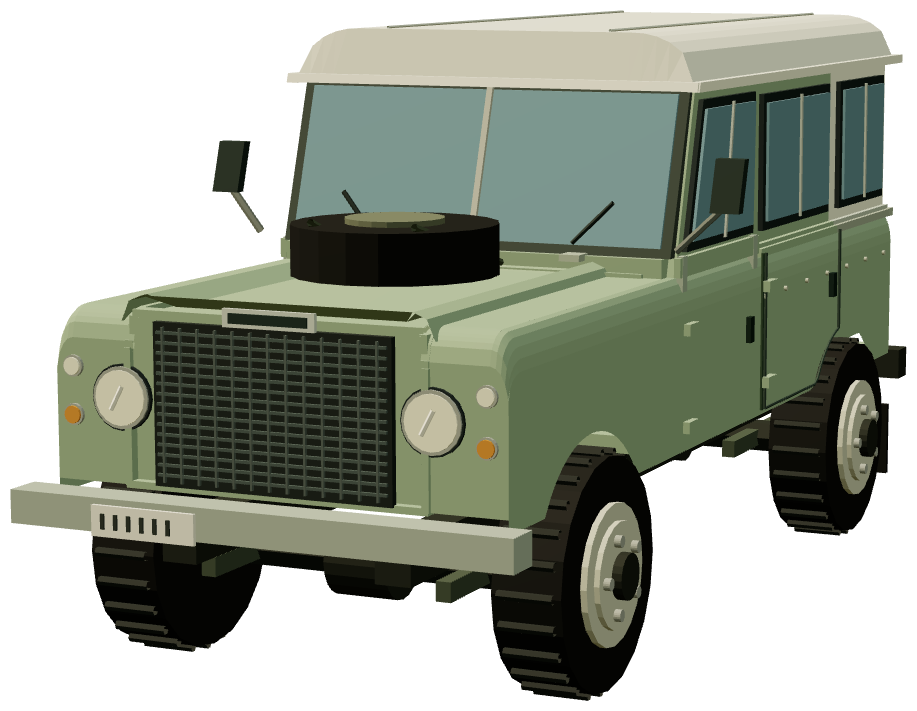
Front three-quarterRegistry renderThree-quarterRegistry renderSideRegistry renderRearRegistry renderFrontRegistry renderLand Rover 109 Stage One V8 in Cazorla, Andalusia, showing the flush front grille that distinguished the V8 modelNievesytinieblas · CC BY-SA 4.0 ↗1982 Stage 1 V8 station wagon with safari roofSicnag · CC BY 2.0 ↗
5Series I front body review — series1-bronze and Series I configurations · HERITAGE-FLEET-REFERENCES.md
User photographs `s1.jpeg`, `imagesj.jpeg`, `25109914-1-55.jpg` and `s1_.jpeg`
show the early Series I front: a narrow central wire-mesh radiator grille with
inboard headlamps, broad flat-sided wings rolling over a long front radius, one
small white sidelight per wing, and a bonnet tapering forward with rounded long
side pressings. The shared Series I builder uses these proportions for both
wheelbases. This is a visual reference interpretation, not a measured CAD scan.
NOTES
6Series III front review — standard Series III configurations · HERITAGE-FLEET-REFERENCES.md
User references `hfhimages.jpeg`, `imagesl.jpeg`, and `IMG_1992-jpg.webp` show the
tall tapered central plastic grille with shorter side vents, recessed radiator
panel, broad wings with rounded leading edges, inboard wing headlamps and white
sidelights above amber indicators. The standard Series III bonnet narrows toward
the grille. Stage 1 V8 and Santana retain their distinct flush-front grilles.
Meteor Works uses a **Series III front**, not the Series IIA front of the army
and RAF Marshall ambulances. Its internal `marshal-series3` shell shares the
Marshall coachwork but inherits Series III wings, bonnet, grille, headlamps and
outer lamps. Meteor adds only its weathered livery, guard and emergency equipment
around that standard front, avoiding duplicated headlamp pods.
### Coachwork front-panel corrections
- The Shop Truck and the Marshall family (including Meteor Works and RAF rescue) retain clipped curved side skins through the front wings and doors at their custom body joins.
- Queen Elizabeth II’s Series IIA station wagon uses the Series III-style wing-mounted headlights, bonnet and broad black grille shown in the supplied reference. No numberplate is modelled. Reference: `

.jpg)