The third-generation Range Rover (2001-2012): engineered under BMW to 7 Series standards with a monocoque body and all-independent air suspension, launched under Ford ownership, and finished its run under Tata's Jaguar Land Rover.
MODEL LINERange Rover L322BUILT BYLand Rover (developed under BMW; produced under Ford 2002-2008, then Tata Motors' Jaguar Land Rover)PRODUCED2001–12PRODUCTION~293,494 vehiclesLAYOUT4 wheels
The record
The L322 was conceived in the late 1990s as project 'L30' while Land Rover belonged to BMW, and it shows: the first monocoque Range Rover was engineered alongside the E38 7 Series, with fully independent air suspension replacing beam axles and BMW electronics and drivetrains throughout. BMW sold Land Rover to Ford in 2000, two years before production began, with the sale contract keeping BMW involved through the launch - so the car reached showrooms in early 2002 as a Ford-owned product powered by BMW's M62 4.4-litre petrol V8 and M57 3.0-litre diesel straight-six.
Design chief Don Wyatt's team gave the L322 a monumental, yacht-inspired interior and exterior details that consciously restated Range Rover hallmarks - the floating roof, castellated clamshell bonnet and split tailgate. It moved the model decisively into the luxury-car class, and reviews treated it as the world's most complete vehicle: as capable off-road as anything Land Rover had built while cruising like a limousine.
Ford progressively engineered the BMW content out. The 2005 facelift (2006 model year) brought Jaguar's AJ-V8 in 4.4-litre and 400-horsepower supercharged 4.2-litre forms plus new infotainment; 2007 added the Terrain Response system; the TDV8 diesel arrived for 2007 and grew to 4.4 litres by 2011; and the heavily revised 2010 cars introduced 5.0-litre and supercharged 510 PS petrol V8s with a 12-inch digital instrument cluster. Ownership changed again in 2008 when Ford sold Jaguar Land Rover to India's Tata Motors, making the L322 the only Range Rover generation built under three different parent companies.
Production at Solihull ended in 2012 after 293,494 vehicles, and the all-aluminium L405 replaced it that autumn. The L322 remains the definitive 2000s luxury SUV, from airport VIP fleets to the 2002 launch of 'football's favourite car'.
Specification
MANUFACTURERLand Rover (developed under BMW; produced under Ford 2002-2008, then Tata Motors' Jaguar Land Rover)
MANUFACTURED2001-2012 (2002-2012 model years)
ENGINEBMW M62 4.4 V8, then Jaguar 4.4/4.2 SC and 5.0/5.0 SC V8 petrols; BMW M57 3.0 six and 3.6/4.4 TDV8 diesels
PRODUCTION RUN~293,494 vehicles (Wikipedia's compiled figure, 2001-2012)
COUNTRY OF ORIGINUnited Kingdom
STATUSout of production
RECORD KINDBase model
MODEL LINERange Rover L322
FAMILYRange Rover L322
WHEELS4
BODY STYLERange Rover L322
VARIANTS1
Catalogue fields describe the vehicle's structure and body as this registry records it. They are not certified factory measurements, and no performance figures are published here.
Codes on hover. Hex values are representative approximations of period paint unless a source states a measured value.
Renders & references
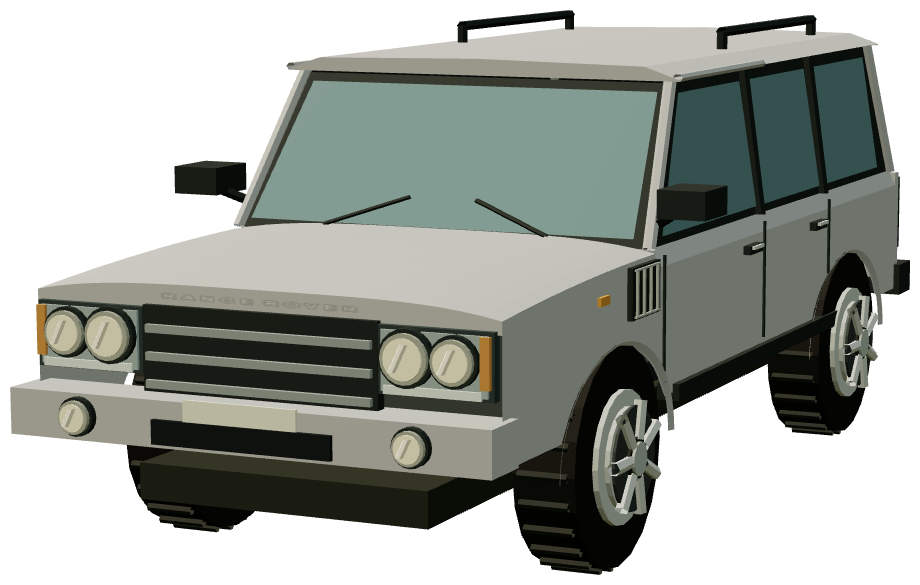
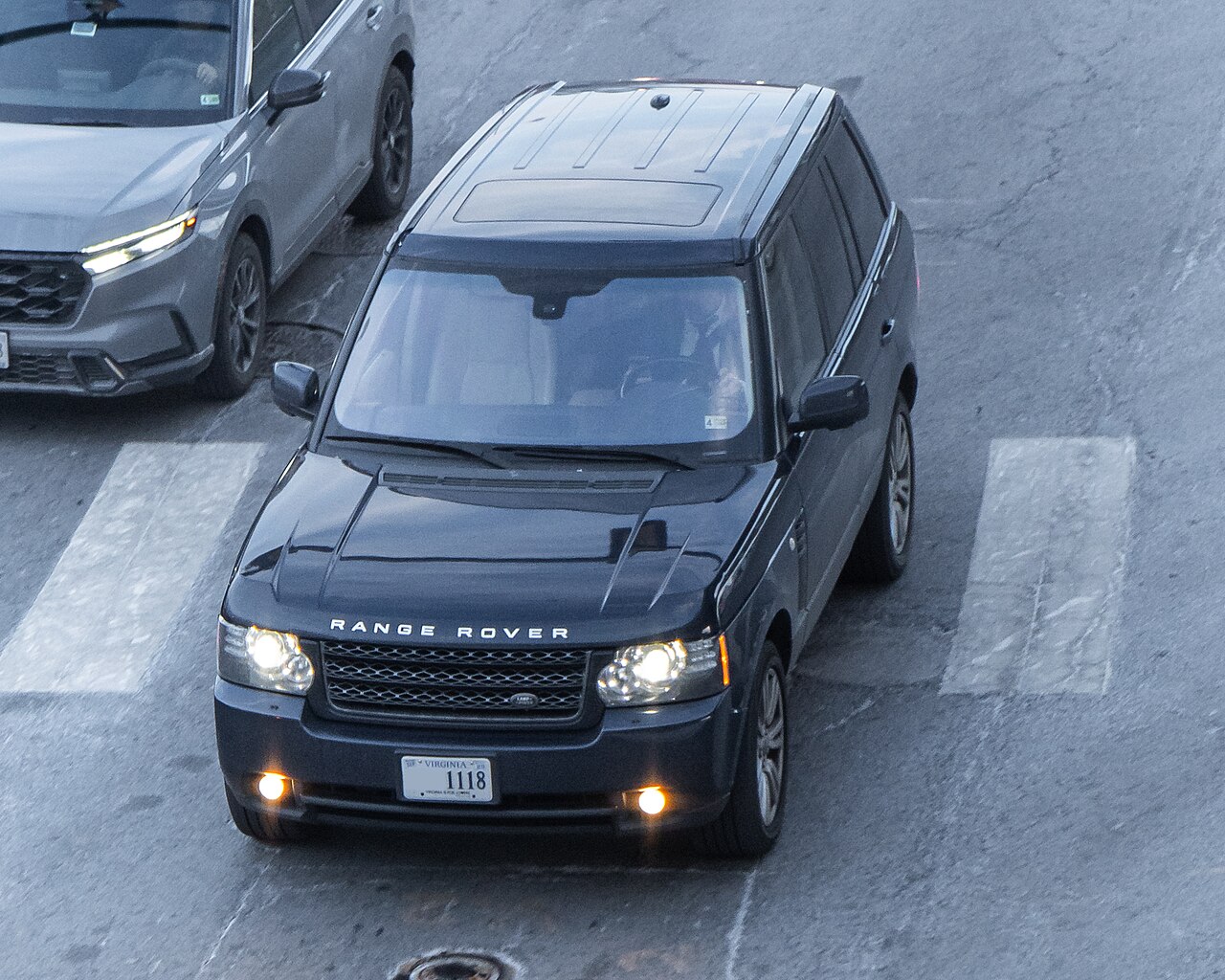
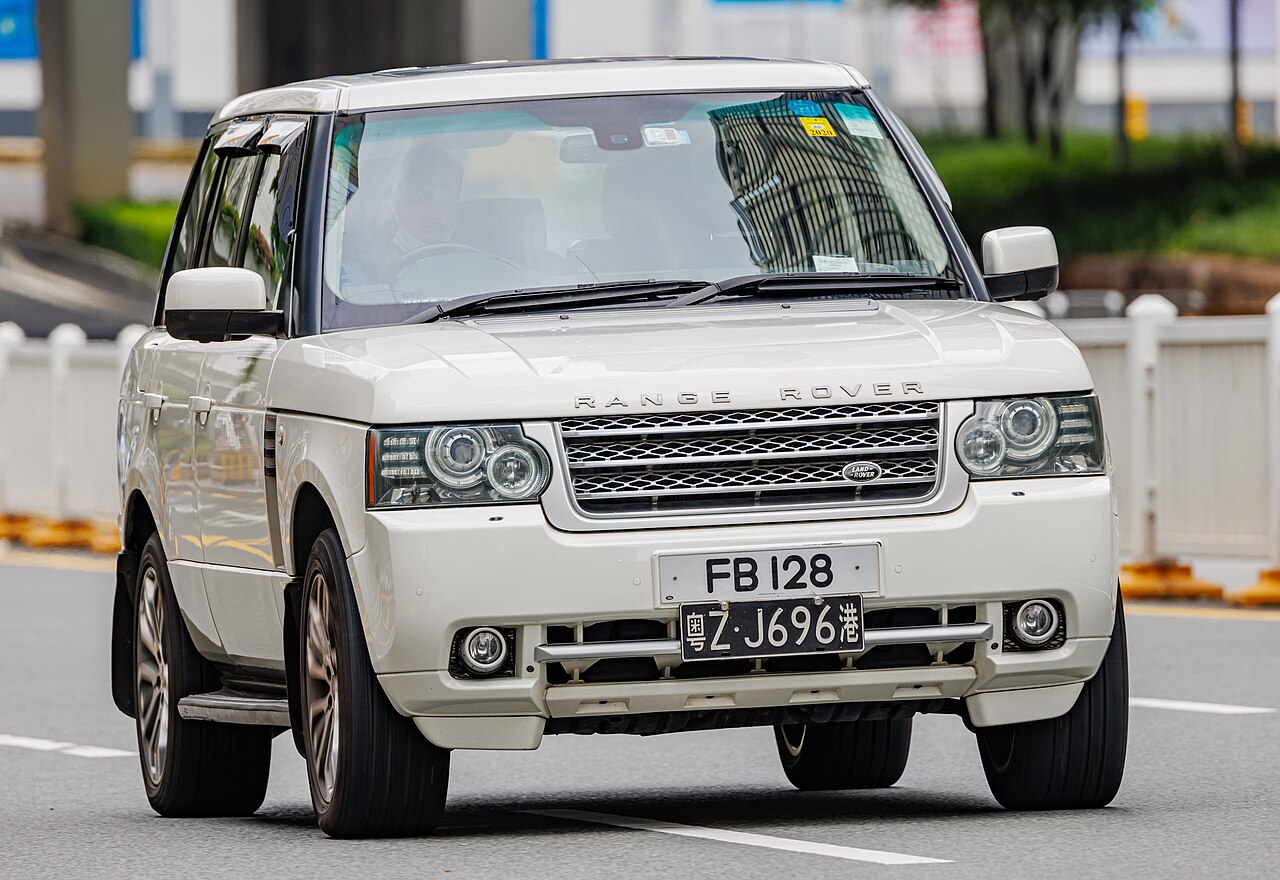
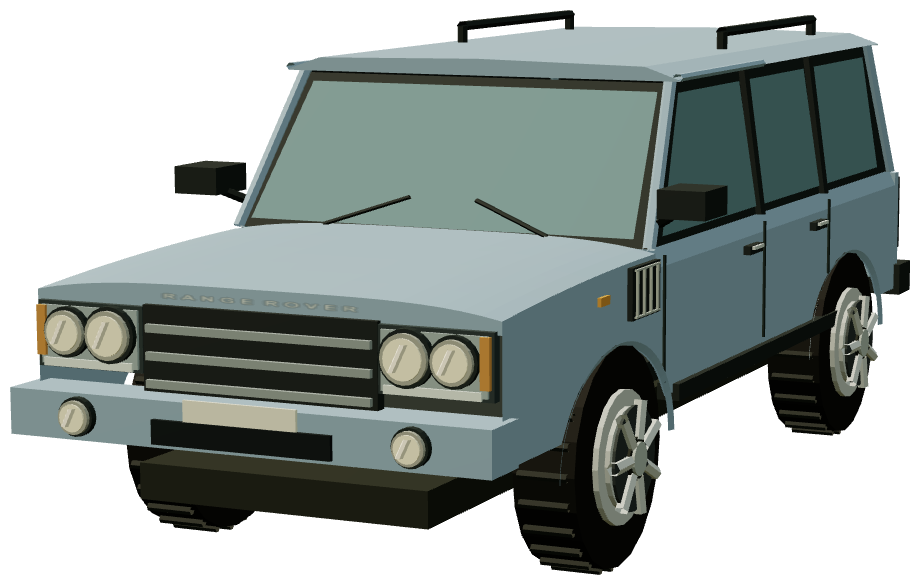
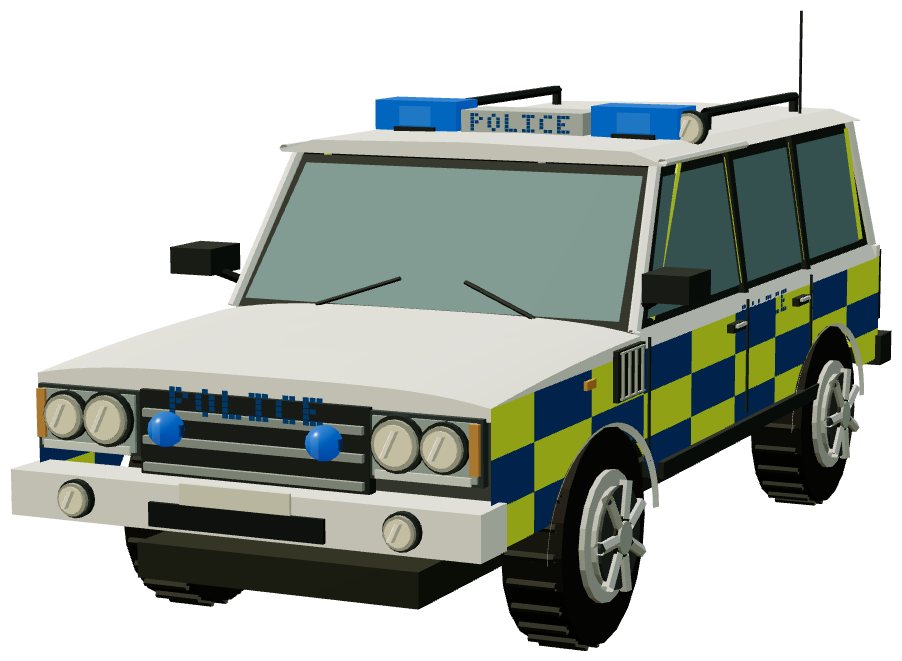
Front three-quarterRegistry renderThree-quarterRegistry renderSideRegistry renderRearRegistry renderFrontRegistry renderRange Rover (L322) in the Washington DC metro areaOWS Photography · CC BY 4.0 ↗Range Rover (L322) in Hong KongDinkun Chen · CC BY-SA 4.0 ↗
4Series I front body review — series1-bronze and Series I configurations · HERITAGE-FLEET-REFERENCES.md
User photographs `s1.jpeg`, `imagesj.jpeg`, `25109914-1-55.jpg` and `s1_.jpeg`
show the early Series I front: a narrow central wire-mesh radiator grille with
inboard headlamps, broad flat-sided wings rolling over a long front radius, one
small white sidelight per wing, and a bonnet tapering forward with rounded long
side pressings. The shared Series I builder uses these proportions for both
wheelbases. This is a visual reference interpretation, not a measured CAD scan.
NOTES
5Series III front review — standard Series III configurations · HERITAGE-FLEET-REFERENCES.md
User references `hfhimages.jpeg`, `imagesl.jpeg`, and `IMG_1992-jpg.webp` show the
tall tapered central plastic grille with shorter side vents, recessed radiator
panel, broad wings with rounded leading edges, inboard wing headlamps and white
sidelights above amber indicators. The standard Series III bonnet narrows toward
the grille. Stage 1 V8 and Santana retain their distinct flush-front grilles.
Meteor Works uses a **Series III front**, not the Series IIA front of the army
and RAF Marshall ambulances. Its internal `marshal-series3` shell shares the
Marshall coachwork but inherits Series III wings, bonnet, grille, headlamps and
outer lamps. Meteor adds only its weathered livery, guard and emergency equipment
around that standard front, avoiding duplicated headlamp pods.
### Coachwork front-panel corrections
- The Shop Truck and the Marshall family (including Meteor Works and RAF rescue) retain clipped curved side skins through the front wings and doors at their custom body joins.
- Queen Elizabeth II’s Series IIA station wagon uses the Series III-style wing-mounted headlights, bonnet and broad black grille shown in the supplied reference. No numberplate is modelled. Reference: `
_Washington_DC_Metro_Area,_USA.jpg)
_HONG_KONG.jpg)