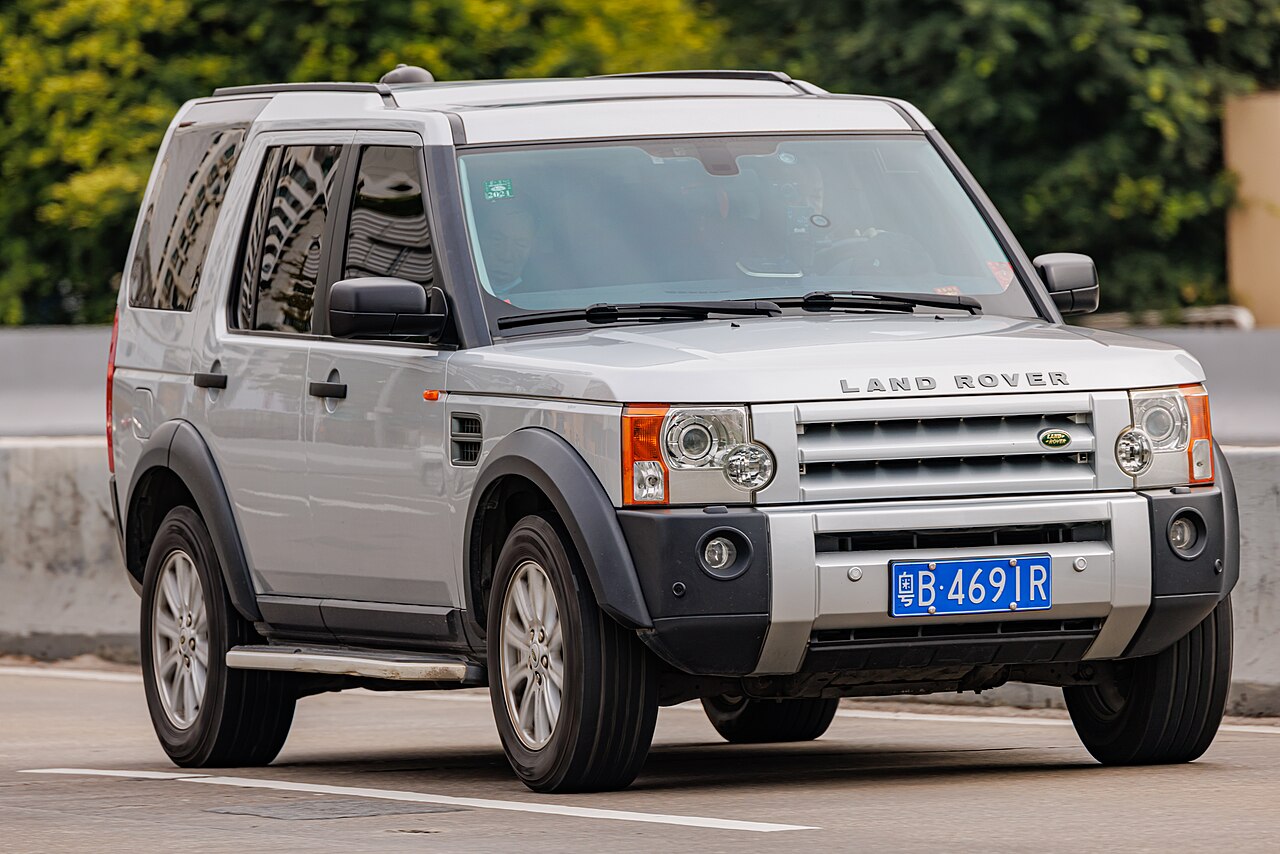
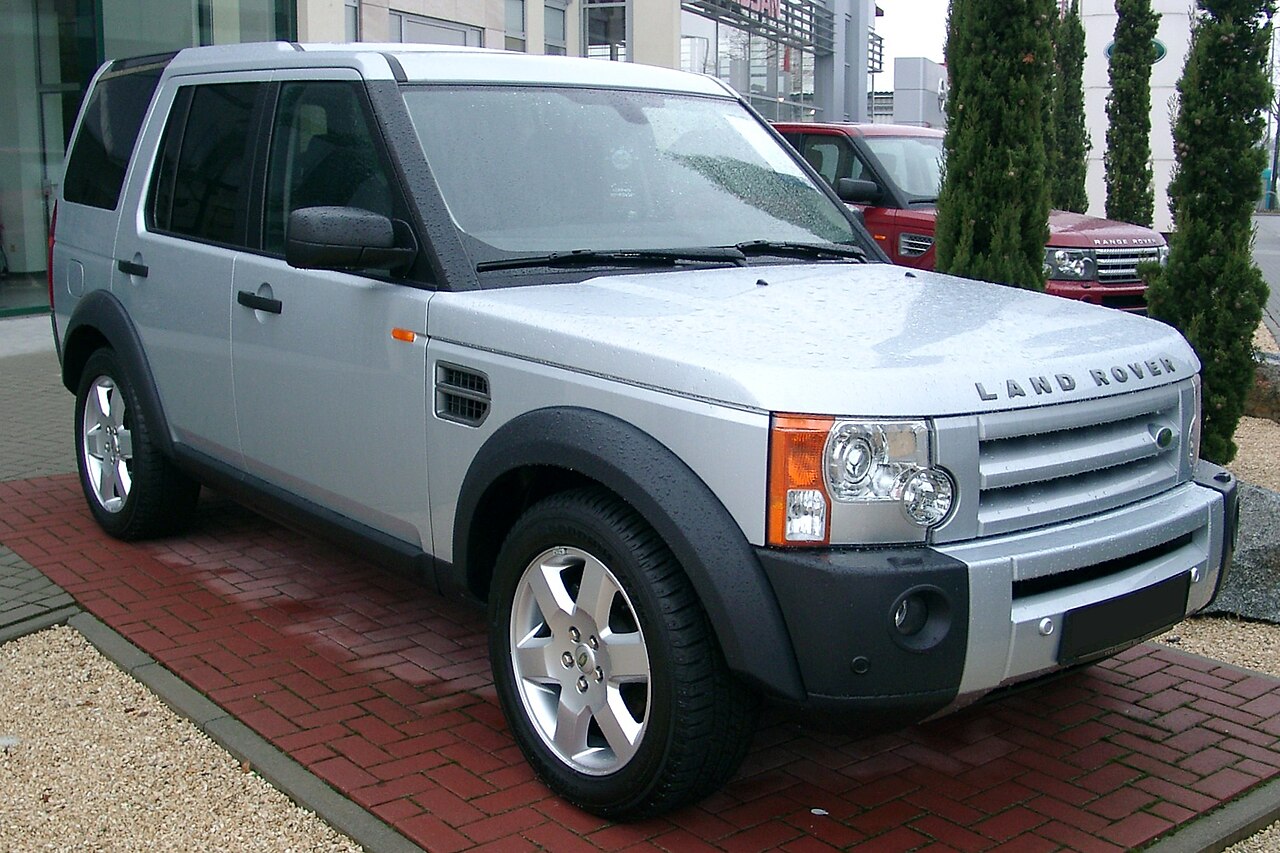
The clean-sheet third Discovery of 2004-2009 (LR3 in North America): Ford-era engineering with the hybrid Integrated Body Frame, independent air suspension, up to seven full-size seats and the debut of Terrain Response.
MODEL LINEDiscovery 3BUILT BYLand Rover (Ford Motor Company's Premier Automotive Group; Tata Motors from 2008)PRODUCED2004–09PRODUCTIONNo official Discovery 3-only total publishedLAYOUT4 wheels
The record
The Discovery 3 (codename L319) was the first all-new Discovery, developed under Ford ownership and revealed on 2 April 2004 ahead of a New York Auto Show debut, going on sale as the LR3 in North America and the Middle East. Almost nothing carried over: the 'Integrated Body Frame' welded a monocoque body to a hydroformed ladder chassis, suspension became fully independent (with cross-linked air springs on most models), and Terrain Response - the rotary controller that reconfigured engine, gearbox, diffs and traction electronics for chosen surfaces - made its world debut, becoming a Land Rover signature.
Gerry McGovern-era design under Geoff Upex replaced the original Discovery's soft edges with an unapologetically geometric body that kept the model's landmarks: the stepped roof, stadium seating and near-vertical tail (now with an asymmetric split tailgate). Three rows seated seven adults, with the rear rows folding into a flat floor. Engines came from the Ford-Jaguar portfolio: the 2.7-litre AJD TDV6 diesel that dominated European sales, the 4.4-litre Jaguar AJ-V8, and a base 4.0-litre Cologne V6 for North America.
The Discovery 3 was showered with awards - including a string of 4x4-of-the-year titles and Australia's '4WD of the Year' - and Top Gear's road testers rated it among the best vehicles in the world at any price for its combination of off-road ability and on-road manners. A G4 Challenge liveried fleet and strong global sales cemented it as the definitive mid-2000s expedition and towing vehicle.
Production ran at Solihull (with some assembly in Aqaba, Jordan for regional markets) until 2009, when the substantially upgraded Discovery 4/LR4 took over the L319 platform; no model-specific production total appears to have been published. Ownership changed beneath it in 2008, when Ford sold Jaguar Land Rover to Tata Motors.
Specification
MANUFACTURERLand Rover (Ford Motor Company's Premier Automotive Group; Tata Motors from 2008)
MANUFACTURED2004–2009
ENGINE2.7 L AJD TDV6 turbodiesel; 4.4 L Jaguar AJ-V8 and 4.0 L Ford Cologne V6 petrols
PRODUCTION RUNNo official Discovery 3-only total published
COUNTRY OF ORIGINUnited Kingdom
STATUSout of production
RECORD KINDBase model
MODEL LINEDiscovery 3
FAMILYDiscovery 3
WHEELS4
BODY STYLEDiscovery 3
VARIANTS1
Catalogue fields describe the vehicle's structure and body as this registry records it. They are not certified factory measurements, and no performance figures are published here.
5Series I front body review — series1-bronze and Series I configurations · HERITAGE-FLEET-REFERENCES.md
User photographs `s1.jpeg`, `imagesj.jpeg`, `25109914-1-55.jpg` and `s1_.jpeg`
show the early Series I front: a narrow central wire-mesh radiator grille with
inboard headlamps, broad flat-sided wings rolling over a long front radius, one
small white sidelight per wing, and a bonnet tapering forward with rounded long
side pressings. The shared Series I builder uses these proportions for both
wheelbases. This is a visual reference interpretation, not a measured CAD scan.
NOTES
6Series III front review — standard Series III configurations · HERITAGE-FLEET-REFERENCES.md
User references `hfhimages.jpeg`, `imagesl.jpeg`, and `IMG_1992-jpg.webp` show the
tall tapered central plastic grille with shorter side vents, recessed radiator
panel, broad wings with rounded leading edges, inboard wing headlamps and white
sidelights above amber indicators. The standard Series III bonnet narrows toward
the grille. Stage 1 V8 and Santana retain their distinct flush-front grilles.
Meteor Works uses a **Series III front**, not the Series IIA front of the army
and RAF Marshall ambulances. Its internal `marshal-series3` shell shares the
Marshall coachwork but inherits Series III wings, bonnet, grille, headlamps and
outer lamps. Meteor adds only its weathered livery, guard and emergency equipment
around that standard front, avoiding duplicated headlamp pods.
### Coachwork front-panel corrections
- The Shop Truck and the Marshall family (including Meteor Works and RAF rescue) retain clipped curved side skins through the front wings and doors at their custom body joins.
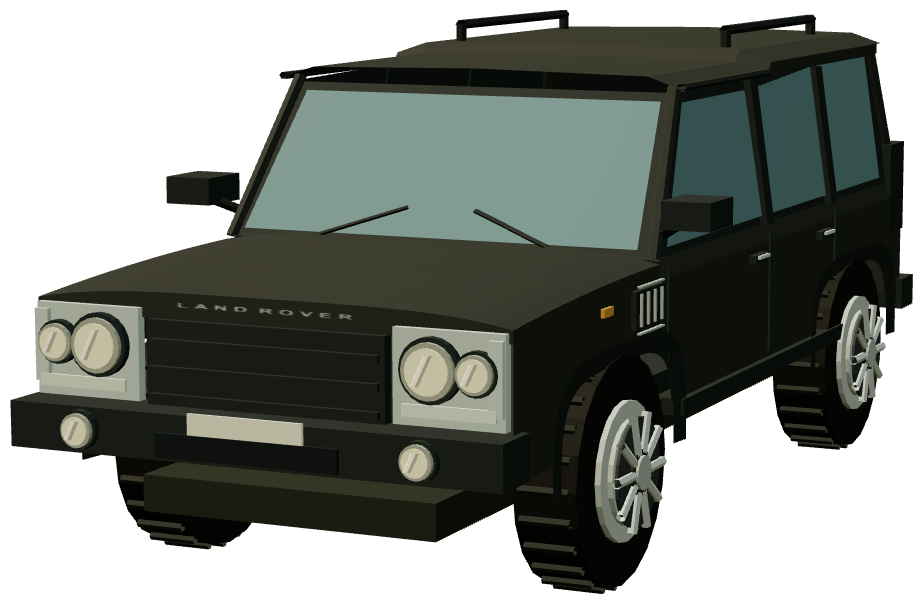
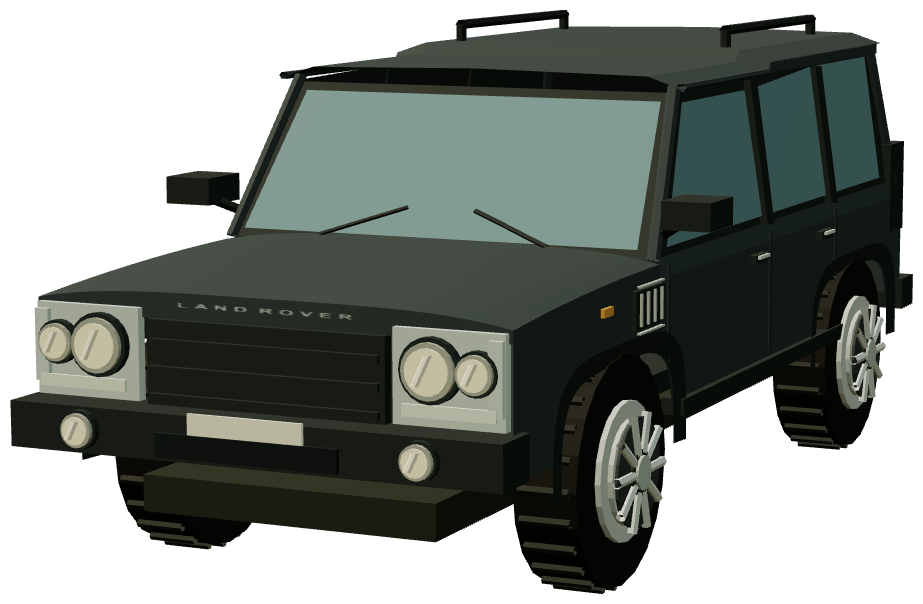
- Queen Elizabeth II’s Series IIA station wagon uses the Series III-style wing-mounted headlights, bonnet and broad black grille shown in the supplied reference. No numberplate is modelled. Reference: `
_China.jpg)
